Advertisement
East African bloc calls emergency health meeting over Ebola
Sunday 31st May, 2026 02:41 PM|

The East African Community (EAC) will hold an emergency ministerial meeting next week as countries in the region strengthen preparations against an Ebola outbreak that has already affected parts of the Democratic Republic of Congo (DRC) and Uganda.
Health ministers from EAC partner states will meet virtually on June 1 and 2 to discuss regional measures aimed at containing the outbreak caused by the Bundibugyo strain of the Ebola virus.
The meeting comes as the regional bloc intensifies coordination efforts following the outbreak, which was officially declared on May 15, 2026. The Bundibugyo strain is rare and currently has no licensed vaccine or specific treatment.
According to the EAC Secretariat, the ministerial session will review proposed regional actions and provide strategic direction for a coordinated response among member states.
You Might Also Like
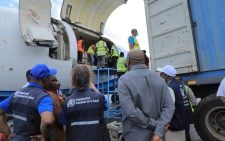
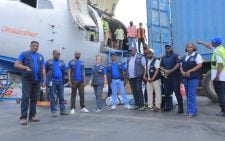
The outbreak has mainly affected eastern DRC, particularly Ituri, North Kivu and South Kivu provinces. Ituri Province remains the epicentre, with health officials expressing concern over high levels of population movement and cross-border travel in the area.
As of May 26, DRC had reported 121 confirmed Ebola cases and 17 confirmed deaths. Authorities had also recorded 1,077 suspected cases and 246 deaths among suspected cases.
Uganda has also reported infections linked to the outbreak. By May 25, the country had confirmed seven cases and one death. The first two confirmed patients had travelled from DRC before seeking treatment in Uganda.
The spread of cases beyond DRC has increased concern across East Africa, where countries share busy border crossings, transport routes and commercial links.
Regional response gathers pace
EAC Secretary General Stephen Mbundi said the regional bloc had activated several emergency mechanisms to help countries prepare for and respond to the outbreak.
“We are mobilising regional mechanisms and working closely with Partner States, Africa CDC, WHO, and development partners to strengthen surveillance, laboratory diagnosis, infection prevention and control, risk communication, and rapid response capacities,” said Mbundi.

He added that the organisation aimed to prevent cross-border transmission while protecting public health and economic stability across the region.
“The EAC remains committed to ensuring that every outbreak meets a prepared community. Our focus is to support partner states to prevent cross-border transmission while safeguarding the health, social well-being, and economic stability of East Africans,” he said.
One of the key measures involves the deployment of mobile laboratories across strategic border points and high-risk locations. The EAC Secretariat, with support from the Government of Germany through German Development Bank KfW and technical assistance from the Bernhard Nocht Institute for Tropical Medicine, is facilitating the deployment of nine mobile laboratories.
The laboratories will operate in locations considered critical for surveillance and rapid testing. These include Beni in eastern DRC, the Busia border in Kenya, the Nimule-Elegu border between South Sudan and Uganda, the Kobero border in Burundi, and selected locations in Tanzania, Rwanda and Uganda.
The regional bloc is also strengthening laboratory capacity through the Uganda Virus Research Institute, which serves as the EAC Regional Centre of Excellence on Virology.
Training has become another major focus of preparedness efforts. Through the regional TEACH programme, the EAC is working to improve the clinical management of high-consequence infectious diseases such as Ebola.
Following a regional workshop held in Nairobi between April 27 and May 1, the EAC plans to conduct additional training sessions in June. The programme will cover clinical care, infection prevention, critical care management and practical exercises involving personal protective equipment.
The EAC also plans specialised training for emergency medical teams from Uganda and experts from South Sudan because of the heightened risk of cross-border transmission.
In addition, the regional bloc has activated its Rapidly Deployable Expert Pool, which includes more than 180 emergency responders from across East Africa. The experts have previously supported responses to Ebola, Mpox, Marburg and anthrax outbreaks.
The EAC will also provide refresher training for around 40 members of the expert pool in outbreak management, infection prevention, risk assessment and community engagement.
To support frontline health workers, the organisation has procured 500 sets of personal protective equipment for DRC and Uganda, with plans to purchase more supplies for other partner states.
Laikipia facility sparks debate
The regional response comes as Kenya continues to strengthen its own preparedness measures.
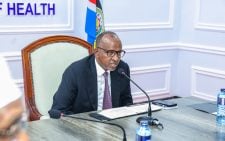
Health Cabinet Secretary Aden Duale recently said Kenya remains at risk because of its position as a major transport and trade hub in the region. He said border screening alone cannot stop disease outbreaks.
The Ministry of Health has expanded isolation and treatment capacity at Kenyatta National Hospital, the Kenya National Police Hospital and Moi Teaching and Referral Hospital. Authorities have also established facilities in more than 10 high-risk border counties.

At the same time, the government plans to establish an additional quarantine, isolation and treatment facility in Laikipia through a partnership with the United States government.
The project has generated political debate and public concern. Some leaders have questioned whether Kenya’s health system has sufficient resources to manage such arrangements, while others have raised concerns about the location of the proposed facility.
Duale has defended the plan, saying the facility will be operated by the Kenya Defence Forces rather than foreign personnel.
“It will be manned by the KDF. The Kenyan defence forces have one of the most robust medical wings led by a major general,” he said.
He also dismissed claims that the facility would serve only foreign nationals.
“It is for everybody, not necessarily US citizens who have contracted the virus,” he added.
As East African countries prepare for the ministerial meeting, health authorities continue to emphasise surveillance, rapid detection and regional cooperation as the most effective tools for preventing the outbreak from spreading further across borders.
Author
Kenneth Mwenda
Kenneth Mwenda is a business, sports, and politics digital writer with over seven years of experience in journalism, covering breaking news, feature stories, and in-depth analysis across a range of beats.
For inquiries, he can be reached at [email protected]
View all posts by Kenneth MwendaLatest News





Advertisement
More on News