Drought pushes Garissa children out of classrooms
By Kenneth Mwenda, January 10, 2026Drought has forced dozens of children out of school in parts of northern Kenya, underlining the growing impact of failed rains across arid and semi-arid regions.
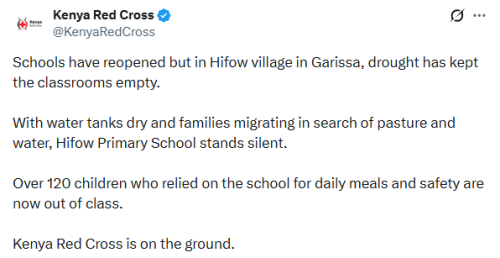
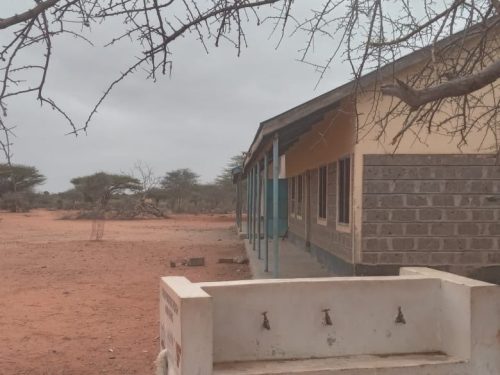
In a post on X on Saturday, January 10, 2026, the Kenya Red Cross said classrooms at Hifow Primary School in Garissa County remain empty despite schools reopening nationwide. The organisation said dry water tanks and the migration of families in search of pasture and water have left the school silent.
“Over 120 children who relied on the school for daily meals and safety are now out of class,” the Red Cross said, adding that its teams are on the ground responding to the situation.
Hifow village reflects a wider crisis affecting northern Kenya, where prolonged drought has disrupted livelihoods, education and access to basic services. Families dependent on pastoralism have moved with their livestock as water sources and grazing land dry up, leaving children without stable access to schooling.
The situation has drawn growing concern from local leaders, who are pressing the national government to declare the drought an emergency or national disaster.
On Friday, January 9, Mandera Deputy Governor Ali Maalim said the crisis had worsened beyond what county governments could manage on their own. After meeting Kenya Red Cross Society Secretary General Ahmed Idris, Maalim said leaders had agreed to push for an emergency declaration in Mandera, Turkana, Marsabit and Samburu counties.
“This year’s drought is far worse than 2023,” Maalim said, warning that without a large-scale response, the country risks preventable loss of life. He cited the failure of the October–November–December rains and the likelihood of further poor rainfall in coming seasons.
Maalim acknowledged that county governments had stepped up water provision, food relief and health and nutrition programmes. However, he said these efforts could not match the scale and speed of the crisis.
MPs warn of hunger
Similar warnings have come from Members of Parliament from the North Eastern region. In December, Eldas MP Adan Keynan said more than 2.1 million people in arid and semi-arid lands faced crisis-level hunger between October and January 2026.
Keynan said the poor performance of the short rains, combined with La Niña conditions and a negative Indian Ocean Dipole, had led to high temperatures and very low rainfall. He said many households had exhausted food reserves and now depend on markets, where prices have risen sharply.
Water shortages and depleted pasture have also hit livestock productivity, with diseases spreading among weakened animals. Leaders have warned that competition for water and grazing land is increasing tensions within pastoral communities, while women and children face higher risks of malnutrition and displacement.
MPs from the region have urged the government to expand emergency food aid, cash transfers and livestock support. They have also called for urgent investment in borehole drilling, water trucking and the repair of community water points.