Advertisement
DPP calls for digital revolution to transform Kenya’s justice system
Monday 27th July, 2026 03:43 PM|

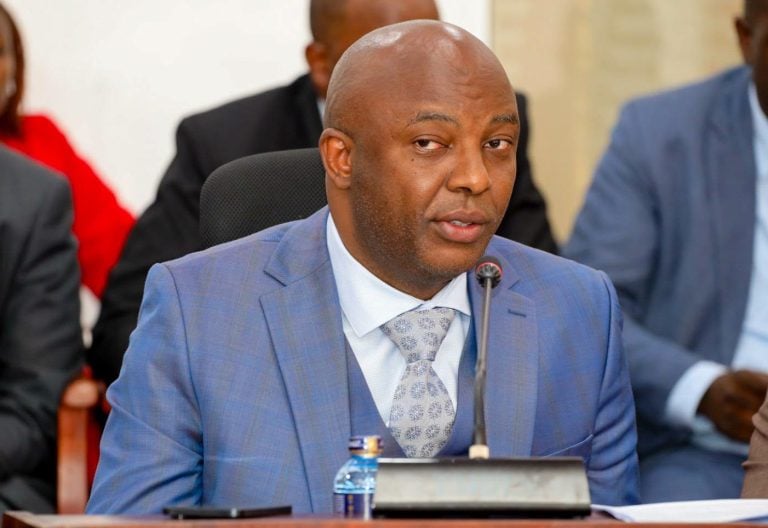
Director of Public Prosecutions (DPP) Renson Ingonga has called for a digital revolution in Kenya’s justice system, saying technology is now essential to improving efficiency, transparency and access to justice.
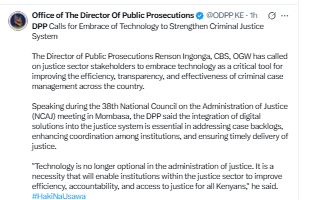
In a statement shared on his X account on Monday, July 27, 2026, Ingonga said justice sector institutions must embrace digital solutions to address case backlogs, improve coordination and ensure the timely delivery of justice.
The DPP was speaking during the 38th meeting of the National Council on the Administration of Justice (NCAJ) in Mombasa.
“Technology is no longer optional in the administration of justice. It is a necessity that will enable institutions within the justice sector to improve efficiency, accountability, and access to justice for all Kenyans,” Ingonga said.
/X
DPP targets case backlogs
You Might Also Like



Ingonga said the integration of technology into criminal case management would help justice institutions work more efficiently while improving accountability across the justice chain.
His remarks come as the justice sector continues to grapple with case backlogs and the need for better coordination among institutions involved in investigations, prosecution and adjudication.
The DPP said digital tools could also strengthen the sharing of information and improve the speed at which criminal cases are handled.
Koome unveils five justice reforms
The call for greater use of technology came on the same day Chief Justice Martha Koome unveiled five major justice-sector reforms during the NCAJ meeting.
Among them is the Justice Sector ICT Policy and Action Plan, which seeks to accelerate digital transformation across justice institutions, improve secure information sharing and reduce reliance on paper-based systems.
The Judiciary also launched new procedures on sexual and gender-based violence, People-Centred Justice Guidelines and Standard Operating Procedures for service delivery initiatives.
Koome said the reforms were aimed at making justice more accessible, efficient and responsive to the needs of ordinary Kenyans.
“The justice system is experienced by the public not as a collection of separate institutions, but as one interconnected justice chain,” she said.
Justice sector prepares for 2027 polls
The reforms come as justice institutions begin preparations for the 2027 General Election.
The NCAJ is expected to deliberate on election preparedness, sexual and gender-based violence, instant traffic fines, wildlife crime, identification parades, child-friendly justice, legal aid and other issues affecting the administration of justice.
Koome said the success of reforms should ultimately be measured by the experience of citizens seeking justice.
She said justice institutions must work together while maintaining their constitutional independence.
The DPP’s call for digital transformation and the reforms unveiled by the Judiciary signal a growing push to modernise Kenya’s justice system, with technology expected to play a bigger role in case management, information sharing and service delivery ahead of the 2027 polls.
Author
Latest News








Advertisement
More on News