Advertisement
Can new safety audits of boarding schools fix years of neglect?
Monday 01st June, 2026 02:42 PM|

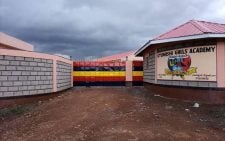
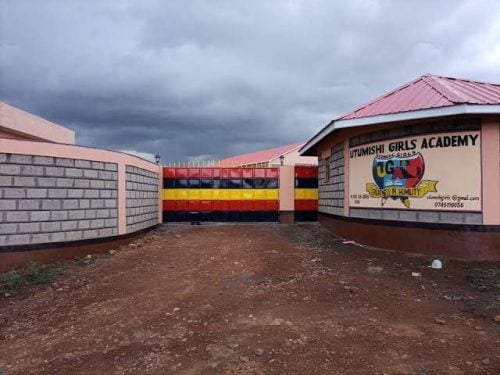
The Ministry of Education has ordered a fresh round of inspections in all boarding schools across the country following the deadly dormitory fire at Utumishi Girls Senior Secondary School in Gilgil that claimed 16 lives.
Speaking during an Elimu Mashinani education event in Wajir County on Sunday, May 31. 2026, Basic Education Principal Secretary Julius Bitok announced that education officials had been directed to carry out inspections in all boarding schools over the next 10 days beginning Tuesday, June 2, 2026.
According to Bitok, the exercise will focus on student safety and compliance with established standards.
“We have directed our officers to do very thorough inspections in the next 10 days at all boarding schools to confirm afresh whether they are meeting the safety standards and give recommendations,” Bitok stated.
You Might Also Like

He warned that school administrators found violating safety regulations would face consequences.

“And we are going to take very serious actions against any principal, any school, any teacher that deliberately violates the safety standards,” he added.
The directive comes amid growing concern over recurring school fires, many of which have resulted in deaths and injuries.
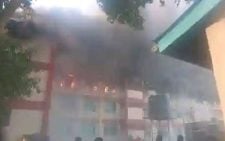
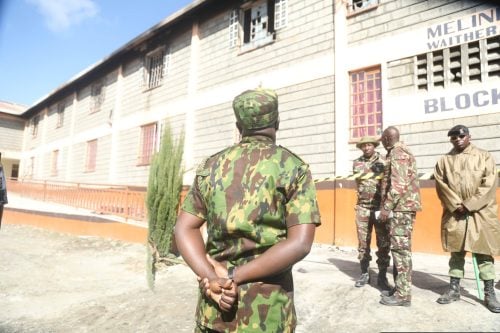
The latest tragedy occurred on May 28, 2026, when a fire swept through the Meline Waithera Dormitory at Utumishi Girls, killing 16 students and injuring others.
Preliminary findings raised concerns about overcrowding, with reports indicating the dormitory housed more students than its intended capacity and some learners slept in hallways instead of designated cubicles.

Utumishi incident
While the government insists the Utumishi incident is isolated, the disaster has revived questions about whether longstanding safety failures in boarding schools have been adequately addressed.
A six-year-old Performance Audit Report on Fire Safety Preparedness in Secondary Schools by the Office of the Auditor-General suggests many of the risks exposed by the Utumishi fire had already been identified years earlier.
“The audit revealed that implementation of fire safety measures put in place by the Ministry of Education has faced several challenges such as inadequate infrastructure, limited training on fire safety preparedness, insufficient guidance and counselling in schools,” the report stated.
“Secondary schools were not adequately prepared to handle fire incidents.”
The findings paint a troubling picture of systemic weaknesses that may have persisted despite repeated warnings.
Among the most alarming discoveries was that none of the 42 schools sampled had displayed evacuation maps on buildings as required under the Safety Standards Manual for Schools in Kenya. Some schools lacked functional assembly points, while others had emergency gathering areas obstructed by fences and barbed wire.
“Lack of a functional fire assembly point is likely to lead to confusion on where to assemble in the event of a fire, and some students and staff might end up being trapped in buildings, resulting in loss of lives or serious injuries,” the auditor warned.
The report also highlighted serious architectural shortcomings in dormitories.
“Some schools did not have doors at each end of the dormitory or clearly labelled emergency exits,” the report stated, adding that windows reinforced with metal grills and inward-opening doors could “hinder evacuation in the event of fire, leading to injuries and loss of lives.”
Ignoring audit reports?
Investigators examining the Utumishi fire have indicated that the emergency exit may have been locked from the outside or inaccessible during the blaze, precisely the type of danger identified in the audit.
Overcrowding emerged as another major concern. According to the report, the government’s push for a 100 per cent transition from primary to secondary education was not matched by adequate expansion of school infrastructure.
For instance, at Utumishi, the school has 715 students against 600 recommended capacity.
Thirty of the 40 schools visited had exceeded their approved student capacity, with one institution accommodating 519 students beyond its registered limit.
The audit further found that 34 boarding schools had double-decker beds without the required spacing, while six had introduced triple-decker beds.

“Schools are therefore congested, and this increases the risk of loss of lives in the event of a fire,” the report warned.
The description closely mirrors conditions reported at the Utumishi dormitory, where 135 double-decker beds occupied a single upper floor.
Bitok acknowledged that school leaders had previously been warned about the need to comply with safety regulations.
“Strictly speaking, I had a meeting with all the field officers, giving them firm instructions that they must stick to the safety standards of the schools. I also had a meeting with all the principals and directors of education, and I told them this is a very delicate time. Unfortunately, some principals did not listen,” Bitok said.
The upcoming inspections are expected to focus on dormitory safety, emergency exits, firefighting equipment, electrical installations and other measures designed to protect learners.
The question now is whether the renewed audits will finally enforce recommendations that have existed for years, or whether the findings will once again highlight problems that remain unresolved until the next tragedy strikes.
Author
Latest News







Advertisement
More on News