Can Kenya avoid another disaster as El Niño threatens again?
By Aloys Michael, June 4, 2026Kenya is once again staring at the possibility of devastating floods, landslides and food insecurity after the World Meteorological Organisation (WMO) warned that El Niño conditions are developing across the tropical Pacific Ocean.
With an Ebola threat also demanding public health vigilance in parts of Africa, Kenya faces a broader test of emergency preparedness.
Yet as scientists raise the alarm over an impending climate threat, questions are emerging about whether the country has learned anything from previous disasters or whether leaders remain trapped in a cycle of political distractions and reactive governance.
According to the latest WMO climate update released on June 2, 2026, there is an 80 per cent chance that El Niño will develop between June and August and more than a 90 per cent probability that the phenomenon will persist through November.
“A new WMO El Niño/La Niña Update indicates an 80% likelihood of an El Niño event during June-August 2026,” WMO stated.
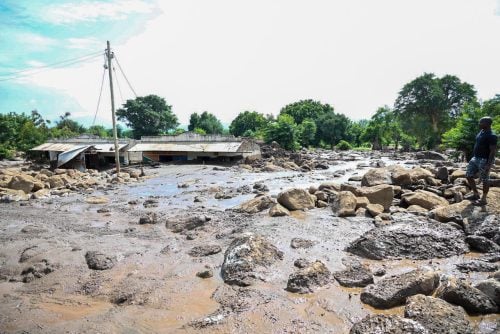
The forecast points to wetter-than-normal conditions across the Horn of Africa, including Kenya, increasing the likelihood of flooding, landslides, infrastructure destruction and disruption of food production.
The warning comes at a time when public attention has largely been dominated by political battles, succession debates and partisan manoeuvring as critics argue that the country’s leadership often resorts to political messaging and diversionary tactics whenever major crises loom, leaving little room for meaningful preparation and disaster mitigation.
A Performance Audit Report on Response to Floods in Kenya by the Office of the Auditor-General painted a troubling picture of the country’s disaster preparedness and emergency response systems.
“Despite existing structures for disseminating flood warnings, government response to humanitarian emergencies was characterised by inadequacies and deficiencies in response and recovery,” the audit observed.
That finding remains relevant today as meteorologists warn of another potentially destructive rainy season.

The report noted that flood victims often suffer long after floodwaters recede. According to the audit, previous flood disasters were exposed.
“Inadequacies in relief processes that caused suffering in camps, while many affected families were left on their own to struggle in recovery, with no additional assistance from the Government, thereby increasing their vulnerability to future flooding,” the report revealed.
Such findings raise concerns about Kenya’s readiness to cope with another major climate event should the WMO forecast materialise.
The El Niño fears
The WMO notes that El Niño is expected to contribute to higher-than-average global temperatures, with seasonal forecasts indicating above-normal temperatures across most parts of the world from June to August, increasing the risk of heat stress.
Scientists attribute the developing conditions to unusually warm waters beneath the surface of the Pacific Ocean, stretching across regions including Indonesia, the Philippines and Papua New Guinea, where temperatures are significantly above average.
The climate outlook shows a likelihood of wetter-than-normal conditions across the Horn of Africa, including Kenya, Somalia, Ethiopia, Eritrea, Djibouti and South Sudan.
The anticipated increase in rainfall raises concerns over flooding, landslides and widespread destruction of crops and infrastructure.
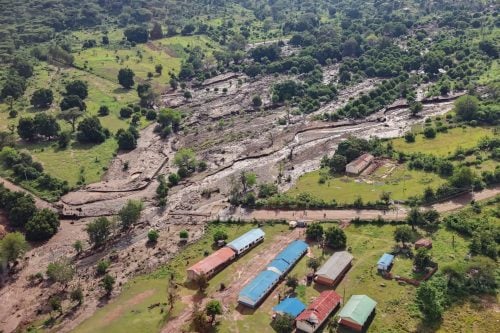
Such impacts could disrupt food production and supply chains, worsening food security challenges and increasing the risk of displacement among vulnerable communities.
“Rainfall probabilities are typical of El Niño patterns, and this is likely to contribute to a greater probability of extremes (e.g. increased rainfall and flooding), as well as drier conditions and droughts,” WMO stated.
Historically, such conditions have brought catastrophic consequences to Kenya. During the 1997-1998 El Niño episode, torrential rains caused widespread flooding, deadly landslides and extensive destruction of roads, bridges and public infrastructure.
More recently, the 2023-2024 El Niño event combined with a positive Indian Ocean Dipole to produce some of the worst floods witnessed in recent years.

Hundreds of thousands of people were displaced, homes were destroyed, and livelihoods were wiped out across several counties.
Despite those experiences, the Auditor-General’s report found fundamental weaknesses in disaster governance.
“The Government’s ability to adequately respond to flood-related humanitarian emergencies is hampered by challenges in preparedness, particularly in disaster risk governance,” the audit revealed.
One of the most striking findings was that Kenya still lacked a robust legal framework to govern flood response operations.
The audit noted that the development of a national disaster policy had been delayed for about 20 years, leaving emergency response agencies operating without sufficient legal backing and coordination mechanisms.
The report further revealed that disaster response remains heavily dependent on ad hoc arrangements.
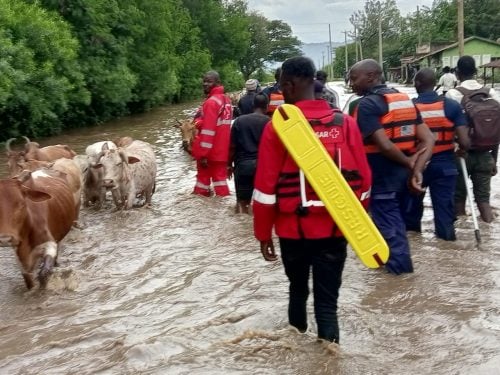
“Response at both levels of government is based on an ad hoc mechanism with no prior planning,” the audit stated.
This lack of planning could prove costly if the projected heavy rains trigger widespread emergencies in flood-prone regions.
The WMO has also warned that the anticipated rainfall patterns could affect agricultural production and supply chains, worsening food insecurity in vulnerable communities.
Crops may be destroyed by floods, while transport networks could be disrupted, limiting access to markets and essential supplies.
Equally worrying is the report’s finding that communities remain underprepared despite being the first responders during emergencies.
The audit observed that government efforts to build local capacity for disaster response and recovery have been insufficient, leaving vulnerable populations exposed when disasters strike.