Advertisement
Auditor: Seal loopholes used to misuse emergency funds
Tuesday 25th April, 2023 07:50 AM|
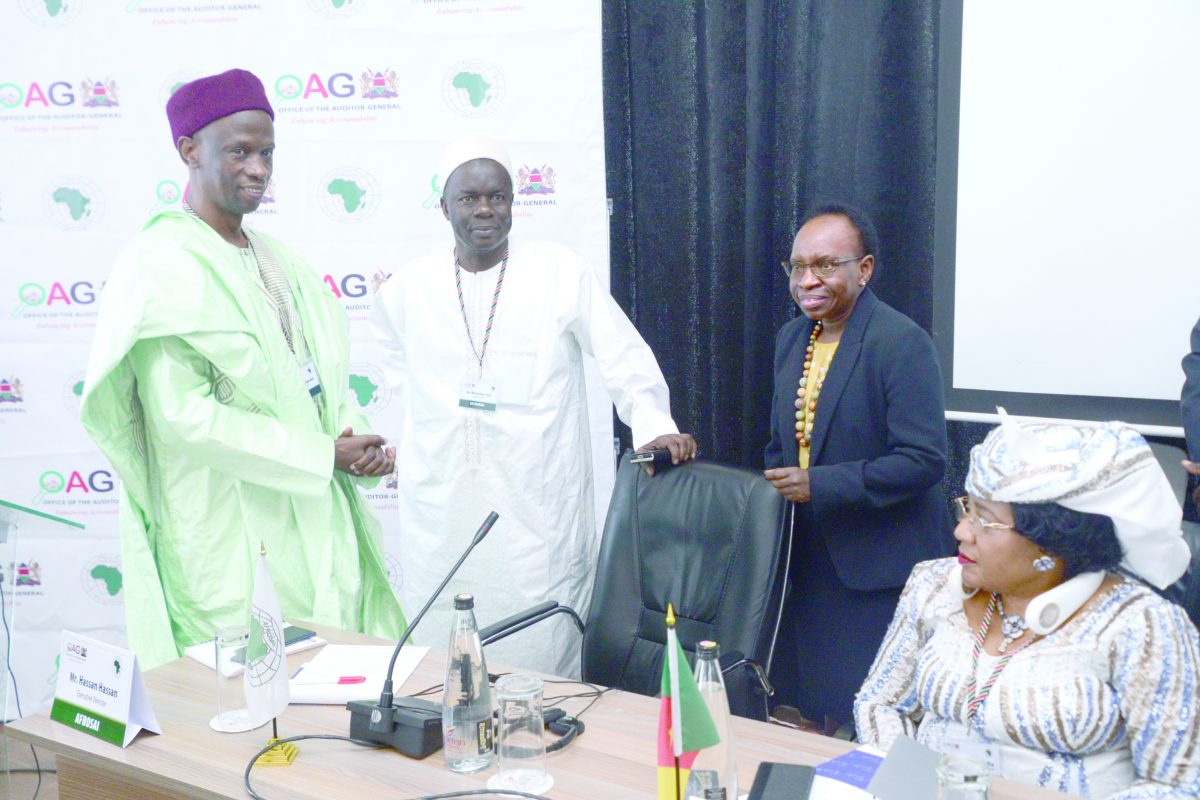
There is need to strengthen public financial frameworks to seal any loopholes that may lead to misuse of emergency response funds, Auditor General Nancy Gathungu has said. Gathungu yesterday said the Covid-19 pandemic was a major eye opener for Supreme Audit Institutions (SAIs) across the world.
She said SAIs have observed that responses to disasters increase opportunities for corruption and Illicit Financial Flows (IFFs) due to the more relaxed safeguards and override of controls.
“What we discovered is that when governments are responding to these crises there is a tendency to override controls that are already in place and ignore the public financial management systems and frameworks in the name of emergency response,” she said.
Auditor made the remarks when she opened a meeting of 18 heads of SAIs in Nairobi, which seeks to promote coordinated regional audit on IFF.
“We need to look at our public financial frameworks to strengthen them and ensure that embedded in them, is emergency response. If we have that, we will not have people going out of the system, we will not have corruption taking place or funds being lost or wasted because the public financial management system will be strengthened enough to accommodate emergency response and other institutions,” she explained.
Gathungu further noted that developing countries, in particular Africa, continue to bear the brunt of IFFs. Tax Transparency in Africa Report of 2022 says Africa loses in the range of Sh7 billion to Sh80 billion through IFF.
She also said the Economic Development in Africa Report 2020 by UN Conference on Trade and Development estimates that Africa loses about 3.7 per cent of its Gross Domestic Product annually in IFFs, amounting to nearly half of the Sh27 billion financing gap the continent must bridge to achieve the Sustainable Development Goals.
“I would not want to say the amount that Kenya loses out of the Sh80 billion at the moment until we get all our data in place,” she said when asked for a specific amount for Kenya.
She explained that a number of institutions from Africa will carry out a joint audit because countries are still looking at the numbers to establish how much was lost during Covid-19 and how much is lost during other crises.
Total figures
“Corruption and illicit financial flow is sometimes not only difficult to audit but also to investigate but we can now work together to get the total figures. At the moment, we cannot say how much we lost but generally all over the world, those in developing and developed nations, a lot of funds were lost during response to Covid-19 especially through relief packages and procurement of commodities,” she explained.
She said her office has been recommending, under the Public Finance Management Act, is calling to account the person responsible for losses, wastage and corruption within those institutions to avoid punishing people who require services.
“The public audit act allows me to recommend withholding of funds where there is wastage but the one thing I ask myself… if like, for instance, it is a county government and you recommend withholding of funds, who are you punishing in the end, is it the people in that county or officials or leadership wasting the funds?” she posed.
Gathungu said SAIs will work with other organisations in the accountability chain like Asset Recovery Agency, Central Bank of Kenya, financial reporting centre, Ethics and Anti Corruption Commission and other criminal investigation agencies to coordinate together not just in the country but also in Africa and share information.
In her reports, Gathungu said she indicates where funds are getting lost and it is for other institutions to take up investigation and prosecute to finality and ensure people are brought to book “When it comes to corruption you do not look for evidence of the money stolen, you look for evidence of what is missing in terms of development and service delivery,” she said.
Author
Irene.Githinji
View all posts by Irene.GithinjiLatest News






Advertisement
More on News