Advertisement
AUC chief seeks political will, resources for Agenda 2063 amid aid cuts
Sunday 01st February, 2026 07:29 AM|
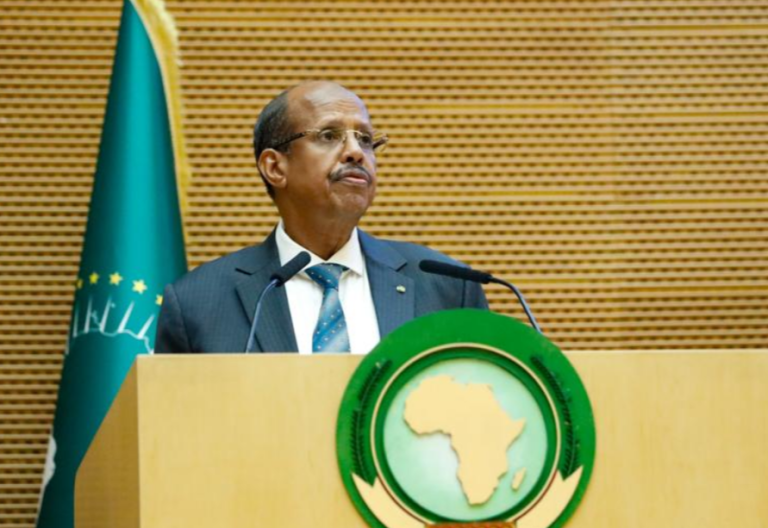
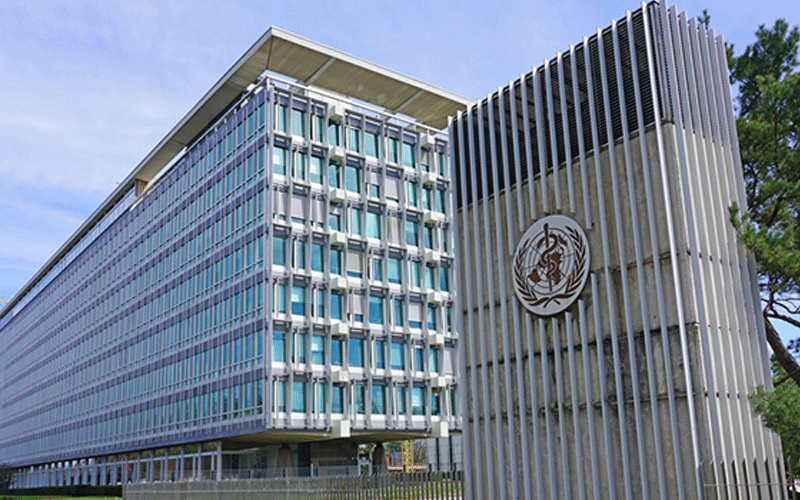
The African Union Commission (AUC) Chairperson, Mahmoud Ali Youssouf, has warned that Africa’s long-term development ambitions under Agenda 2063 are increasingly at risk amid declining international aid, including the United States’ withdrawal from the World Health Organisation (WHO), which has raised concerns about global health.
Youssouf has said the shifting global funding landscape has exposed long-standing weaknesses in financing, institutional capacity and political commitment across the continent, urging African leaders to demonstrate stronger political will and accelerate domestic resource mobilisation to sustain Africa’s transformation agenda.
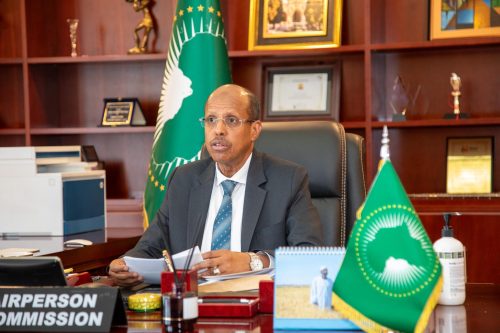
Speaking on Saturday, January 31, 2026, at the Ministerial Follow-Up Committee on the Implementation of Agenda 2063, Mahmoud said the current global funding environment has exposed deep-seated challenges in financing, institutional capacity and political commitment across the continent. He noted that reduced external support has heightened the urgency for African governments to take greater ownership of the agenda.
Mahmoud stressed that leadership transitions across Africa must move beyond symbolic or ceremonial exercises and instead serve as catalysts for renewed energy, urgency and decisive action in implementing the continent’s long-term development blueprint.
You Might Also Like
“This is not a technical failure; it is a political choice,” Mahmoud said, warning that business as usual will not deliver the Africa envisioned under Agenda 2063, particularly at a time when traditional development partners are scaling back financial commitments.
While acknowledging that the Second Ten-Year Implementation Plan of Agenda 2063 provides a clear and structured roadmap for accelerating progress, the AUC Chair cautioned that ambition without adequate and predictable financing will not yield the desired transformation.
He said Agenda 2063 remains chronically underfunded, flagship projects continue to face persistent implementation constraints, and institutions mandated to deliver results often lack sufficient technical and operational capacity.
He called for stronger alignment between Africa’s development vision and available resources, improved institutional capacity, and enhanced oversight and accountability mechanisms at national, regional and continental levels. Mahmoud also urged the full operationalisation of existing implementation tools, reform-oriented governance, and the removal of policy and institutional bottlenecks that continue to slow progress.
The AUC Chair further emphasised that Agenda 2063 must move beyond policy discussions, strategy documents and conference rooms to produce tangible improvements in the daily lives of African citizens. Without visible impact on the ground, he warned, the continent’s aspirations risk remaining abstract rather than becoming an irreversible transformation.
Agenda 2063 is Africa’s strategic blueprint and master plan for transforming the continent into a global powerhouse of the future. It aims to achieve inclusive and sustainable development and represents a concrete expression of Pan-Africanism, unity, self-determination, freedom and shared prosperity.
Author
Latest News







Advertisement
More on News