Advertisement
Ali Maalim attributes Northern Kenya’s marginalisation to historical planning decisions
Wednesday 18th February, 2026 08:39 AM|

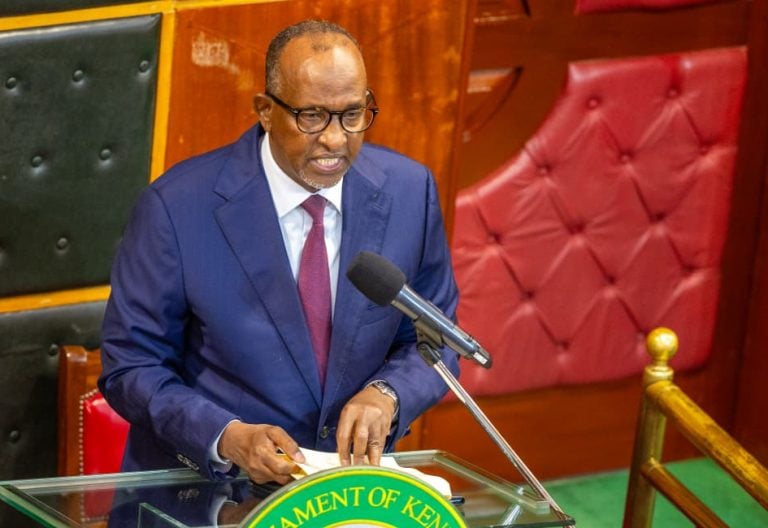
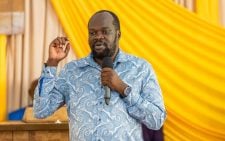
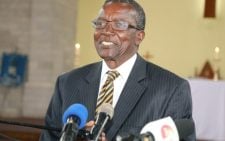
Mandera County Deputy Governor Ali Maalim Mohamed has strongly defended devolution’s achievements in northern Kenya, dismissing claims of widespread corruption as dishonest while acknowledging the region’s historical neglect.
Speaking in an interview with a local TV station on February 18, 2026, Maalim challenged critics to visit Mandera and witness progress firsthand.
“It is quite interesting that Ahmed has been to Mandera one time and now he is an expert in Mandera. I would have asked my brother and I will host him to come to Mandera and see for himself what kind of development and progress that has been made over the last 13 years or so,” Maalim said.
He contrasted pre-2013 Mandera town, which had only a “four-room block” as the semblance of government presence, with current advancements under county governments.
Historical neglect and policy legacy
You Might Also Like
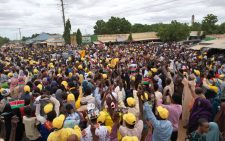
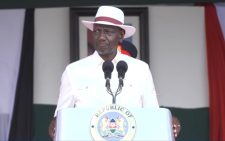
Maalim attributed past underdevelopment to deliberate policies like Sessional Paper No. 10 of 1965, which prioritised investment in high-potential agricultural areas while deeming arid and semi-arid lands like northern Kenya as “low potential.”
He noted that travelling from Isiolo to Mandera once took three to four days due to poor roads, describing such infrastructural gaps as a legacy not created by current county leaders.
“That has systematically marginalised northern Kenya… If any one of you had a chance to read the sessional paper number 10, which has clearly, up to today, it’s alive, stated that Kenya’s resources and development will be focused in high productive areas,” he explained.
On allegations of corruption, Maalim argued: “It will be very dishonest of us the leaders… to come out and claim that suddenly there is corruption in Mandera.” He emphasised that Kenya’s global corruption rankings affect the entire country, not just the north. Instead, he urged focus on devolution’s “very big progress and big positive achievement” for northern Kenya.
Government development push and political tensions
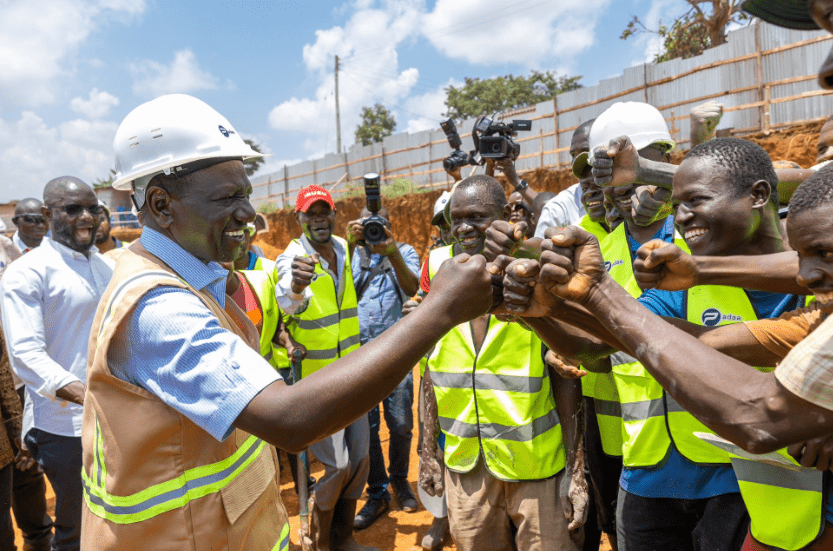
This comes days after President William Ruto reaffirmed his administration’s commitment to reversing decades of marginalisation in northern Kenya, highlighting major infrastructure investments, including the 750km Isiolo-Mandera road valued at Ksh100 billion.
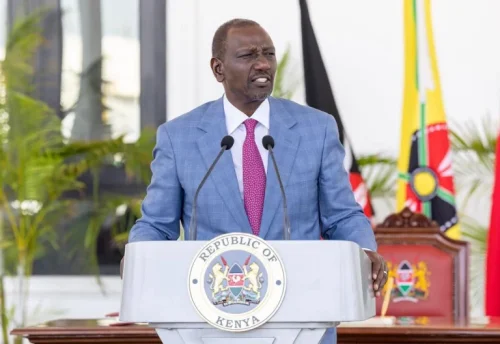
“We are building one of the longest and most comprehensive roads in Kenya – 750km Isiolo-Mandera road at a cost of Ksh100 billion – to demonstrate our commitment to developing every part of our country,” Ruto said following a visit to Garissa town on February 11, 2026.
He toured the ongoing construction on February 12, framing the project as part of broader efforts to address historical injustices. “Under our leadership, we will correct the past of marginalisation and discrimination, and rewrite a future of transformation that leaves no Kenyan, no region and no community behind,” he added.
Former Deputy President Rigathi Gachagua has criticised the pace of development, persistent drought, and misuse of public funds in northern Kenya.
Speaking on February 10, 2026, he urged the President to declare the drought a national disaster and deliver aid personally. Gachagua further claimed that over Ksh1 trillion in devolved funds since 2013 has been misappropriated, leaving residents in poverty despite allocations.
Author
Latest News


Advertisement
More on News