Advertisement
Ruto’s affordable housing push faces hidden threat as global steel crisis deepens, report
Friday 05th June, 2026 11:29 PM|

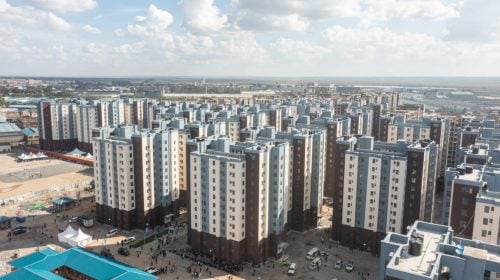
President William Ruto’s flagship Affordable Housing Programme is helping fuel a construction boom across Kenya, with thousands of housing units, roads, industrial parks and energy projects rising across the country.
But a new global steel crisis could expose a hidden vulnerability at the heart of the government’s development agenda: Kenya’s growing dependence on imported steel.
A new OECD Steel Outlook 2026 report warns that global steelmaking capacity continues to expand despite weak demand, with excess capacity projected to reach 745 million tonnes by 2028, levels approaching those seen during the last major steel crisis.
The report says the imbalance is being driven largely by government subsidies and non-market interventions in major producing countries, particularly China.
You Might Also Like



For Kenya, the implications are both immediate and long-term. Steel is a critical component in housing construction, roads, bridges, electricity transmission infrastructure, industrial parks and manufacturing facilities.
Cheaper imported steel can reduce construction costs and help accelerate the delivery of affordable housing projects.
Yet industry analysts warn that prolonged dependence on low-cost imports could weaken domestic manufacturing capacity and leave Kenya vulnerable to future supply shocks.
The OECD notes that countries with excess steel capacity are increasingly pushing surplus production into global markets at low prices.
According to the report, Chinese steel exports surged to a record 131 million tonnes in 2025, representing a 153 per cent increase from 2020 levels, adding that weak domestic demand in China has forced producers to seek foreign markets for their output.
“Countries with excess capacity are flooding world markets with steel,” the report states, warning that subsidised production is distorting competition and placing pressure on producers elsewhere.
The concern arrives at a time when Kenya is aggressively pursuing large-scale infrastructure development.
Beyond affordable housing, the government is investing heavily in road construction, industrial parks, special economic zones, power transmission projects and manufacturing hubs under its economic agenda.
Trade imbalance
The OECD argues that global steel demand remains fragile despite continued capacity expansion. Demand is expected to grow by only 0.9 per cent annually through 2030 while steelmaking capacity continues to rise, widening the gap between supply and demand.

“Global steelmaking capacity continues to expand despite dim prospects for steel demand,” the report says, adding that excess capacity is expected to increase further over the next three years.
For ordinary Kenyans seeking affordable homes, cheaper steel may appear to be good news. Lower material costs can help developers reduce construction expenses and potentially make housing units more affordable.
However, the longer-term picture is more complicated. The OECD warns that extensive subsidies in some countries are creating an uneven playing field.
It found that the median Chinese steel firm received subsidies equivalent to 15 times those available to comparable producers elsewhere relative to asset size. Such support allows producers to maintain output even when market demand weakens.
Industry experts say this creates a difficult environment for manufacturers in developing economies, including those in East Africa, which must compete against heavily subsidised imports.
The report also highlights another growing concern: economic security.
“Steel is required in nearly all industrial activities, construction and infrastructure, all forms of energy generation, and is a critical input for numerous strategic sectors of the economy,” the OECD notes.
That warning resonates in Kenya, where policymakers are pushing to expand domestic manufacturing while reducing reliance on imports.
If local steel production fails to keep pace with national demand, critical sectors ranging from housing to energy infrastructure could become increasingly exposed to disruptions in global supply chains.
The challenge for Kenya is therefore balancing two competing objectives. On one hand, affordable imported steel can support President Ruto’s housing ambitions and reduce project costs.
On the other, overreliance on foreign steel risks undermining local industrial growth and weakening long-term economic resilience.
As governments around the world introduce tariffs, anti-dumping measures and trade restrictions to shield their steel industries from global overcapacity, Kenya may soon face difficult questions about how much of its development future should depend on steel produced elsewhere.
Author
Latest News





Advertisement
More on Business