Advertisement
Alternative rites still thriving
Thursday 06th February, 2020 06:51 PM|
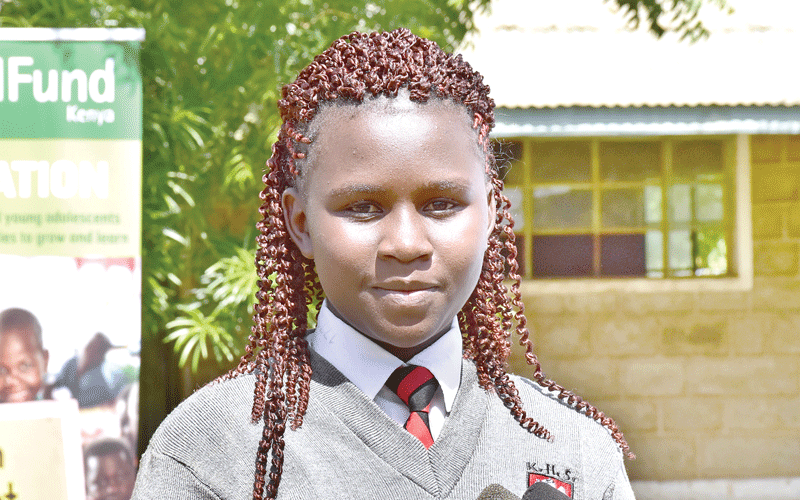
Ann Nyathira
Christine Makena just completed a four-day Alternative Rights of Passage (ARP) training programme, a practice that allows girls to transition into adulthood without being circumcised.
The Kenya High student, who hopes to become a doctor after completing school, now believes she is empowered enough to go for it.
“I am fortunate to have had this opportunity to learn and understand more about FGM, we were taught about its dangers and why we shouldn’t undergo it.
We also had conversations about education, child rights, sexual abuse, self-esteem, good health, culture, and harmful traditions,” says Christine.
The graduation took place at at Kamarandi Secondary School in Tharaka Nithi county, one of the 28 counties with the highest prevalence of Female Genital Mutilation (FGM).
Efforts to fight the vice have been ongoing for years, with ARP introduced in the county about 23 years ago by Maendeleo Ya Wanawake organised in collaboration with Programme for Alternative Technology in Health (Path) as a way to accelerate change and fight against genital mutilation.
ARP is a ritual that aims to replicate or mimic certain aspects of the traditional initiation process without the physical cut.
It takes varied forms in different communities, but some common aspects include community sensitisation, education, and female empowerment.
The progamme, in collaboration with Child Fund, has already started bearing fruit.
Abed Rwito, the area chief, says strong commitment and increased concerted actions in the fight against FGM has seen positive changes in the area in recent years.
“Although the practice has endured, the change is visible, the harmful practice has drastically reduced in recent years due to efforts by stakeholders and collaboration with the ethnic groups.
Our main challenge is parents who take their children to a different region such as Embu to undergo mutilation, but we are working with regional and national actors to support holistic and integrated initiatives to ensure we achieve zero FGM tolerance,” he says.
Emily Kanana, child protection officer with Child Fund, says the organisation has increased its efforts in fighting the evil act that limits opportunities for girls and women to realise their rights and full potential.
She calls for increased action to end female genital mutilation and fully uphold the human rights of all women and girls.
“We have increased our efforts in order to achieve grassroots change by outpacing the practice and we increasingly encourage not just pubescent girls, but also the parents and ethnic elders to embrace this alternative coming of age ritual in order for the girls to continue with their education rather be ‘lost to’ to FGM and early marriage,” says Kanana.
Author
People Reporter
View all posts by People ReporterLatest News




Advertisement
More on Lifestyle