Advertisement
5 breast cancer warning signs to watch for
Saturday 04th October, 2025 01:10 PM|

As October 2025 marks the 40th Breast Cancer Awareness Month, attention turns to early detection, a key factor in saving lives.
In Kenya, breast cancer remains the most common cancer, with 7,243 new cases annually, accounting for 16.2% of all cancers, and ranks as the second-highest cause of cancer deaths, claiming 3,398 lives, according to GLOBOCAN 2022.
Across Africa, women are often diagnosed at a younger age, between 45.8 and 59.6 years, 10-15 years earlier than in Western countries, with 50-70% presenting at advanced stages.
Also watch: Health PS Oluga says 95% of cancer patients under SHA are not paying anything
You Might Also Like
This underscores the urgency of recognising warning signs early; they include:
- A breast lump or thickening, often without pain
- Change in size, shape or appearance of the breast
- Dimpling, redness, pitting or other changes in the skin
- Change in nipple appearance or the skin surrounding the nipple (areola)
- Abnormal or bloody fluid from the nipple
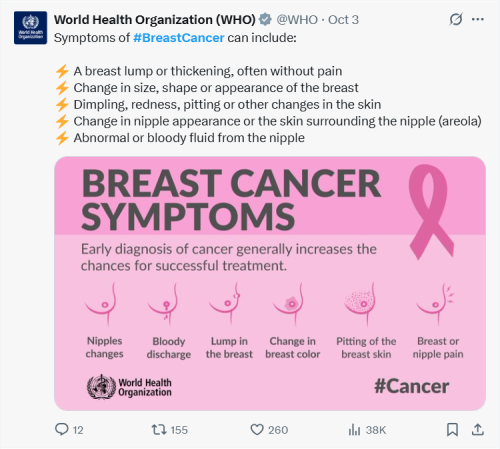
Spotting the early symptoms
One of the earliest and most common indicators of breast cancer is a lump or thickening in the breast, which may not be painful. These lumps can feel firm or hard and vary in size. For many Kenyans, where late-stage diagnoses are common, regular self-exams are critical.
The World Health Organization notes that half of all breast cancers occur in women without specific risk factors beyond age and sex, making awareness and routine checks essential.
Changes in the size, shape, or contour of the breast can also signal trouble. This might include asymmetry, unusual swelling, or sudden changes in the overall appearance. In younger African women, these changes are sometimes mistaken for hormonal fluctuations, delaying proper evaluation. Regular clinical check-ups alongside self-exams help catch such alterations early, especially in areas with limited screening services.
Skin changes are another key warning. Dimpling, redness, pitting, or a texture resembling orange peel can indicate that cancer has affected the underlying tissue or lymphatic system. These signs often suggest more advanced disease, and timely detection through education and screenings can make a critical difference.
Nipple changes and unusual discharges
Changes in the nipple or areola, such as inversion, flattening, scaling, or redness, should not be ignored. These may result from cancer affecting the milk ducts or surrounding tissue. Similarly, abnormal or bloody fluid from the nipple, especially from a single breast, is a red flag requiring immediate medical evaluation.
While breast cancer in men is rare, these symptoms are equally relevant across genders. Awareness campaigns in Kenya, Ghana, and Nigeria encourage women and men to recognise these signs early to avoid late-stage complications.
Lifestyle and prevention tips
Alongside vigilance for warning signs, adopting healthy lifestyle habits can reduce the risk of breast cancer.
A diet rich in fruits, vegetables, and lean proteins; regular physical activity; and avoiding alcohol and tobacco can complement early detection efforts. Community walks, screenings, and educational programmes during Breast Cancer Awareness Month 2025 emphasise these preventive strategies.
With global breast cancer mortality at 670,000 in 2022, combining self-awareness with timely medical care is crucial. Early detection dramatically improves survival, with localised-stage breast cancer offering a 99% five-year survival rate.
Individuals are urged to stay proactive, get checked regularly, and encourage others to do the same. Raising awareness, recognising symptoms, and embracing healthy habits together form a strong front in the fight against breast cancer.
Author
Latest News







Advertisement
More on Lifestyle