World Bank delays Ksh78B loan to cushion fuel prices in Kenya: What govt can do next
By Mustafa Juma, July 14, 2026Kenya’s bid to secure an emergency Ksh78 billion (US$600 million) World Bank loan to cushion the economy against rising global fuel prices has hit an unexpected hurdle after the lender sought more detailed information on how the funds would be spent.
The delay comes at a delicate time for the Kenyan economy, with the government battling the ripple effects of geopolitical tensions in the Middle East that have driven up international crude oil prices, increased the country’s fuel import bill and piled pressure on inflation.
While the World Bank has not rejected Kenya’s request outright, the latest development means Nairobi may have to wait longer for the emergency financing it hoped would help stabilise fuel prices and protect the economy from further external shocks.
Why Kenya wanted the emergency loan
The government first sought rapid World Bank financing in April after the conflict involving Iran disrupted global oil markets and threatened fuel supplies across several import-dependent economies.
Like many African countries, Kenya imports nearly all of its petroleum products, making it highly vulnerable whenever international crude prices surge.
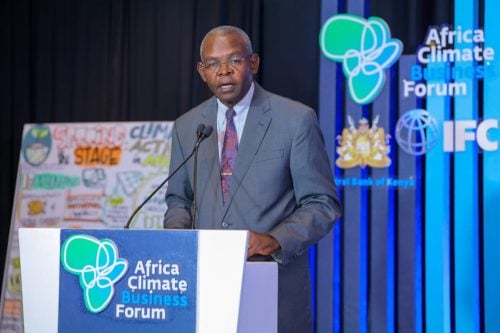
Central Bank Governor Kamau Thugge said at the time that the emergency financing was intended to cushion the economy from the external shock, protect foreign exchange reserves and complement a separate World Bank budget support programme already under negotiation.
The funding was also expected to ease pressure on the Petroleum Development Levy (PDL), which the government has increasingly relied upon to cushion consumers against steep fuel price increases.
Why the World Bank pressed pause
According to reports, the World Bank delayed processing the emergency facility after seeking a more detailed spending framework from the Kenyan government.
The lender wants greater clarity on exactly how the money would be utilised, monitored and accounted for before presenting the request to its Board of Executive Directors.
The delay is separate from Kenya’s broader US$750 million (about Ksh97 billion) Development Policy Operation (DPO), which has already been approved to support governance reforms, public financial management and social protection measures.
Why the delay matters
Although fuel prices have recently moderated following tax interventions and government subsidies, Kenya remains exposed to volatility in international energy markets.
Petroleum imports account for a significant share of the country’s foreign exchange demand, meaning any sustained increase in global oil prices quickly translates into higher pump prices, increased transport costs, rising food prices, more expensive electricity generation, higher inflation, and increased pressure on the Kenyan shilling.
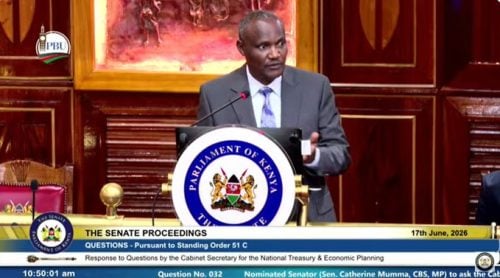
The World Bank itself recently downgraded Kenya’s economic growth forecast for 2026 from earlier projections, citing elevated energy costs and global uncertainty as major risks. The lender warned that persistently high fuel prices could weaken household purchasing power and push more Kenyans into poverty.
What options does Kenya have?
With the emergency funding delayed, policymakers still have several tools available to cushion consumers and maintain macroeconomic stability.
1. Continue using the Petroleum Development Levy
The most immediate option is continued deployment of the Petroleum Development Levy Fund.
The government has already spent billions of shillings from the fund to moderate pump prices following the Middle East crisis.
While this offers quick relief, it is expensive and cannot be sustained indefinitely without replenishing the levy.
2. Adjust taxes temporarily
Another option is temporary tax relief.
Earlier this year, Kenya reduced VAT on petroleum products, leading to lower pump prices for consumers.
If global oil prices spike again, Treasury could consider extending or expanding targeted tax measures, although doing so would reduce government revenue at a time when fiscal space remains tight.
3. Fast-track World Bank requirements
The quickest long-term solution may simply be satisfying the World Bank’s additional requirements.
Submitting a detailed spending framework and accountability mechanisms could accelerate approval of the emergency facility and unlock much-needed foreign exchange support.
Such compliance would also strengthen Kenya’s credibility with other development partners and international lenders.
4. Protect foreign exchange reserves
The Central Bank can continue using its foreign exchange reserves prudently to smooth excessive volatility in the shilling while avoiding heavy intervention that rapidly depletes reserves.
Maintaining reserve buffers helps reassure investors and keeps import financing stable during periods of global uncertainty.
5. Diversify energy sources
The current situation once again highlights Kenya’s heavy dependence on imported fossil fuels.
Expanding electric mobility, geothermal power, wind energy and biofuels could reduce future exposure to global oil shocks.
Although these solutions take years to implement, they offer a more sustainable path than repeated fuel subsidies.
Bigger fiscal challenge
The delay also comes as Kenya continues balancing debt sustainability with growing financing needs.
The country is simultaneously implementing fiscal reforms, negotiating concessional financing and attempting to reduce reliance on expensive domestic borrowing.
The recently approved World Bank Development Policy Operation is expected to support reforms aimed at improving procurement, strengthening public financial management and expanding social protection, all measures intended to improve investor confidence and create fiscal savings over time.