Wooed for numbers, ignored for voice: Gen Z’s political reality
By Faith Lagat, October 4, 2025In Kenya, the youth, particularly Generation Z, have become the hottest political commodity as the 2027 General Election draws closer.
Across the political divide, leaders are on an aggressive charm offensive, rallying millions of young Kenyans to register as voters. But beneath the energetic campaigns and catchy messaging lies a fundamental question: will Gen Z be treated as equal stakeholders in shaping Kenya’s future, or merely as numbers to be counted on election day?
Leaders tap Gen Z’s cultural pulse
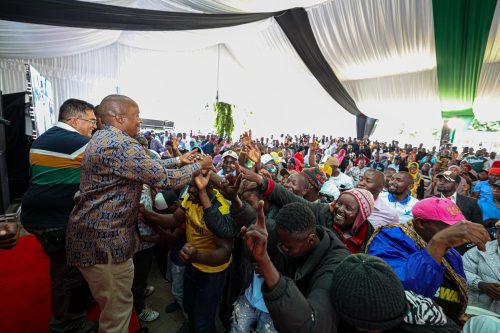
Political leaders are sparing no effort to mobilise young voters, using both traditional and digital platforms to reach them. Embakasi East MP Babu Owino has emerged as one of the most vocal figures in this push. On October 4, 2025, he posted on X, urging young Kenyans to register as voters while linking the exercise to popular weekend activities such as watching English Premier League matches.
His message cleverly dismissed the notion that youth activism is confined to social media, calling on them to translate their digital influence into tangible action at Independent Electoral and Boundaries Commission (IEBC) registration centres.
Babu’s posts on September 30 and October 3 reveal a coordinated strategy. By encouraging young voters to transfer their votes to Nairobi as he eyes the gubernatorial seat, he has tapped into Gen Z’s online spaces with a mix of humour and urgency. His rallying aligns with the IEBC’s Continuous Voter Registration (CVR) drive, which targets 6.3 million new registrants to bridge the gap left by 8 million eligible voters who abstained in 2022.
The response has been noticeable. Nairobi has recorded the highest number of new registrations over four days, an early sign that the youth message is resonating. Leaders from across the political spectrum are following suit.
Former Chief Justice David Maraga has launched a campaign to register five million new voters, while IEBC Chairperson Erastus Ethekon projects that 70 per cent of 2027 voters will be youth. Wiper leader Kalonzo Musyoka has also joined in, calling for greater transparency in the electoral process and diaspora voting access.
For political actors, the math is simple. Gen Z represents over 13 million potential voters, according to Agano Party Secretary General Pessa Odanga, enough to swing a presidential race. The youth vote is a powerful bloc, and leaders are eager to harness it.
Numbers over voices
Yet, this aggressive mobilisation reveals a paradox. While Gen Z are being wooed for their numerical strength, their political voices often remain sidelined. The same leaders urging them to register rarely engage meaningfully with their demands for systemic change, accountability, and better governance.
This contradiction was evident during the 2024 “Occupy Parliament” protests, when thousands of young Kenyans took to the streets to challenge governance failures and economic hardship. Their ability to organise and amplify grievances showed that Gen Z is not apathetic; they are politically conscious and ready to act.
However, as former Interior Cabinet Secretary Fred Matiang’i noted during a Nakuru meeting on October 3, 2025, bureaucratic hurdles like delays in national ID issuance continue to frustrate their participation. While he pledged to streamline registration through mobile and centralised points via the Jubilee Party, such logistical solutions only scratch the surface. The deeper issue is that political structures often treat youth as tools for mobilisation rather than partners in policy formulation.
Concerns about data security have further complicated the picture. Lawyer Saitabao Ole Kanchory dismissed fears over voter registration on September 30, arguing that youth data is already widely accessible online.
IEBC Commissioner Anne Nderitu has repeatedly assured the public of compliance with the Data Protection Act, but scepticism persists. A TIFA survey conducted on September 24 found that only 18 percent of Kenyans are “very confident” in the IEBC’s ability to run a free and fair election, down from 58 percent in 2022.
Beyond mobilisation
As the numbers grow, so does the political spectacle around Gen Z. Martha Karua’s People’s Liberation Party has framed the registration drive as a means to hold the Kenya Kwanza administration accountable. Peter Salasya and other leaders have echoed similar sentiments, underscoring the youth’s role as a potential game changer.
But despite the loud rallies and colourful campaigns, Gen Z remains caught in a system that celebrates their turnout but neglects their input. Leaders are eager to see them at polling stations but slow to address their demands for jobs, education reform, and genuine accountability.
For their participation to translate into power, Kenya’s political class must go beyond wooing youth as a statistical advantage. Engaging their ideas, listening to their grievances, and involving them in decision-making processes is essential.
The IEBC’s promise of a credible voter register is only part of the equation. Credibility must extend to political leadership that treats young voters as partners, not pawns.
Kenya’s 2027 election could mark a turning point if Gen Z turns its numbers into a unified voice that demands more than token gestures. Until then, the rallies may continue, but the real question remains: will their voices finally be heard?