Advertisement
Why China is emerging tech superpower
Saturday 19th July, 2025 05:00 AM|
At a time when the global innovation landscape is strained by rising tech protectionism, a widening innovation divide between the Global North and the Global South, China is advancing a distinctive model of innovation through a three-dimensional approach.
As the global economy is being tested by geopolitical instability, accelerated technological change and mounting sustainability challenges, China is turning to emerging technologies as a key lever to reshape global growth dynamics.
China is the world’s largest digital economy, and its strategic investments in areas such as Artificial Intelligence (AI), 5G, the Internet of Things (IoT) and blockchain are not only accelerating domestic economic transformation, but also injecting fresh momentum into the global economy through technology spill-over, standards-setting and the building of shared ecosystems.
China is demonstrating that the highest value of technological innovation lies in its ability to break growth bottlenecks through systemic spillovers, enabling more economies to share in the dividends of technological progress.
You Might Also Like


The country’s industrial internet ecosystem is already among the most advanced globally, with more than 100 million industrial devices connected through leading platforms.
China’s large-scale application of emerging technologies is doing exactly that by unleashing new drivers of productivity through restricting technology processes and unlocking efficiency gains from end to end.
Based on the success of the Special Economic Zones, China has created Economic and Technological Development Zones.
They have the purposes of building up high-tech industries, attracting foreign investment, increasing exports and improving the regional economy.
China has reached a new stage in its economic development with much greater innovation capabilities in its universities and domestic companies, and on many indicators, China now leads the US. It is China’s progress on innovation that poses a significant challenge to the US and its democratic allies.
And now China is intent on developing a new generation of military technologies that will surpass those of the US and change the nature of warfare to China’s advantage.
While innovation strategy includes the absorption of Western technology, Beijing is emphasising innovations and disruptive advances in Artificial Intelligence, unmanned weapons systems and directed energy weapons.
Quantum technology leadership will give China an advantage in offensive intelligence operations and encryption.
Advanced weapon systems will increase China’s geopolitical and combat options.
Beijing is also pursuing a strategy of innovation-driven development to bring about its economic transformation and military modernisation.
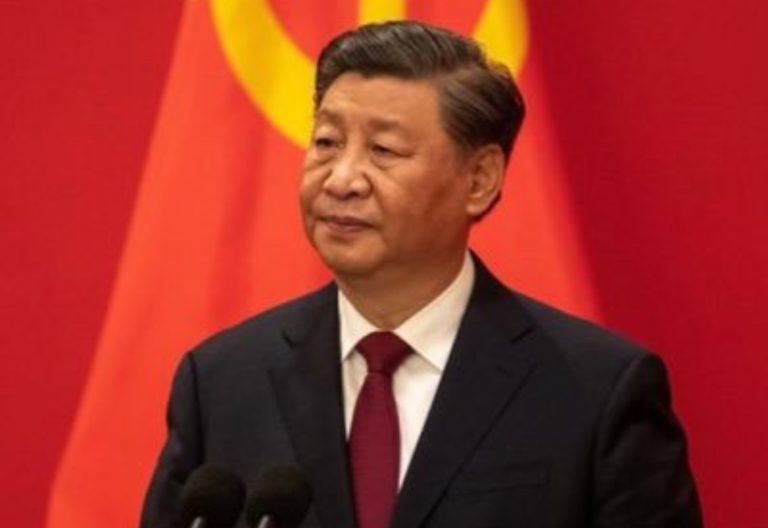
During the 19th Party Congress in 2017, Chinese President Xi Jinping highlighted the country’s ambition to transform itself into a ‘Science and Technology Superpower”.
However, in recent remarks, Jinping has called for breakthroughs in AI and quantum science.
Now, China is producing cutting-edge products, from consumer electronics like smartphones and smart home appliances to advancements in electric vehicles, renewable energy and robotics.
China’s global market share in advanced industries like telecommunications equipment, machine tools and high-speed rail has also grown significantly.
The global economy is currently grappling with deep-rooted challenges as traditional engines of growth lose steam.
Environmental and resource constraints are forcing a rethink of development models.
Growing technological monopolies are widening innovation gaps, leading to a state of “low-efficiency equilibrium” in global growth.
China’s global market share in advanced industries like telecommunications equipment, machine tools and high-speed rails has also grown significantly.
The spillover of China’s achievements in emerging technologies is no longer simply about commercial gains, but also about a model for delivering global public goods.
The rapid advancement and wide adoption of these technologies are a testament to the strength of China’s sustained investment in emerging tech, and the results are beginning to speak for themselves.
The writer is the Chairman of the Political Journalists Association of Kenya (PJAK)
Author
Rawlings Otieno
View all posts by Rawlings OtienoLatest News








Advertisement
More on Insights