Advertisement
Why CDF should not be abolished
Sunday 03rd August, 2025 03:58 PM|

In recent months, the debate around the Constituency Development Fund (CDF) has resurfaced, with some voices calling for its abolishment. While it is true that the fund has faced challenges of mismanagement in certain cases, scrapping it entirely would be a grave mistake that would hurt ordinary Kenyans far more than it would help.
The CDF was established with a clear purpose: to bring development closer to the people. Unlike other government funding mechanisms that are bogged down by layers of bureaucracy, the CDF allows constituencies to directly access resources for projects that reflect their immediate needs.
From the construction of classrooms and dispensaries to drilling boreholes and maintaining rural roads, CDF has touched millions of lives in ways that national and county budgets often fail to.

True devolution tool
If Kenya indeed values devolution, as many leaders have claimed, it is ironic for a Kenyan leader to portray themselves as a champion of devolution enshrined in the 2010 Constitution while at the same time fighting CDF or calling for its abolishment.
You Might Also Like


The first true expression of devolution was the CDF because giving money to both counties and MPs at the constituency level is still part of devolution; it brings resources closer to the people.
Through CDF, MPs can fill the gaps left by county governors. Once money reaches the county level, it still needs to trickle further down to the grassroots. However much money governors are given, they might not be able to cover the entire county, and this is where the CDF comes in.
Strengthen oversight
If anyone champions devolution and decentralisation of resources closer to the people, such a person should not be fighting for the abolishment of CDF; it is essentially the same principle.
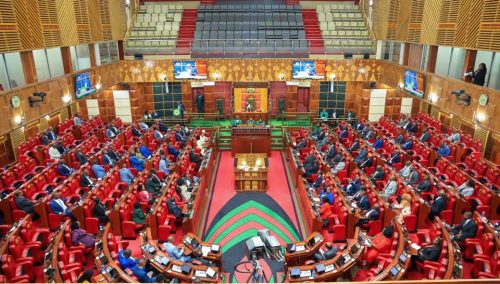
Although the CDF currently has no constitutional backing, since MPs’ roles are purely legislation, oversight, and representation (not budget execution), the fund should be entrenched into the Constitution and made legal.
While it has been plagued with mismanagement and loss of funds in the past, the Office of the Auditor-General should be properly empowered to exercise its oversight role and ensure these funds are used appropriately.
Valid concerns, better solutions
Many have argued that CDF undermines devolution by creating parallel funding structures and duplicating powers separate from the counties as set out in the Constitution. They argue that these funds should be channelled through the counties as envisioned in the Constitution. These are valid concerns, but the solution is not abolishment. The conversation ahead should focus on how to legalise the fund and establish clear structures for its proper use.
CDF is part of the decentralisation of funds to the people, and anything that brings resources closer to the people should be encouraged, not abolished, as it promotes devolution.
Some argue that CDF should be abolished and the funds given to counties, leaving MPs to assume their constitutional roles.
But why should funding to counties be increased at the expense of abolishing CDF? Kenya is not short of funds; while the country is indeed going through tough economic times, a lot of money is still being spent on nonessential items, with much of it lost through corruption.
If such loopholes were sealed, there would be more than enough resources to fund both counties and CDF.
Conclusion
Finally, abolishing CDF would jeopardise employment opportunities for local workers and stall ongoing projects. Many CDF-funded initiatives engage local labour, injecting much-needed income into rural economies.
Instead of dismantling a tool that has proven indispensable in accelerating grassroots development, policymakers should focus on refining its implementation.
The true cost of abolishing CDF will not be felt by legislators or governors, but by the children who will study under trees, the patients who will travel miles to seek basic healthcare, and the communities that will wait years for clean water.
Kenya cannot afford to take a step backward. CDF must not only remain—it must be strengthened.
Author
Latest News








Advertisement
More on Insights