Advertisement
When the Constitution speaks, officials go selectively deaf
Friday 01st August, 2025 06:00 AM|
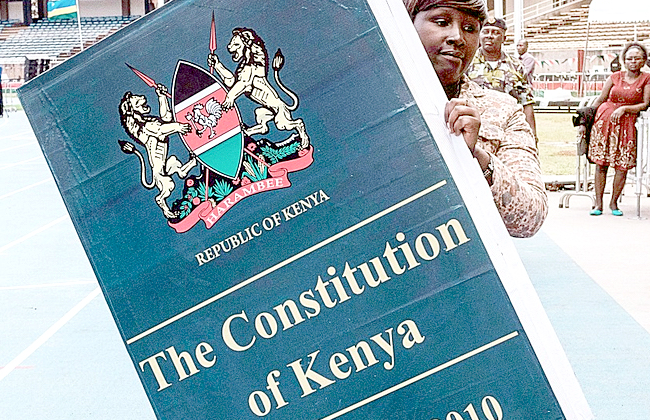
In the game of “Simon Says”, the rules are simple: follow the command only when preceded by “Simon says”. Fail to heed this instruction, and you’re out. The game teaches us about authority, rules, and consequences, lessons that seem lost on Kenya’s current leadership when it comes to our most sacred document: the Constitution.
The Constitution ensures that the government does not own the state; it simply manages the state, under the authority of higher laws, on behalf of citizens. In this sense, constitutionalism is the opposite of despotism, where despotism is a system of government in which the governing authorities are a law unto themselves.
Over the past year, we have witnessed a troubling pattern of blatant disregard for constitutional provisions, particularly Article 33, which guarantees freedom of expression. Article 33 of Kenya’s 2010 Constitution emerged from the ashes of our troubled past. Born from the comprehensive constitutional reform process that followed the 2007-2008 post-election violence, this article was crafted as a beacon of hope a guarantee that never again would Kenyans be silenced by authoritarian tendencies.
The article promises freedom to seek, receive, and impart information, protecting artistic creativity and academic freedom while establishing necessary limitations against hate speech, incitement to violence, and propaganda for war. These limitations were carefully balanced, drawn from international human rights instruments, and designed to protect both individual expression and collective harmony.
You Might Also Like



But what happens when the very government sworn to protect these freedoms becomes its greatest threat?
Let’s play a game called “Simon Says” with our Constitution. In this version, the government only follows constitutional commands when it suits their interests:
Simon says “Citizens have the right to freedom of expression.”
Government response: Silence.
Simon says: “The state shall not interfere with the right to seek, receive, and impart information.”
Government response: Continued internet shutdowns and media house intimidation.
Simon says: “Every person has the right to artistic creativity.”
Government response: Censorship of creative works that call out the government,, harassment of artists, and suppression of dissenting voices.
The game reveals a disturbing pattern: when the Constitution speaks, the government chooses selective deafness. Unlike the childhood game where breaking rules means you’re simply “out”, the consequences here are far graver as they threaten the very foundation of our democracy.
Artists and creatives have found themselves targets of state machinery, their works censored and their freedoms curtailed.
When government authorities become a law unto themselves, we witness the emergence of despotism.
In the end, the game of democracy requires that everyone, government and citizen alike, follow the same rules. When the Constitution speaks, everyone must listen. That’s not a suggestion; it’s the law.
The writer is a Correspondent with People Daily
Author
Helga Muinde
View all posts by Helga MuindeLatest News







Advertisement
More on Insights