Advertisement
What Trump’s remarks mean for Kenya’s military partnership with the US
Thursday 02nd October, 2025 07:03 AM|
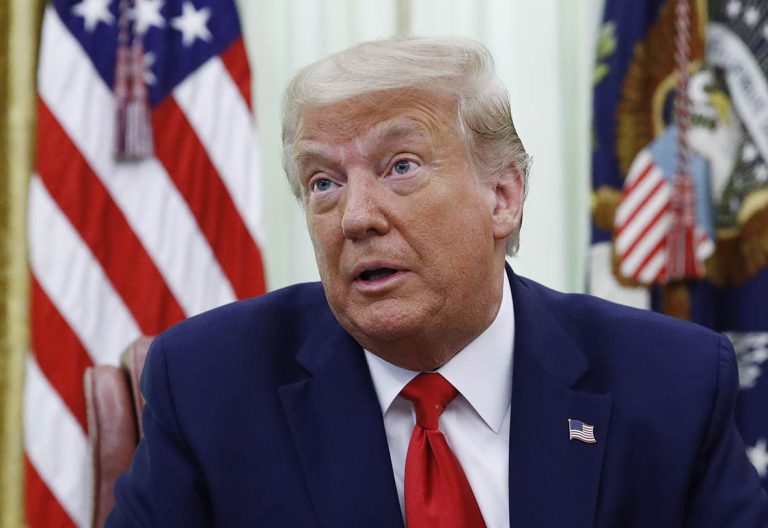
United States President Donald Trump has openly questioned his country’s long-standing military operations in Kenya and neighbouring Somalia. In a blunt address to top US military officials this week on Tuesday, September 8, 2025, Trump said it was not the military’s job to defend foreign nations while America faced what he described as an “invasion from within.”
The comments, made at the Marine Corps Base Quantico in Virginia, mark one of the sharpest signals yet that his administration could scale down US involvement abroad, including in East Africa.
“But together with many of you in the room, we’ve brought back the fundamental principle that defending the homeland is the military’s first and most important priority. That’s what it is,” Trump told more than 800 generals gathered at the base.
Trump insisted that defending the homeland was the “first and most important priority” of the military, saying that trillions had been wasted protecting the borders of other countries.
You Might Also Like

“Only in recent decades did politicians somehow come to believe that our job is to police the far reaches of Kenya and Somalia, while America is under invasion from within. No different than a foreign enemy, but more difficult in many ways because they don’t wear uniforms.”
“At least when they’re wearing a uniform, you can take them out. These people don’t have uniforms. But we are under invasion from within. We’re stopping it very quickly. After spending trillions of dollars defending the borders of foreign countries, with your help we’re defending the borders of our country from now on. We’re not going to let this happen.”
“Biden let people come in from prisons, mental institutions, drug dealers, murderers. You know, we had 11,488 murders allowed into our country by this guy who had no clue. He had no clue. He shouldn’t have been there in the first place, but he had no clue. The people that ran the office, the White House, were people that surrounded him, radical left lunatics that are brilliant people, but dumb as hell when it came to policy and common sense.”
Earlier, President William Ruto said that training military cadets from other countries would strengthen Kenya’s bilateral ties and promote Pan-Africanism.
Why this matters for Kenya
Kenya has been a central partner in America’s fight against terrorism in the Horn of Africa. The Kenyan Defence Forces (KDF) play a major role in the African Union Transition Mission in Somalia (ATMIS), with the support of US intelligence, training, and equipment. Washington also maintains a military base at Manda Bay in Lamu County, which has been key in drone surveillance and operations against al-Shabaab.
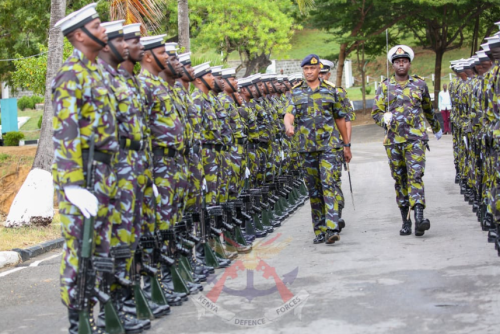
In May 2024, the Biden administration designated Kenya as a major non-NATO ally, a move that gave Nairobi greater access to military and economic benefits. The two countries also signed a five-year defence cooperation agreement worth about $100 million (Ksh13 billion), aimed at boosting joint training, counter-terrorism, and maritime security.
Trump’s statement now puts this partnership into question. If his administration shifts resources away from foreign missions, Kenya could see reduced military aid, training, and intelligence support. This would come at a sensitive time when al-Shabaab remains a major security threat along Kenya’s border with Somalia.
Trump’s inward turn
Trump’s address to the military was filled with strong language about domestic security. He claimed that the US was facing an invasion “no different than a foreign enemy,” blaming migrants from prisons and mental institutions abroad. He announced that military deployments would now focus on American cities, including New York, San Francisco, and Chicago.
This “America First” security approach is consistent with his wider foreign policy views. Just days earlier, at the United Nations General Assembly in New York, Trump told world leaders to close their borders and expel foreigners, accusing the UN of promoting a “globalist migration agenda.”
“It’s time to end the failed experiment of open borders,” he said, warning European countries that migration was “destroying your heritage.”
These remarks show a broader shift: Trump wants fewer foreign commitments and a stronger focus on border control and domestic issues. For partners like Kenya, this could mean Washington taking a step back from its traditional role in regional security.
Kenya’s military ties with the US
Kenya and the US have built a defence relationship stretching back to 1964. American investments have been visible through military education programmes, equipment support, and joint operations. The KDF has been recognised as one of the most capable partners in the fight against violent extremism.
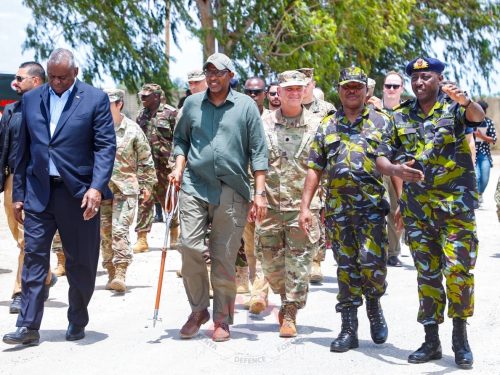
The 2023 defence framework signed in Nairobi was designed to deepen cooperation until 2028. It covered technology, counter-terrorism, and maritime operations, ensuring Kenya’s forces remain well-equipped. At the time, then US Defence Secretary Lloyd Austin said the agreement showed Washington’s gratitude for Kenya’s leadership in tackling security challenges.
“I thank the Kenyan government for hosting US Forces at Manda Bay and the commitment to shared security. Signing a Framework for Defence Cooperation between our two countries reinforces the importance of our strategic partnership,” said the Defence Secretary.
If Trump reduces military support, Kenya may need to look for new partners or increase its own budget for security operations. Any cutback could weaken ATMIS efforts in Somalia and create space for al-Shabaab to regroup.
Possible political impact
Trump’s comments may also influence how Kenyans view their relationship with Washington. For decades, Kenya has relied on US support to strengthen its defence forces and gain international recognition as a regional security hub. Nairobi has also taken pride in hosting high-level visits from American officials, which symbolise trust and partnership.
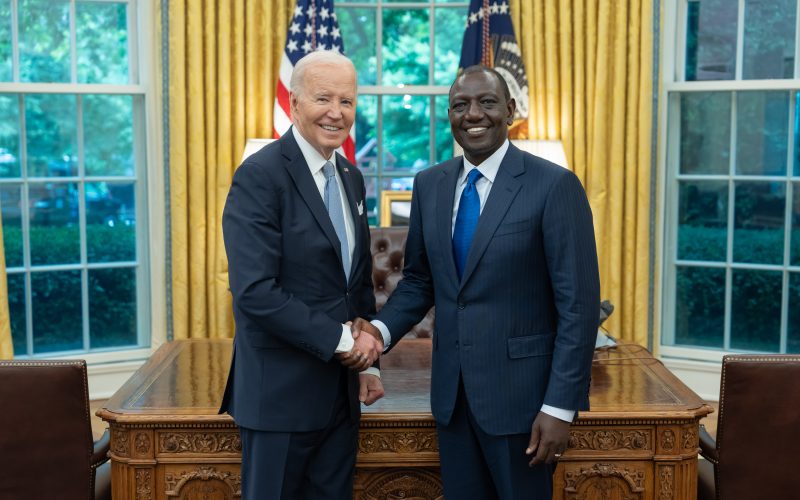
However, if Washington scales back its commitments, Kenya may have to rethink its strategy. It could turn to other global partners such as the European Union, China, or Gulf states for security cooperation. This would shift the balance of influence in the Horn of Africa.
Trump’s remarks come at a time when US–Africa relations are under pressure. The African Growth and Opportunity Act (AGOA), which gives preferential trade access to African countries, including Kenya, expired this week, with Trump administration saying it supports 1-year renewal. Combined with Trump’s military stance, this raises new questions about America’s long-term engagement with the continent.
For Kenya, future US policy may no longer guarantee the same level of military support as in previous decades. While the designation of Kenya as a major non-NATO ally was seen as a milestone, Trump’s review of foreign commitments could affect that status.
Author
Kenneth Mwenda
Kenneth Mwenda is a business, sports, and politics digital writer with over seven years of experience in journalism, covering breaking news, feature stories, and in-depth analysis across a range of beats.
For inquiries, he can be reached at [email protected]
View all posts by Kenneth MwendaLatest News




Advertisement
More on Insights