What KUCCPS’ new placement criteria mean for Kenya’s education system
By Aloys Michael, March 24, 2026The Kenya Universities and Colleges Central Placement Service (KUCCPS) is introducing a revised framework for university admissions starting with the 2026–27 academic year.
This update is set to change how students are placed into degree programs, aiming to better reflect individual academic strengths and the evolving demands of the education system.
Traditionally, KUCCPS placements relied on a combination of Kenya Certificate of Secondary Education (KCSE) performance (minimum C+ grade), subject-specific cluster points, and student preferences.
Cluster points, calculated from performance in four relevant subjects, have been the key determinant, with students arranged from highest to lowest scores. Affirmative Action Criteria are also applied to enhance access for women, persons with disabilities, and students from marginalised regions.

Under the new system, there will be a stronger emphasis on students’ individual academic strengths. Rather than focusing predominantly on aggregate grades, the revised criteria will weigh performance in specific subjects most relevant to the chosen course.
This is designed to better match students to programs aligned with their aptitudes and future career paths.
Priority competitive placement
Placements will continue to prioritise student preferences alongside university capacity.
“Placement is based on the priority choices listed by the student, with preference given to top choices, as well as the capacity declared by the respective universities,” KUCCPS stated.
The process remains competitive, ensuring that the best-qualified students are placed first, with slots filled in descending order of merit until the program’s capacity is reached.
One of the most significant changes is the planned removal of C+ as the minimum university entry grade.

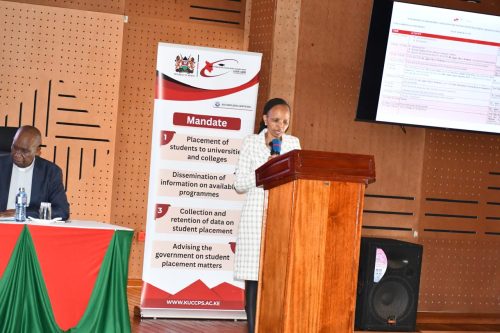
“The pass mark was no longer tenable after a large number of 2025 KCSE candidates failed to meet the minimum threshold.” The move is also intended to align university entry requirements with the Competency-Based Education (CBE) system, which emphasises skills and subject-specific competence over raw grades,” KUCCPS CEO Agnes Wahome explained.
Historical data will play a major role in placements. Wahome said that the process will heavily draw on data from previous years, including student performance and course enrollment trends.
Cut-off points for highly competitive courses are expected to rise slightly due to increased competition.
“You will see that this year we had 270,000 students who scored C+ and above, compared to 245,000 last year. This means competition will be higher. If the last student admitted to the University of Nairobi to pursue medicine scored 45.5 points, then this year it is likely to rise to 45.7 points. That is how the process works,” she noted.
Implications for Kenya’s Education System
KUCCPS also emphasised the importance of students selecting courses that align with their interests and abilities.
Wahome cautioned that students with A and A-minus grades in sciences are often advised against pursuing the courses they actually want. Parents and teachers sometimes believe they are protecting them, but it can end up limiting their opportunities.
The new placement criteria aim to empower students to make choices informed by their strengths rather than external pressures.
Overall, the new KUCCPS placement criteria signal a shift toward a more individualised and data-driven approach in higher education admissions. By factoring in subject-specific performance and prioritising student preferences, Kenya’s education system hopes to produce graduates better aligned with their chosen fields.
The removal of rigid grade thresholds and closer alignment with Competency-Based Education further underscores the country’s commitment to adaptive, skills-focused learning.