Advertisement
Victims Compensation Panel: Was it right for Faith Odhiambo to accept Ruto’s appointment?
Tuesday 07th October, 2025 03:53 PM|

In August 2025, President William Ruto established a Panel of Experts on Compensation of Victims of Demonstrations and Public Protests through a gazette notice.
Chaired by Professor Makau Mutua, with Faith Odhiambo, President of the Law Society of Kenya (LSK), as vice-chair, the panel was tasked with reviewing how the State compensates victims and delivering a report within 120 days.
However, her appointment drew harsh criticism. Many felt that by accepting a role created by the executive, she risked compromising the independence of LSK and the cause of human rights and justice.
Some lawyers demanded she resign as LSK president. Others questioned the constitutionality of the panel itself.
You Might Also Like

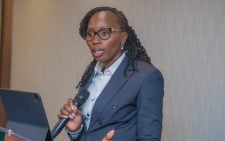

On October 6, 2025, Odhiambo resigned from the panel. She cited the fact that the High Court had issued orders suspending the panel’s operations, that the 120-day timeframe risked lapsing without meaningful work, and that her role could conflict with her duties at LSK.
“I have today handed in my formal and immediate resignation from the position of Vice Chairperson of the Panel of Experts on Compensation of Victims of Demonstrations and Public Protests to the Head of Public Service,” she stated.
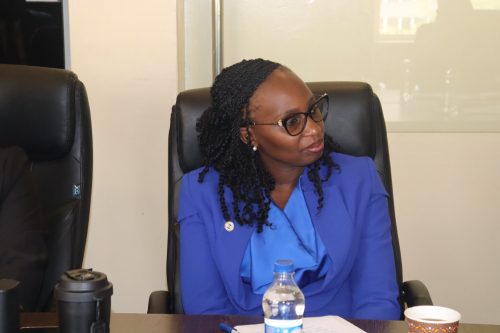
These events raise the central question: was it right for her to accept the appointment in the first place?
Constitutional and legal framework
To assess her decision, we must consider several provisions of the Constitution, statutes, and the doctrine of institutional independence.
Courts and enforcement of rights (Article 23)
Article 23 of the Constitution of Kenya (2010) empowers the courts to uphold and enforce the Bill of Rights. According to the Kenya Law Reform Commission, the provision grants the judiciary the mandate to provide appropriate relief in cases where rights have been violated.
In particular, the Constitution states:
“In any proceedings brought under Article 22, a court may grant appropriate relief, including … an order for compensation.”
That means that when fundamental rights are breached, victims may seek redress through the courts, including compensation, without needing ad hoc panels. The Constitution thus reserves a central enforcement role for courts.
Also, the judiciary must be guided by constitutional values such as openness, impartiality, and public participation. The separation of powers principle implies that executive bodies should not arrogate to themselves quasi-judicial roles unless legally grounded.
Existing statutes on victim protection
Kenya’s Victim Protection Act, 2014, implements the constitutional mandate (Article 50(9), among others) to provide protection, rights, and welfare of victims. Any new mechanism for compensation should be consistent with, or based on, that law.
Separation of powers and institutional integrity
A core tenet of constitutionalism is that state organs must respect their limits. The executive should not unilaterally create bodies that usurp powers properly held by courts or independent institutions.
Moreover, leaders of independent or oversight institutions (like LSK) must guard their institutional independence and avoid even the appearance of co-option by the executive.
In sum, any appointment to a government panel must meet high standards: legal grounding, institutional safeguards, clarity of mandate, and no undermining of constitutional roles or perception of bias.
Why she accepted the offer
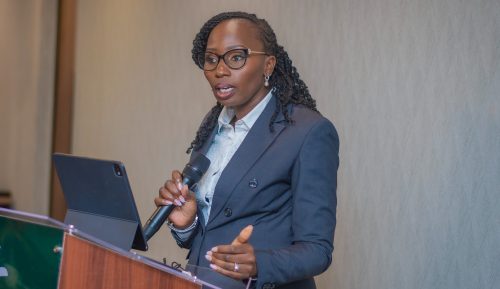
Speaking during the panel’s swearing-in on September 4, 2025, Odhiambo defended her decision.
“As I take up this responsibility, let it be known that I have in no way betrayed your trust,” she said. “Access to criminal justice remains critical to me in our quest to promote and protect the rule of law as an essential element in the enjoyment of fundamental human rights and freedoms.”
She told Kenyans that she would not allow “the bloodshed of our comrades to be in vain” and promised transparency throughout the panel’s work. “This effort is victim-centred, impartial and nonpartisan,” she added.
Odhiambo said she saw the panel as a chance to influence justice from within and ensure that victims’ families were not left behind.
“The panel of experts that I join today bears both the duty and opportunity to spearhead a revolutionary shift in victim reparations. Never again shall Kenyans be killed by trigger-happy officers for exercising their constitutional rights,” she said.
Critics’ stand
Her explanation did not convince everyone. Several lawyers, led by Levi Munyeri and former LSK president Nelson Havi, immediately questioned the constitutionality of the panel and her decision to serve.
Munyeri argued that Odhiambo’s dual role created a conflict of interest.
“It is a personal decision for Faith Odhiambo to serve Ruto in an unconstitutional panel of experts,” he said on X. “However, she must resign as the president of LSK, failure to do so will result in us filing an urgent motion to eject her.”
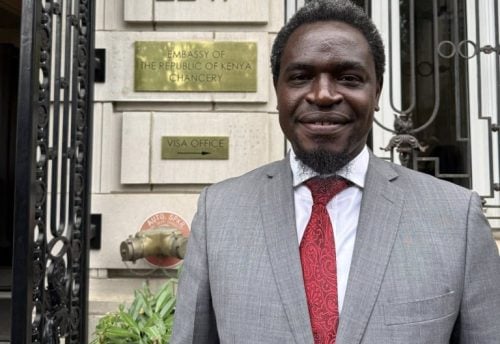
He later instructed Havi & Company Advocates to represent him in a case challenging the legality of the panel, calling it unconstitutional because it duplicated the functions of the Kenya National Commission on Human Rights (KNCHR) under Article 59 of the Constitution.
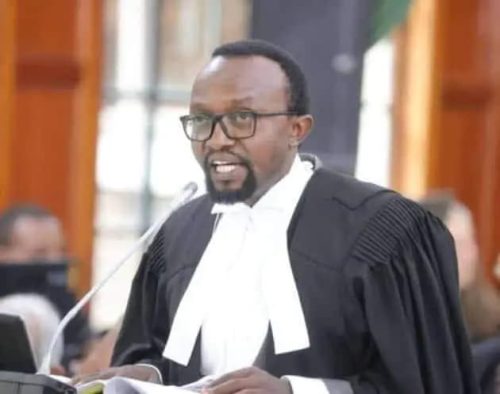
Havi, who has often been vocal on constitutional issues, accused Odhiambo of handing over LSK to the Executive, claiming she had compromised the society’s independence. Other lawyers, including Ndegwa Njiru, dismissed the panel as a committee of deceit, arguing that only the High Court can grant relief under Article 23 of the Constitution.
The backlash grew when comparisons were drawn to her earlier stand. In July 2024, Odhiambo had rejected President Ruto’s appointment to a public debt audit task force, saying it violated the Constitution because the Auditor General already held that mandate.
Then, the LSK council, through secretary Florence Muturi, had clearly stated that neither our president nor any of our members shall take up appointments or participate in the said task force.
To many, her 2025 acceptance looked inconsistent.
Legal and political hurdles
The panel’s work was short-lived. On September 8, 2025, the High Court in Kerugoya, presided over by Justice Kizito Magare, suspended its operations after a petition challenged its legality. The court issued conservatory orders halting the panel’s activities pending a hearing.
Human rights advocate Irungu Houghton, also a member of the panel, immediately suspended his participation in compliance with the court order. He stated that he respected the rule of law, the Constitution, and judicial oversight.
The suspension left the panel paralysed. Its 120-day mandate was ticking, and it had achieved little progress.
Verdict: was accepting the appointment, right?
On balance, the decision to accept the executive appointment to the victims’ compensation panel was ill-advised, given the constitutional and institutional context. The arguments against acceptance, weak legitimacy, risk to independence, impractical mandate, and overlapping mandates outweigh the potential gains.
Divided reactions
The resignation drew mixed reactions. Some, like Embakasi North MP James Gakuya and former MP Kabando wa Kabando, praised her for stepping down and redeeming her leadership. Others, including Senator Samson Cherargei, criticised her for what they saw as inconsistency and indecision.
Professor Makau Mutua, who chaired the panel, lamented that political and legal elites were obstructing justice.
“WHY would rich, wealthy, and powerful politicians and greedy lawyers fight so hard to deny victims of protests and riots compensation from the state? The cynicism, callousness, and hypocrisy of Kenya’s elites is truly galling. Shame on them!” he posted.
Author
Kenneth Mwenda
Kenneth Mwenda is a business, sports, and politics digital writer with over seven years of experience in journalism, covering breaking news, feature stories, and in-depth analysis across a range of beats.
For inquiries, he can be reached at [email protected]
View all posts by Kenneth MwendaLatest News




Advertisement
More on Insights