Advertisement
Treasury’s Ksh1T borrowing plan raises debt concerns ahead of 2027 elections
Saturday 22nd November, 2025 09:07 PM|

Kenya’s National Treasury has outlined plans to borrow more than Ksh1 trillion in the 2026/27 financial year, a move that has reignited debate over the country’s rising public debt and the government’s ability to manage its finances.
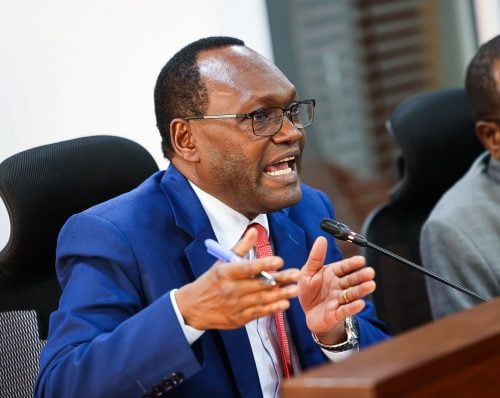
Treasury Principal Secretary Chris Kiptoo confirmed the borrowing targets this week, saying the government must bridge a widening budget deficit and sustain key services.
The plan includes net external financing of Ksh241.8 billion and net domestic borrowing of Ksh775.8 billion. The external portion will likely come from multilateral lenders and commercial loans, while the domestic market will absorb most of the borrowing through Treasury bonds and bills.
Treasury aims to raise the money to cover a budget gap estimated at 4.9 per cent of GDP, slightly higher than the previous year’s 4.8 per cent.
You Might Also Like


The announcement comes as Kenya’s total public debt stands at Ksh12.06 trillion. Domestic debt accounts for around Ksh6.66 trillion, while external debt sits at about Ksh5.39 trillion.
The figures show that the country has crossed earlier debt ceilings and continues to rely heavily on borrowing to run government programmes. Critics argue that this trend is unsustainable, especially with slow revenue growth and high repayment obligations.
The government has already borrowed heavily in the current fiscal year. Treasury data shows that in the first quarter of 2025/26, the government secured Ksh437.8 billion in new loans.
Domestic borrowing contributed Ksh339.7 billion, while external sources added Ksh98.1 billion. This amount represents almost half of the annual borrowing target of Ksh901 billion for the year.
Part of the reason for the heavy borrowing is weak revenue performance. Treasury reported that revenue collections fell below target by Ksh83.6 billion in the first quarter. Total revenues grew by only 1.7 per cent, compared to 10.8 per cent in the same period last year.
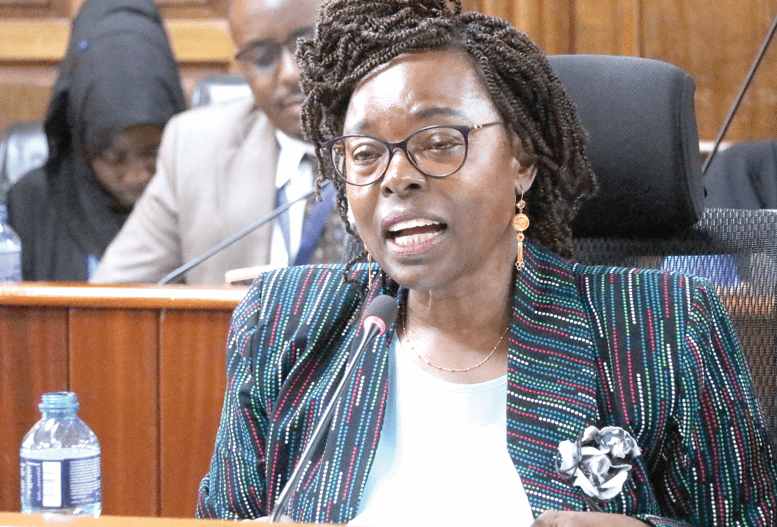
“Budget execution in the 2025/26 fiscal year has progressed well but is constrained by slow adoption of e-procurement, revenue shortfalls against targets, as well as expenditure pressures,” Treasury PS Chris Kiptoo said on Wednesday during parliamentary hearings on the 2026 budget.
Ordinary revenues dropped by 2.9 per cent, a sharp contrast to the 10.1 per cent growth recorded in 2024. With spending running ahead of projections by Ksh5.9 billion, the budget deficit widened to Ksh280.4 billion, equivalent to 1.5 per cent of GDP.
Borrowing tied to spending
The government has linked part of the planned borrowing to new spending commitments. It intends to use the funds to pay newly hired teachers and recruit more. In January 2026, the government plans to hire 20,000 intern teachers.
President William Ruto earlier announced that Ksh1.6 billion would go towards teacher training and another Ksh1 billion towards promotions. Treasury officials also said that the money will support health services and security, including the recruitment of 10,000 police officers this week. Police recruitment had stalled for more than three years due to budget constraints.
The timing of the borrowing has raised political concerns, especially as the country heads towards the 2027 General Elections. Kiharu MP Ndindi Nyoro criticised the borrowing trend, saying that the government is borrowing more than Ksh3.4 billion a day. He warned that the pace of borrowing could burden future budgets and limit development spending.

Treasury defends the borrowing strategy as necessary to maintain cash flow and avoid disruptions in government operations. Officials say that frontloading borrowing helps the government raise funds ahead of large repayments in early 2026, including Eurobond obligations, loans tied to the standard gauge railway, and major domestic infrastructure bonds.
By raising the money early, Treasury hopes to manage repayments without resorting to emergency borrowing at unfavourable rates.
The domestic market has so far responded positively. Treasury bonds raised Ksh310.6 billion in the first quarter, while Treasury bills added Ksh45 billion. Falling interest rates have also helped ease debt servicing costs.
Bonds issued in recent months carried coupon rates between 12 and 14 per cent, compared to the 18.5 per cent paid on similar infrastructure bonds in 2023 and 2024. Treasury has reopened long-term infrastructure bonds of 15 and 19 years, raising significant amounts through both primary issuance and tap sales.
However, uncertainty remains over future external financing. Kenya had expected additional support from a new International Monetary Fund programme, but talks have stalled.
The delay relates to disagreements over how to classify securitised loans, a key issue that affects Kenya’s ability to access concessional funding. Without the IMF’s backing, Kenya may face higher borrowing costs on the international market.
Author
Kenneth Mwenda
Kenneth Mwenda is a business, sports, and politics digital writer with over seven years of experience in journalism, covering breaking news, feature stories, and in-depth analysis across a range of beats.
For inquiries, he can be reached at [email protected]
View all posts by Kenneth MwendaLatest News


Advertisement
More on Insights