Advertisement
Tax on menstrual products is bad for the women’s health
Wednesday 08th June, 2022 10:21 AM|
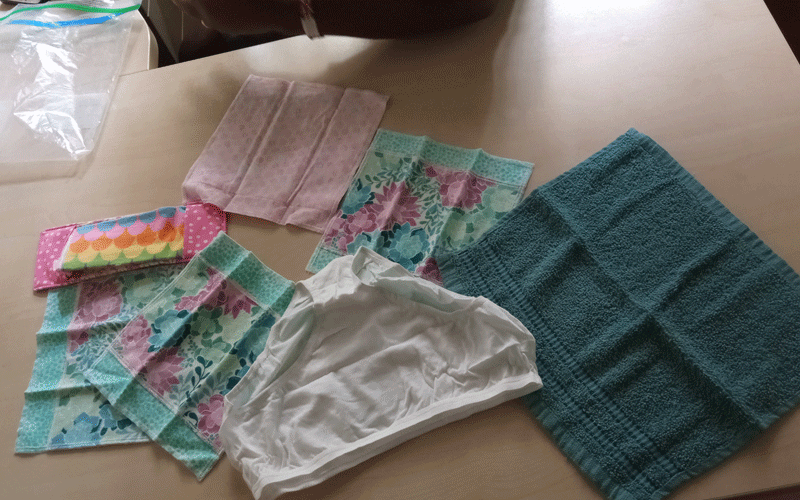
The beginning of menstrual cycle is the start of struggles for many adolescent girls. Menstrual equity needs is a critical concern globally and particularly in Kenya it has a huge impact on education, dignity, health and economic safety for girls and women. Menstruation is surrounded by stigma and worse for women who experience period poverty.
Due to period poverty many girls skip school mainly because of fear, shame and self esteem regarding their periods and this impacts their performance in both education and career outcomes.
According to a UNICEF report, seven per cent of women and girls rely on old cloths, pieces of blankets, chicken feathers, mud and newspapers—all these alternative materials are prone to wetting, contributing to shame or embarrassment and we all know what these can do to an adolescent girls.
Additionally, women and girls may find themselves using menstrual products longer than expected which is likely to cause health complications, infection and even long-term health issues. Further, in some parts women and girls engage in transaction sex for sanitary pads.
Menstrual hygiene management involves having the ability to access essential menstrual products, including clean water, toilet and bathing facilities, soap, access to waste disposal facilities and more so addressing societal norms and taboos encompassing menstruation. Lack of menstrual products and sanitation facilities exacerbate existing vulnerabilities, and women and girls may opt for desperate coping mechanisms. Despite access to information being a human right, taboos to talk about menstrual hinder women from accessing information about the normal functions of their body, how to manage menstruation, and seeking care when they experience menstruation-related disorders.
In many cultures, its treated as something shameful and dirty. The continued silence makes girls have little knowledge about what’s happening to their bodies. Lack of sexual reproductive health information also makes them feel ashamed about the changes in their bodies.
While countries like India have abolished tax on menstrual products to address menstrual inequity, Kenya is faced by corruption crisis. For instance, President Uhuru set aside Sh470 million to cater for menstrual products for school girls. This was later reduced to Sh270 million and some schools have never had access to the products.
Further the price of the menstrual products hiked, making it difficult for most girls and unable to access them. Menstruation is a normal biological process and its a key sign of reproductive health.
Menstruation should not only be women’s problem, but a societal burden. We all must unite to end period poverty and stigma. There’s no shame in periods.
There is need to sensitise policymakers about the problem of girls missing school due to period poverty—they must continue to have access to the facilities, products and information they need to protect their dignity, health and well-being. More involvement of men on menstrual hygiene management will lower stigma and discrimination.
Myths and misconceptions around menstruation should be clarified and appropriate information given to women and girls. There is dire need to advocate for removal of taxes on menstrual products to improve access for every girl.
— Kathia and Nthiana are youth advocates at NAYA Kenya
Author
PD columnist
View all posts by PD columnistLatest News








Advertisement
More on Insights