Advertisement
Ruto’s rocky re-election bid faces economic backlash
Saturday 08th February, 2025 06:20 AM|
As I recently exited from a supermarket parking, and just as I indicated the direction I was taking, a fruit vendor approached me. I had braked since there was a jam building up on entering the main road. She instantly requested that I promote her hustle, and I jokingly told her, Mama mboga wako na pesa now that he (Ruto) is the president. She responded, Huyo alitucheza na tutamcheza ipasavyo. The rest is history.
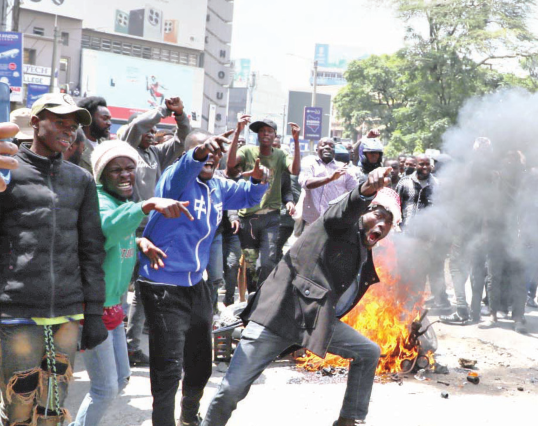
This is just one of the many disgruntled voters looking forward to punishing Ruto come 2027 because of his unpopular policies and unfulfilled promises. The excitement and optimism that once surrounded his presidency have faded into frustration, disappointment, and outright anger.
Kenyans who bought into his hustler narrative—especially small-scale traders, boda boda riders, and young people—now feel betrayed. Instead of economic empowerment, they are burdened with relentless taxation, rising inflation, and job losses. The president, who branded himself as the champion of the common mwananchi, is now seen as the architect of their struggles.
Transformative solution
Perhaps the most symbolic failure of Ruto’s presidency so far is the Affordable Housing Programme, which was marketed as a transformative solution to Kenya’s housing crisis.
The initiative, funded by a mandatory 1.5 per cent salary deduction, was supposed to provide decent, low-cost housing for ordinary citizens. However, what was meant to be a revolutionary policy has turned into a nightmare for workers, many of whom feel exploited. The process of acquiring these houses remains unclear, the eligibility criteria are restrictive, and the pricing is far from affordable.
If taxpayers are the ones funding the project, why do they still have to struggle to own the houses? Reports from various media outlets have exposed how political elites and well-connected individuals are poised to benefit the most, while the real hustlers remain locked out. Even within Ruto’s government, dissent is growing, with leaders such as Public Service CS Justin Muturi openly questioning the policy’s implementation.
The housing project is just one of Ruto’s grand ideas that has failed to deliver. His administration’s attempt to overhaul the Higher Education Fund (HEF) ended in an embarrassing failure, forcing a retreat to the former HELB system.
The new funding model, which was meant to ensure equity in higher education, quickly turned chaotic, leaving thousands of university and Technical Vocational Education and Training (TVET) students stranded.
The government had promised that the new scheme would make education more accessible, but instead, many students—especially those from middle-income families—found themselves struggling to afford tuition. Universities, facing financial uncertainty due to delayed disbursements, were unable to function properly.
Struggling to keep promises
At the heart of Ruto’s dwindling popularity is his taxation policy, which many Kenyans view as punitive. The introduction of the Social Health Insurance (SHI) tax, which deducts 2.75 per cent from workers’ gross pay, coupled with an increase in National Social Security Fund (NSSF) contributions, has left salaried employees with significantly reduced take-home pay.
Business owners are also reeling from excessive taxation. Small businesses, once the backbone of Kenya’s economy, are shutting down due to an unforgiving business environment. The Kenya National Bureau of Statistics (KNBS) recently reported that hundreds of businesses have closed down.
The media has been relentless in covering these failures, with headlines painting a picture of an administration struggling to keep its promises. In one of the dailies, a report recently dissected how the Affordable Housing Programme has largely failed to meet its targets. The report highlighted how, two years into his presidency, Ruto’s ambitious legislative agenda remains in shambles.
Forced evictions in areas earmarked for housing projects, such as the displacement of families in Makande, Mombasa County, have further tainted the initiative. Opposition leaders have seized on these failures, branding Ruto as the president who promised relief but delivered suffering.
But perhaps the biggest threat to Ruto’s re-election bid is Kenya’s Gen Z electorate. Unlike past generations, which relied on political rallies and mainstream media for information, Gen Z voters are digitally savvy, politically engaged, and unafraid to challenge authority. They fact-check politicians in real time, replay campaign promises, and demand accountability like never before.
Their frustration with Ruto’s governance—especially regarding unemployment, the high cost of living, and broken promises—has fueled a growing anti-Ruto sentiment. In 2022, many young people rallied behind Ruto, believing he represented a break from the old political order. Now, they feel used and abandoned. If Ruto fails to win them back, they could become the deciding factor in the 2027 election.
Architect of economic hardship
Sensing the growing discontent, the opposition has positioned itself as the voice of the people. Kalonzo Musyoka, Eugene Wamalwa, former deputy president Gachagua and other leaders have promised to reverse Ruto’s tax policies, restore economic stability, and create jobs. Their message is resonating with struggling Kenyans who feel overburdened and unheard. However, promising change is one thing—delivering it is another. If the opposition hopes to translate public anger into votes, it must offer clear, practical solutions, not just criticism of the government.
Ruto now finds himself at a crossroads. If he hopes to win a second term, he must shift from grand rhetoric to tangible results. Kenyans are no longer interested in speeches; they want affordable homes that are actually accessible, an education system that works, and economic policies that reduce their suffering rather than add to it.
Transparency in governance will also be key. If voters continue to perceive mismanagement and wastage of public funds, no amount of campaign efforts will salvage his reputation.
Kenyan elections have always been shaped by promises—some kept, many broken. The 2027 battle will be won by whoever convinces the electorate that they can truly ease their economic burdens.
Will the opposition successfully frame Ruto as the architect of economic hardship, or will the president rewrite his own narrative and prove that his policies will eventually bear fruit?
From where things stand, Ruto has a steep mountain to climb. With frustrated workers, struggling businesses, and a defiant Gen Z electorate, he must either adapt or risk becoming a one-term president. The clock is ticking.
Author
Latest News








Advertisement
More on Insights