Real estate projects shaping Kenya’s property market in 2025
By Kenneth Mwenda, December 20, 2025Kenya’s property market in 2025 recorded steady progress despite high construction costs, financing pressure and legal delays. Development activity was largely driven by the Affordable Housing Programme (AHP), private mid-market developers and infrastructure-linked investments.
Rather than mega master-planned cities, the year was defined by practical, demand-driven projects that either reached completion or made significant construction progress. Here are the key real estate developments that shaped the market in 2025.
Mukuru Affordable Housing Project – Nairobi
One of the most impactful completions of the year, the Mukuru Affordable Housing Project marked a major shift in informal settlement upgrading. By 2025, more than 1,080 housing units had been handed over in phases, comprising bedsitters, one-bedroom and two-bedroom apartments.
Delivered under the AHP framework, the project adopted a rent-to-own model, with monthly payments ranging between Kshs3,900 and Kshs5,000. Beyond housing delivery, the project created thousands of jobs during construction and set a template for future inner-city regeneration efforts.
The Beacon Mall – Upper Hill, Nairobi
Completed in the third quarter of 2025, The Beacon Mall emerged as a rare success story in Nairobi’s mixed-use space. Spanning approximately 24,300 square metres, the retail and office complex attracted anchor tenants such as Naivas, helping it achieve high occupancy levels shortly after opening.
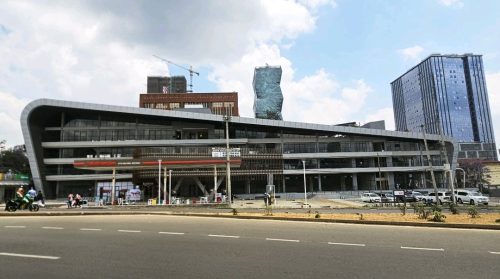
The project reinvigorated Upper Hill’s commercial landscape at a time when the node faced office oversupply, with reported investor yields averaging between eight and nine per cent.
Muzi Stawi, Garden City Precinct – Nairobi
Muzi Stawi, developed by IHS Kenya, stood out as a green-focused affordable housing project within the larger Garden City ecosystem. By mid-2025, the development was nearly 90 per cent complete, with units already delivered to homeowners.
The project emphasised energy efficiency and sustainability, aligning with EDGE certification standards. Its progress highlighted growing demand for environmentally conscious housing within Nairobi’s expanding suburban corridors.
Kings Boma Estate – Ruiru, Kiambu County
Satellite towns continued to outperform traditional suburbs, with Ruiru leading the way. Kings Boma Estate, developed by Kings Developers, completed several units during 2025.
Offering studios to three-bedroom apartments, the estate attracted strong demand from first-time buyers and young professionals. Its success reinforced Ruiru’s position as one of Kenya’s fastest-growing residential nodes.
Starehe Point – Nairobi
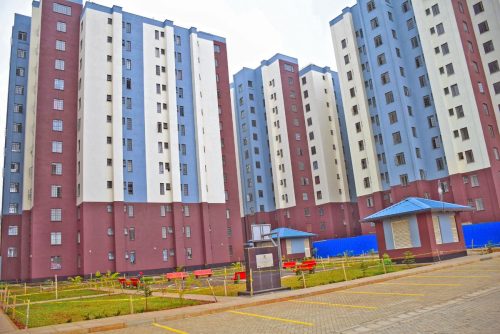
Starehe Point remained one of the largest AHP projects under active construction in 2025. Led by Gulf Cap Real Estate, the project made substantial progress during the year, with thousands of affordable units in the pipeline.
/X
Its scale and location underscored the government’s push to deliver high-density housing close to employment centres rather than pushing low-income residents to the city’s outskirts.
Buxton Point Phase Two – Mombasa
In Mombasa, construction continued on Buxton Point Phase Two, another Gulf Cap-led AHP development. The project advanced steadily through 2025, delivering mid-market and affordable apartments as part of the coastal city’s urban renewal drive.
Buxton’s progress highlighted the growing role of public-private partnerships in reshaping Kenya’s older urban estates.
Vipingo Special Economic Zone – Kilifi County
The Vipingo Special Economic Zone marked a major non-residential development milestone in 2025. Spanning roughly 2,000 acres, the industrial and logistics hub broke ground during the year, with early infrastructure works underway.
The SEZ is expected to attract manufacturing and agro-processing firms, with projections of more than 50,000 jobs once fully operational. Its development signalled a shift toward industrial-led real estate growth outside Nairobi.
Kings Orchid – Thika, Kiambu County
Kings Orchid, also by Kings Developers, recorded rapid construction progress in 2025. The project features more than 800 affordable detached homes incorporating solar power and green design elements.
Its momentum reflected rising demand for low-density housing in Thika and surrounding areas, driven by improved road connectivity and relative affordability.