Advertisement
Maduro’s capture: Why oil prices dropped and precious metals rose
Monday 05th January, 2026 03:54 PM|

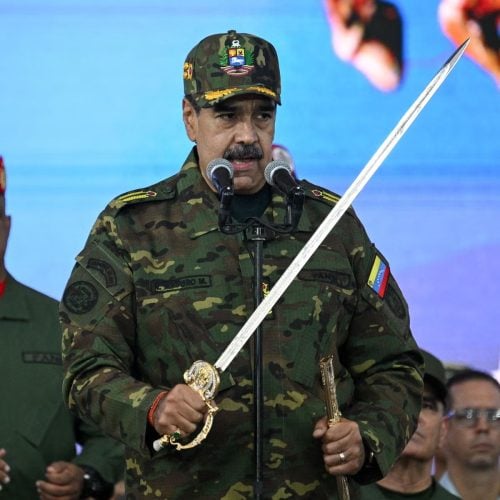
Oil prices dipped on Monday, January 5, 2026, while gold and silver rose, as global markets reacted to the US capture of Venezuelan President Nicolás Maduro over the weekend.
Asian stocks climbed, driven by strong gains in technology companies, while European markets opened slightly higher.
US benchmark crude initially rose slightly but later fell 36 cents to Ksh7,348 per barrel. Brent crude, the international standard, dropped 34 cents to Ksh7,793. Analysts said oil markets were largely unaffected because Venezuela’s production is currently low, at about 1.1 million barrels per day, and its energy infrastructure has been in poor condition for years due to underinvestment, fires, theft, and sanctions.
“While many are reporting Venezuela’s oil infrastructure was unharmed by U.S. military actions, it has been decaying for many, many years and will take time to rebuild,” said Patrick De Haan, lead petroleum analyst at gasoline price tracker GasBuddy.
You Might Also Like

Investors also noted that global oil supplies remain plentiful. As a result, short-term concerns over disruptions from the Maduro raid had a limited effect on crude prices.
In contrast, gold rose 2.7 per cent and silver jumped 6.6 per cent as traders moved money into safe-haven assets. Geopolitical uncertainty often drives demand for precious metals because they retain value when financial markets face risk. Analysts said the price gains reflected caution rather than panic, with investors seeking protection while maintaining exposure to other assets.
US oil stocks rally
US oil stocks surged in premarket trading after President Donald Trump pledged to revive Venezuela’s oil sector. Chevron, which has continued operations in Venezuela under US permission, gained as much as 10 per cent. ConocoPhillips and Exxon Mobil also saw gains. Trump said American oil companies would spend billions to rebuild Venezuela’s crumbling infrastructure and restore production.
Chevron is well positioned to benefit immediately, producing about 20 per cent of Venezuelan crude under a sanctions waiver. ConocoPhillips is owed more than Ksh1 trillion and Exxon about Ksh129 billion from past nationalisations of Venezuelan assets. However, experts warned that fully reviving the oil sector could take years and cost over Ksh12.9 trillion.
European oil companies with operations in Venezuela also saw gains. Italy’s Eni and Spain’s Repsol rose, while French firm Maurel & Prom jumped as much as 14 per cent. Analysts said the market reaction reflects expectations that a U.S.-backed government could eventually ease legal and operational barriers for foreign investors.
Share markets in Asia also rallied. Japan’s Nikkei 225 jumped 3 per cent to 51,832.80, South Korea’s Kospi rose 3.4 per cent, and Taiwan’s benchmark climbed 2.6 per cent. Investors focused on corporate performance and broader economic data, treating the Venezuelan crisis as a distant risk.
Venezuela’s impact remains limited
Analysts noted that Venezuela currently contributes less than 1 per cent of the global oil supply. Even with U.S. intervention, any immediate change to crude availability or consumer energy costs is expected to be minimal.

Traders are now closely watching upcoming U.S. economic data, including job reports, services sector updates, and consumer sentiment. These figures will influence the Federal Reserve’s monetary decisions later this month and guide market expectations for the year ahead.
In summary, oil prices fell slightly due to existing oversupply and Venezuela’s limited production, while gold and silver rose as investors sought protection from geopolitical risk. U.S. oil companies gained on the prospect of future opportunities, but full recovery of Venezuela’s oil industry remains a long-term challenge.
Author
Kenneth Mwenda
Kenneth Mwenda is a business, sports, and politics digital writer with over seven years of experience in journalism, covering breaking news, feature stories, and in-depth analysis across a range of beats.
For inquiries, he can be reached at [email protected]
View all posts by Kenneth MwendaLatest News







Advertisement
More on Insights