Advertisement
Let coalition agreements reflect the face of Kenya
Tuesday 07th June, 2022 04:10 AM|
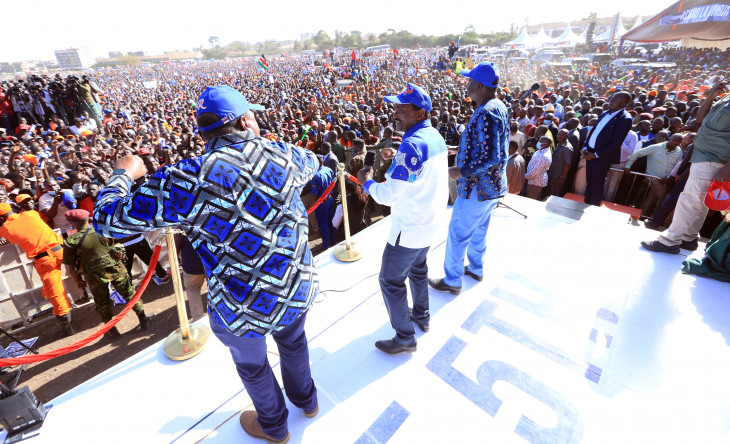
Last week Thursday Kalonzo Musyoka formally agreed to return to Azimio-One Kenya Coalition with the hope of delivering the Ukambani 1.6 million voting bloc. But Just like Musalia Mudavadi and Amason Kingi of the Kenya Kwanza coalition, he, too, was given a political position and some benefits that will go to his constituency.
But the question is, what happens to the rest of Kenya that does not command political kingpins to fight for their share of the national cake? Although political coalitions are formed through power-sharing deals, the economic issues are not overtly expressed.
For example, in Israel, coalitions are formed, and the major concern is about security and the Palestinian issue. On May 18, the future of Israel’s government was plunged into uncertainty after a member quit, leaving it as a minority in parliament for the first time.
The Arab member of the coalition resigned, saying she could not tolerate its leaders’ “right-wing stances” towards her section of society. The unexpected move means the coalition commands only 59 of 120 seats.
This diverse coalition in Israel’s history has been in power for just under a year. Led by nationalist Premier Naftali Bennett, it brought together eight parties from across the political spectrum, some with major ideological differences.
Coalition deals that are devoid of altruism not only disadvantage the community the political leader represents but also put them in peril of missing out on the national share of development.
Let’s be honest; Do you believe Mudavadi and Moses Wetang’ula will deliver the entire Western Kenya to Kenya Kwanza? Perhaps it’s too much to say in retrospect that Mudavadi’s move was a result of a calm and sober assessment of the political situation that had arisen in the Kenyan Kwanza matrix.
We can give him the benefit of hindsight as he could have had esoteric knowledge through a spiritual epiphany that led to signing this agreement.
Kenya Kwanza presidential candidate William Ruto, a political genius, has managed to out-manoeuvre and outwit all the regional kingpins in the coalition.
The deals signed with them are designed to avoid fallout within the coalition. It gives on one hand and takes on the other, promises something on one hand and erases the promise on the other.
For instance, the audacious and brazen pact he made with Kingi will disenfranchise Central Kenya as the inland port of Naivasha will be relocated and Naivasha will lose business.
The two main political contenders Raila Odinga and Ruto should let Kenyans audit their manifestos to know whether they have factored in the interests of all Kenyans and that the coalition pacts made with various political parties were not made at the detriment of the rest of the other regions.
Lastly, the outcome of this coming election has great ramifications for our country that should foster the continuation of President Uhuru’s development legacy. Each vote will therefore be crucial in determining how our future will be governed.
The Dalai Lama stated this African proverb; “If you think you are too small to make a difference, you haven’t spent the night with a mosquito.”
— The writer works in Hong Kong
Author
PD columnist
View all posts by PD columnistLatest News






Advertisement
More on Insights