Advertisement
Kenya’s struggle against human trafficking: What the latest US report means
Tuesday 30th September, 2025 09:15 PM|

Human trafficking remains one of the world’s most pressing human rights issues, affecting millions of vulnerable people across borders.
Each year, the United States Department of State releases its Trafficking in Persons (TIP) Report, ranking governments based on their efforts to combat forced labour, sex trafficking, and modern-day slavery.
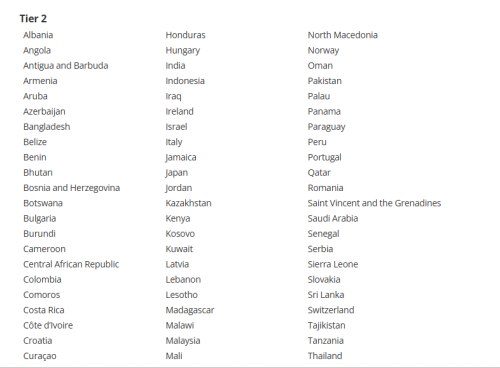
In the 2025 edition of the report, Brazil and South Africa were downgraded to the Tier 2 Watch List, signalling concerns about declining efforts. Kenya, however, retained its Tier 2 status, a ranking that reflects progress but also highlights persistent gaps that must be urgently addressed.
Here is the hierarchy for clarity:
You Might Also Like


Tier 1: Highest, countries fully meet minimum standards.
Tier 2: Countries not fully meeting standards but making significant efforts.
Tier 2 Watch List: A step below Tier 2; countries are making efforts but have serious gaps, or their situation may be worsening.
Tier 3: Lowest, countries not meeting standards and not making significant efforts.
What Tier 2 means for Kenya
As earlier explained, Tier 2 countries are those that do not fully meet the minimum standards for the elimination of trafficking, but are making significant efforts to comply. For Kenya, this means that while progress has been acknowledged, systemic weaknesses still leave thousands of victims unprotected. The report commended Kenya for:
- Increasing investigations, prosecutions, and convictions of traffickers
- Identifying and referring more potential victims for assistance.
- Opening its first state-run shelter for trafficking survivors.
- Engaging Kenyan returnees from the Gulf to shape anti-trafficking policies.
However, it also highlighted critical shortcomings. Despite notable steps forward, the TIP Report flagged several persistent issues:
- Weak victim protection: Services remain scarce, especially for adults and victims outside major towns. Many survivors face retraumatisation due to inadequate support systems.
- Migrant worker vulnerabilities: Fraudulent labour recruitment agencies continue to operate, exposing Kenyans, especially domestic workers in Gulf countries, to abuse, withheld wages, and confiscated passports.
- Complicit officials: Claims persist that some government officers collude with traffickers by issuing fraudulent documents or extorting victims seeking help.
- Legal loopholes: Current laws allow fines instead of mandatory jail terms for sex trafficking offences, undermining deterrence. Reforms to close this loophole have stalled for years.
Transit hub for human trafficking
Kenya continues to be both a source and transit hub for human trafficking. Along the coast and major highways, women and children are exploited in sex trafficking, while porous borders facilitate the movement of girls.
The Gulf remains a primary destination for Kenyan migrant workers, with NGOs reporting that over 98 per cent of returnees show signs of forced labour. Children remain the most vulnerable, particularly those working as domestic servants, in agriculture, or in informal urban sectors, with refugees and migrants also at risk.
Recent cases underscore the severity of the problem: in Mombasa, two individuals were arrested for exploiting and soliciting minors online, including marketing children for sexual exploitation and defiling a minor, while women governors have called for urgent government action against child trafficking syndicates in Maai Mahiu.
In response, Kenya’s justice system has strengthened its anti-trafficking measures, including a Memorandum of Understanding between the Office of the Director of Public Prosecutions (ODPP) and the Human Trafficking Institute (HTI) to enhance cooperation, prosecution outcomes, and capacity building.
Despite these efforts, experts note that systemic challenges such as poverty, weak enforcement of child protection laws, and harmful cultural practices continue to exacerbate the risks to children and vulnerable populations.
The TIP Report highlighted that children remain the most vulnerable, particularly those working as domestic servants, in agriculture, or in informal urban sectors. Refugees and migrants in Kenya also face heightened risks, with weak screening systems failing to identify victims effectively.
What needs to change
Several reforms are recommended for Kenya, including:
- Expanding shelters and specialised services nationwide.
- Enforcing stronger labour agreements with Gulf states.
- Cracking down on rogue recruitment agencies.
- Training frontline officers to identify victims among sex workers, refugees, and migrant workers.
- Strengthening accountability measures for corrupt or complicit officials.
Human trafficking is not just a human rights crisis; it is also an economic, diplomatic, and security issue. Countries that fail to make progress risk sanctions, reduced foreign aid, and reputational damage on the global stage.
Author
Kenneth Mwenda
Kenneth Mwenda is a business, sports, and politics digital writer with over seven years of experience in journalism, covering breaking news, feature stories, and in-depth analysis across a range of beats.
For inquiries, he can be reached at [email protected]
View all posts by Kenneth MwendaLatest News








Advertisement
More on Insights