JD Vance’s visit to Kenya faces uncertainty after US pulls out of G20 summit
By Kenneth Mwenda, November 9, 2025The anticipated visit by United States Vice President JD Vance to Kenya now faces uncertainty following President Donald Trump’s announcement that no American officials will attend the G20 Summit in South Africa later this month.
Vance had been expected to travel to Nairobi in late November after attending the summit in Johannesburg. However, with Washington’s sudden withdrawal, the Kenya leg of his trip is now in question.
The G20 summit, scheduled for November 22–23, 2025, is set to focus on global financial reform, climate change, energy transition, and inclusive development.
A senior White House official said that Vice President Vance will not travel to South Africa for the summit and has no other international trips planned in the near term.
This raises doubts about the first official visit by a senior US executive official to Kenya under the Trump administration, which was seen as an effort to strengthen bilateral ties with Nairobi and reaffirm the United States’ presence in East Africa.
President Trump cited what he described as human rights atrocities against white farmers in South Africa as the reason for pulling out of the summit. Trump posted on his social media platform, Truth Social, that it was a total disgrace for the G20 to be held in South Africa and that no US government official would attend as long as these issues continued.
“Afrikaners (people who are descended from Dutch settlers, and also French and German immigrants) are being killed and slaughtered, and their land and farms are being illegally confiscated,” Trump wrote, reiterating claims that have been rejected by authorities in South Africa.
“No US government official will attend as long as these human rights abuses continue. I look forward to hosting the 2026 G20 in Miami, Florida!” he added.
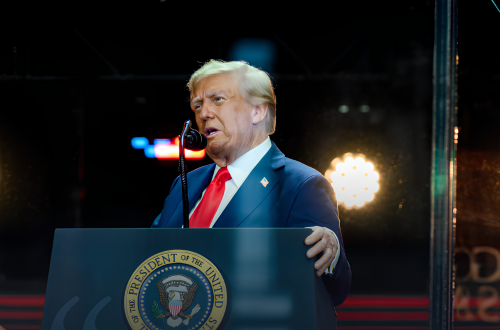
The White House has previously given Afrikaners refugee status, citing discrimination, while restricting overall refugee admissions to a record low.
South African authorities have strongly denied these claims. President Cyril Ramaphosa and the South African foreign ministry have repeatedly described the claims as false and regrettable, pointing out that white South Africans enjoy a higher standard of living than the majority Black population.
Political parties representing Afrikaners and other white communities have not claimed there is persecution or genocide.
Kenya Vance’s visit uncertain
If it proceeds, Vance’s visit would have been the first US Vice Presidential trip to Kenya in 15 years and the highest-level visit since Secretary of State Antony Blinken toured the country in November 2021.
Blinken met with former President Uhuru Kenyatta and then-Foreign Affairs Cabinet Secretary Raychelle Omamo to discuss COVID-19 response, clean energy, environmental protection, and regional security, including the situation in Ethiopia and Somalia. The last visit by a US Vice President was by Joe Biden in June 2010.
Vance’s visit had been expected to focus on several key areas, including trade, security cooperation, and countering Chinese influence in East Africa. Trade discussions would have centred on the African Growth and Opportunity Act (AGOA), which expired on September 30, 2025; Ruto had stated that it would be extended for one more year.
Kenya’s U.S. textile/apparel exports (90 per cent under AGOA) now face 10–28 per cent duties, threatening 66,000 plus direct jobs and 700,000 indirect. Vance was expected to advocate a modified deal linking AGOA benefits to broader US–Kenya investment under the Strategic Trade and Investment Partnership (STIP).
Security cooperation remains a key element of Kenya–US relations, with the country playing a central role in America’s counter-terrorism strategy in the region. US forces operate from Manda Bay, providing drone surveillance, intelligence support, and training for the Kenya Defence Forces.
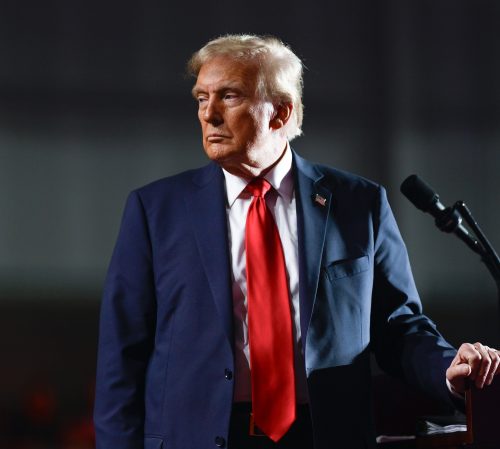
President Trump’s remarks about reducing overseas military engagement could threaten this partnership, potentially leading to cuts in funding, training, and operational support. In early October, he openly questioned his country’s long-standing military operations in Kenya and neighbouring Somalia.
“Only in recent decades did politicians somehow come to believe that our job is to police the far reaches of Kenya and Somalia, while America is under invasion from within. No different than a foreign enemy, but more difficult in many ways because they don’t wear uniforms,” he said.
Vance’s visit to Kenya would have reinforced US commitments while addressing concerns about the impact of any scaling back on regional security.
Geopolitical considerations also featured prominently. Beijing has invested heavily in Kenya, including infrastructure projects such as the Standard Gauge Railway and industrial parks. The US had planned to promote Western-backed investment in digital and green infrastructure to reduce China’s influence.
Projects led by US firms, such as Microsoft, aim to connect millions of Kenyans through satellite and fibre networks, offering alternatives to Chinese financing. At the same time, US-backed initiatives are supporting Kenya’s agricultural sector, which remains highly vulnerable to climate change.
Domestically, President William Ruto could have used the visit to bolster his political standing amid rising taxes, corruption scandals, and high youth unemployment. Securing an AGOA extension and strengthening defence cooperation with the US would have been significant wins for his administration.
For now, uncertainty surrounds Vance’s visit, leaving Kenya’s government to recalibrate expectations. While the trip was a major opportunity for US–Kenya relations, it remains contingent on Washington’s decisions regarding the G20 Summit.