Inside parliamentary push for ethnic balance in staffing at top govt offices
By Emmanuel Rono, April 10, 2026Parliament’s Public Accounts Committee (PAC) has urged senior government offices to strictly adhere to constitutional requirements on ethnic diversity in public service employment, warning against skewed hiring practices.
According to a Parliament of Kenya statement on Thursday, April 9, 2026, the committee, chaired by Tindi Mwale, raised concern that staffing in several top offices remains heavily tilted toward the ethnic communities of office holders, contrary to the law.
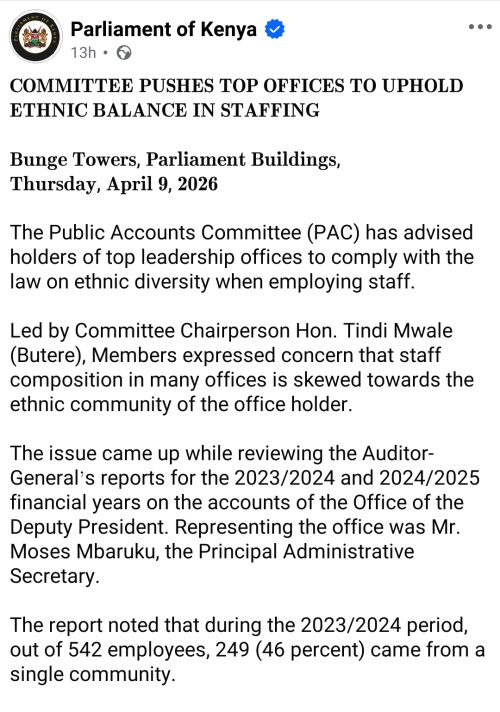
The issue emerged during a review of Auditor-General reports for the 2023/2024 and 2024/2025 financial years on the accounts of the Office of the Deputy President.
Audit findings
The office was represented by Principal Administrative Secretary Moses Mbaruku.
According to the audit findings, 249 out of 542 employees, equivalent to 46 percent came from a single ethnic community during the 2023/2024 period, breaching the constitutional threshold that limits representation from one community to not more than one-third of the workforce.
“The report noted that during the 2023/2024 period, out of 542 employees, 249 (46 percent) came from a single community,” the statement by Parliament of Kenya stated.
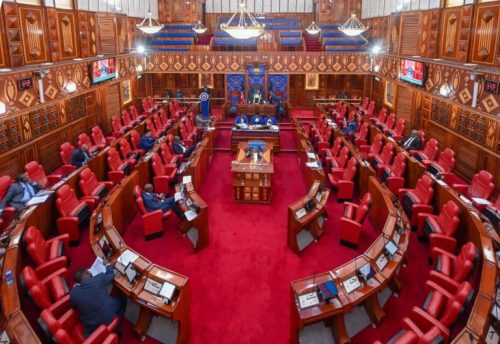
The lawmakers, including PAC Vice Chairperson Amina Udgoon Siyad, emphasized the need for inclusivity in public institutions, noting that Kenya’s diversity must be reflected in government staffing.
“All public establishments need to represent the diversity of the people of Kenya. It is sad that many offices are breaching the law. Top offices must lead by example,” MP Mwale said.
Need for equal opportunities
Siyad termed the imbalance both unconstitutional and unethical, pointing out that all communities have qualified individuals who deserve equal opportunities.
“It is not only against the Constitution but also morally wrong to have the majority of staff from one community. Kenya has over 42 tribes, and there are qualified people from each community,” MP Siyad stated.
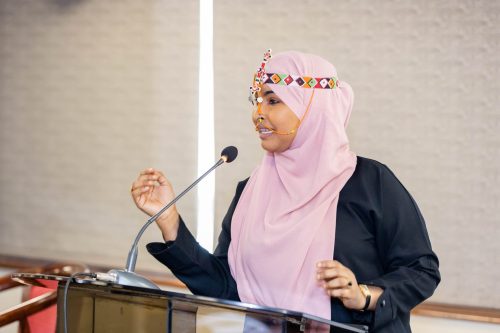
In response, Mbaruku acknowledged past non-compliance but attributed it to hiring practices that predated the tenure of Deputy President Kithure Kindiki.
He told the committee that corrective measures have since been implemented, with reforms ensuring no single ethnic community exceeds one-third of the workforce.
“We have improved recruitment processes to ensure compliance, with no single ethnic community exceeding one-third of total staff. The highest representation is now 23.4%, and diversity has improved to include 33 ethnic communities,” said Mr. Mbaruku