Advertisement
How to make schools ‘fruitful’
Monday 03rd July, 2023 08:08 AM|
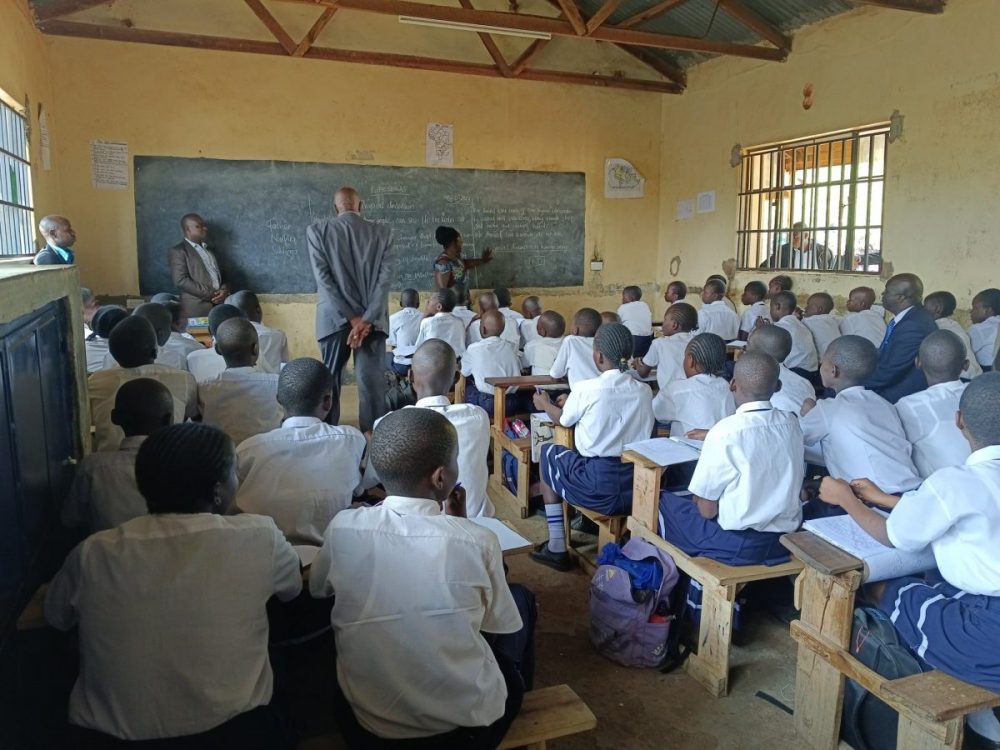
The World Health Organisation (WHO) recommends that children should eat at least five portions of a variety of fruits and vegetables a day, but that portion size may vary with age, body size, and levels of physical activity.
Fruit is one of the most important parts of your child’s diet. Fruits are a rich source of vitamins, minerals, and other nutrients that are essential for growth and development. Fruits are also a good source of fibre, which can help promote healthy digestion and prevent constipation.
Additionally, fruits can help boost the immune system, which can help prevent illness and keep children healthy.
Eating fruits regularly can also help children maintain a healthy weight and reduce their risk of developing chronic diseases such as heart disease, diabetes, and some types of cancer later in life. However, most children don’t get the recommended servings of fruits and vegetables a day.
“Unavailability and high cost are some of the reasons that make children not take fruits as required. Many parents cannot afford to buy fruits for their children daily. Not that they don’t know the benefits of taking fruits daily, but because they have other bills to prioritise,” says Dr Mary Onsarigo chairperson, of the Kenya Australian Alumni Association (KAAA).
KAAA is a professional association of graduates from Australian universities and other accredited Australian educational institutions who were sponsored by the government of Australia through different scholarships and fellowship programmes or privately funded.
Membership encompasses alumni with diverse expertise, which include agriculturists, environmentalists, lawyers, entrepreneurs, medical practitioners, among others. Member’s main objective is to give back to society by applying the experience, skills, and knowledge gained from Australia. It is against this backdrop that KAAA has introduced a programme that is going to ensure the availability of fruits in schools.
The programme will majorly focus on planting different types of early maturing fruit trees in schools around the country. This programme, according to Onsarigo, will not only assist in improving national nutrition security, particularly among school-aged children, but also will help improve our country’s tree cover. It will also go a long way in teaching the children about nutrition, climate change, and agriculture.
“This project’s aim is also to empower learners to become active participants in sustainable practices and environmental conservation. We believe that passing the knowledge to this younger generation will go a long way,” she shares.
With fruits available in the school compound, schools can easily supplement their school-feeding programme at a lower cost. They will also be mentoring students in both primary and secondary schools in those areas. For this programme to be successful, Onsarigo says that they have joined hands with other partners who will be providing different services.
“We aim to grow more fruit trees in schools because other initiatives have been introducing indigenous trees. Fruit trees have been ignored for long, yet they are multipurpose trees. We also want to contribute to the ongoing efforts by the government to achieve the 10 per cent forest cover, food and nutrition security as well as the many objectives of the climate change initiatives,” she adds
For the pilot project, the association is working with three schools in Nairobi and neighbouring counties. In Nairobi, for example, they are working with Uhuru Estate Primary and Secondary School. So far, they have planted 200 fruit trees in each school.
They aim to plant as many as the school can accommodate. They want to first perfect the programme before moving to other schools. They will be growing the trees until they start fruiting. After that, they will be handing over the trees to the schools.
Though their initial aim was to plant different fruit trees, the unavailability of diverse fruit seedlings has forced them to plant the readily available ones, which are mango, papaya, avocado, and guavas. To ensure that diversity has been achieved, they have partnered with Kenya Forestry Research Institute (Kefri) and Green Africa Foundation who will be providing the seedlings.
“We will also be using this programme to educate students about the benefits of planting trees and provide them with the right skills and knowledge to combat ecological degradation and enhance rural household economies. We decided to be working with schools because it is cost-effective to have these trees in an enclosed area such as schools as members and volunteers will take care of these while using them to enhance the practical experience,” she shares
According to Dr Isaac Kalua, the Founder Green Africa Foundation, this programme is timely because many schools have feeding programmes, but they don’t incorporate fruits because of the cost implication. Now with fruit trees in school, children will be getting the fruits for free.
A healthy and well-balanced diet supports brain development, and eating plenty of fresh fruit might boost your child’s performance in school. A study published in the Journal of School Health notes that a diet rich in fruits and vegetables results in higher test scores.
A healthy diet that includes fruit can also increase a child’s focus in the classroom, so he is able to learn new information, as well as retain what he’s learned.
“It’s important to eat a balanced diet throughout the day and a part of that is consuming fruit and vegetables. Available research has shown that children with healthy diets, including high consumption of fruits and vegetables, perform better on academic tests than children who consumed fewer fruits and vegetables,” says Kalua.
He reveals that his organisation decided to partner with KAAA because it is having another campaign dubbed, Plant Your Age that seeks to enhance and unify tree growing across Kenya and Africa as a personalised commitment to environmental conservation.
Although there are already numerous tree-planting campaigns championed by different players and entities, they are often time-bound and splintered, which makes it challenging to track progress and ensure both the survival and flourishing of planted trees.
“Our Plant Your Age campaign doesn’t seek to replace or outshine any of these tree-planting exercises. Rather, seeks to enhance and unify tree growing at individual, corporate, and national levels,” he says.
Author
Milliam.Murigi
View all posts by Milliam.MurigiLatest News








Advertisement
More on Insights