Advertisement
How Saba Saba movement shaped modern-day activism in Kenya
Monday 06th July, 2026 11:37 AM|

Kenya celebrates Saba Saba Day every year on July 7, which is a significant milestone in the country’s democratic transition.
Today, more than 30 years after thousands of citizens took to the streets calling for political reform in response to one-party rule, the day has grown beyond that into a platform for the citizens to call for accountability, constitutionalism, economic justice and good governance.
While today Kenya has a multiparty democracy and constitutional freedoms which were unimaginable when the Saba Saba movement started, most of the issues that inspired it still echo in the minds of many Kenyans.
This year, the occasion of Saba Saba is being marked by the actions of a new generation of activists who use the day to remind everyone that democracy must be constantly guarded.
Birth of Saba Saba
You Might Also Like



‘Saba Saba‘ translates in Kiswahili as “Seven Seven” and was the date of a public gathering by opposition leaders and pro-democracy activists demanding political reforms.
Kenya was then governed by one party, and political opposition was highly suppressed under President Daniel arap Moi. The opposition leaders, such as Kenneth Matiba, Charles Rubia, Raila Odinga, Martin Shikuku and others who promote democracy, demanded a return to multi-party democracy.
The return to multiparty democracy
Multiparty democracy pushed for respect for human rights, respect for freedom of expression and of association, independent institutions, constitutional reforms, universal suffrage and free and fair elections.
The government actually prevented the demonstrations from occurring by arresting some of the opposition leaders and banning the rally. But thousands of Kenyans ignored the order and assembled in Nairobi and other towns.
Law enforcement responded to the protests with force. The security police used live ammunition, tear gas and mass arrests to disperse the protesters. Some people died, numerous were injured, and hundreds were detained.
The demonstrations were violently suppressed, but they changed the political trajectory for Kenya as a whole.
Turning point for Kenyan democracy
Despite the pressure from Saba Saba, prolonged domestic activism and international pressure, the government eventually acceded to the demands of the activists in December 1991 to repeal Section 2A of the constitution.
The amendment reintroduced multiparty politics, bringing an end to almost ten years of one-party rule in the constitutionally protected state.
The changes that ensued gradually opened up democratic space, leading to competitive multiparty elections, greater media freedom and expanded civil liberties.
Rise of modern-day activism
Thirty years later, Kenya’s political scene has undergone a dramatic transformation. Citizens are free to form political parties, to voice their opposition to government policies, and to vote.
However, many Kenyans say that there’s been a widening of political freedoms, but a lack of governance.
The activism of today is more about holding elected officials accountable rather than getting the right to vote.
Protests today tend to be more about the following: Accountability of public expenditure, Anti-corruption efforts, youth unemployment, increased cost of living, police accountability and constitutionalism.
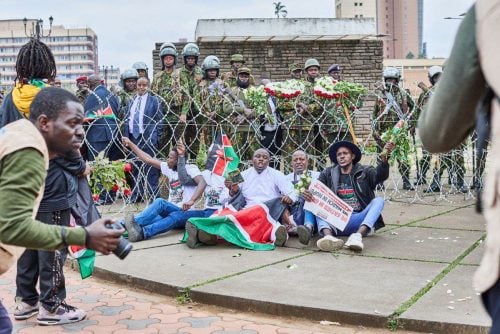
Modern-day activism also pushes for transparency of public procurement and all-inclusive governance.
Activism has been changed by the digitally connected youth. Social media are powerful tools for organising; citizens are able to mobilise quickly, document abuses that may occur, and continue to have public discussions after demonstrations are over.
Contrary to the centralised leadership of the 1990s movement, today’s activism might be decentralised, based on citizens in the process of organising around issues instead of political personalities.
From political freedom to economic justice
Some of the main distinctions between the first Saba Saba movement and the present-day activism are the types of demands that were being made.
The 1990 movement was mainly demanding political freedoms which were denied under one-party rule.
There is a shift to more economic governance in modern demonstrations.
This is a move away from the fight for democratic participation to demands for efficient service delivery and responsible governance.
Democracy is no longer defined just in terms of elections but also as a delivery mechanism of justice, accountability and the improvement of living standards for many Kenyans.
The concerns could have turned from anti-one-party politics to calls for transparency, economic justice and good governance, but the message is the same: Governments must be accountable to the people.
In the face of the ongoing struggle to address Kenya’s political and economic challenges, Saba Saba is a testament to our collective efforts to build a more just, accountable and inclusive society and a call to action for the next generation.
Author
Latest News





Advertisement
More on Insights