Advertisement
How govt failed by sidelining opposition at Raila’s state funeral
Friday 17th October, 2025 08:40 PM|

The death of former prime minister Raila Odinga, a towering and deeply influential figure in Kenyan politics, was always going to be a defining national moment.
His state funeral at Nyayo Stadium on Friday, October 17, 2025, drew world and regional leaders, tens of thousands of mourners, and a fragile public atmosphere following chaotic scenes during the body viewing at Kasarani Stadium the previous day, where security lapses led to fatalities.
However, in the charged environment, the Nyayo ceremony was not just a farewell to one of Kenya’s most consequential political figures, but a national ritual meant to console, unite, and symbolically bind the country after decades of political division.

Yet, amid the solemnity, a quiet controversy emerged as two of Raila’s closest political allies, Wiper Party leader Kalonzo Musyoka and People’s Liberation Party leader Martha Karua, were denied the opportunity to speak, before they later complained of being sidelined by the government, in what loked like disrespect to the opposition family that had walked shoulder to shoulder with Raila in his long political journey.
You Might Also Like
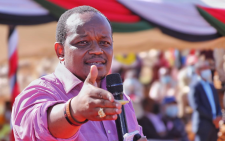
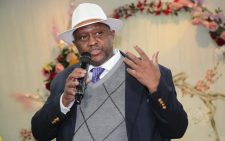
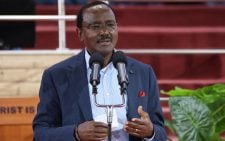
Ahead of the 2027 general election, Kalonzo Musyoka and Martha Karua’s exclusion struck a raw national nerve, one that speaks volumes about how Kenya manages its political transitions, even in moments meant for collective reflection.
Shared struggles, shifting alliances
Kalonzo Musyoka, the veteran Wiper Party leader from the Kamba region, has for decades oscillated between rivalry and partnership with Raila Odinga. The two men shared political trenches in the fight for multiparty democracy and later found themselves on the same side of history in the National Super Alliance (NASA), which contested the 2017 general election. Kalonzo, who served as vice president under President Mwai Kibaki, has often been regarded as Raila’s most enduring political ally in the post-2010 era, a principal partner in opposition struggles and a steady voice in national dialogue.
On the other hand, Martha Karua, a respected lawyer, former justice minister, and human rights advocate, became an even more visible part of Raila’s political life when she was chosen as his running mate in the 2022 presidential election under the Azimio la Umoja coalition. The pairing was symbolic, Raila, the seasoned reformist, and Karua, the “Iron Lady” of integrity and accountability, representing gender equity and progressive governance.
Both Kalonzo and Karua had, in their own ways, staked their political futures on Raila’s ideals. Their partnership with him was not casual; rather, it was built on years of shared struggle, ideological conviction, and mutual political risk-taking. It is for this reason that many Kenyans found it baffling, even disrespectful, that neither was allowed to address mourners at the state funeral.
Kalonzo frustrated
The funeral unfolded under heavy security, a precaution following the chaotic scenes that had marred the Kasarani body viewing. Heads of state, dignitaries, clergy, and senior government officials filled the stands. Speeches were delivered, hymns were sung, and tributes poured in from across the political divide, but noticeably absent were the voices of Kalonzo Musyoka and Martha Karua.
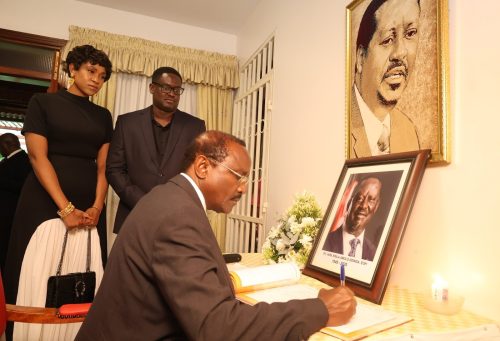
Kalonzo later expressed frustration, accusing the government of deliberately sidelining opposition leaders who had been part of Raila’s political life. He lamented that those who shared in Raila’s democratic journey had been silenced at the moment they most needed to speak. Martha Karua, though present at Nyayo, was similarly not accorded a speaking slot. Her quiet composure during the event stood in sharp contrast to the outcry that followed online, where many Kenyans questioned why two of Raila’s most trusted allies were kept off the rostrum.
The issue was not simply about protocol or timing. It became a symbol of how the state manages political inclusion, even in death and how partisanship can intrude upon national mourning.
Author
Latest News



Advertisement
More on Insights