Advertisement
How AI machines are changing healthcare in rural Kenya
Tuesday 13th January, 2026 03:12 PM|

For many years, lifesaving diagnosis for families in rural counties depended on distance, luck, and cost. A suspected stroke, trauma injury, or unexplained illness could mean travelling hours to access a CT scan or essential lab tests. Many patients never made it in time. Today, that story is changing.
Across counties such as Samburu, West Pokot, Marsabit, Isiolo, Mandera, Garissa, Lamu, and Wajir, clinicians report a dramatic shift in how fast they can diagnose and treat patients.
Under the National Equipment Service Program (NESP), Sunview Medipro International has deployed AI-powered CT scanners in 32 counties, installed 3,400 modern laboratory machines in 75 hospitals, and begun rolling out 40 fully equipped operating theatres nationwide. This combination of imaging, laboratory, and surgical upgrades is reshaping healthcare delivery for communities that have historically been underserved.
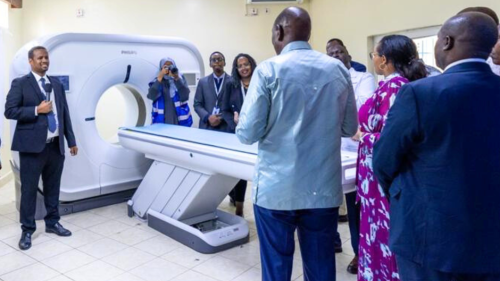
During the commissioning of a modern AI-powered CT scanner at Nakuru County Teaching & Referral Hospital on October 29, 2025, President William Ruto praised the government’s model of accessing high-quality equipment without financial strain.
You Might Also Like
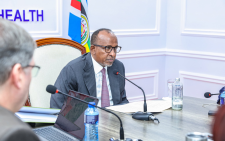


“The primary objective of the government is to treat citizens. Owning the equipment is secondary. If we can find somebody to own the equipment and we just get the service, the better for us,” Ruto said.
The new 128-slice AI-driven CT scanners offer sharper images, faster scan times, and intelligent detection systems that help clinicians diagnose stroke, trauma injuries, and chest complications early and accurately.
Head Radiographer Richard Adomeyon of Nakuru County Referral Hospital noted the changes that the CT scanners have brought.
“This CT scanner has changed how we work in emergencies. We no longer guess. We know what we’re treating, and we know it fast,” he stated
He noted that the hospital has tripled the number of scans, from 50 to over 200 patients, with fewer errors thanks to AI.
In Mandera, where referral transport was once a major barrier, 63-year-old pastoralist Rashid Ahmed said the people can easily get scanned without travelling for long distances.
“If you needed a CT scan, you’d have to travel far. Sometimes to Nairobi, and most times you don’t even have the fare. Now I can be scanned in my own County. It feels like someone finally remembered us,” Rashid said.
3,400 Laboratory Machines Strengthen Diagnostics in 75 Hospitals
While CT scanners attract attention, the 3,400 newly installed laboratory machines, including biochemistry, haematology, and electrolyte analysers, are transforming everyday healthcare in ways many patients feel directly.
Before installation, some rural hospitals packed blood samples into vehicles and sent them to neighbouring counties, waiting days for results. Today, lab clinicians run tests within minutes, enabling faster diagnosis of infections, electrolyte imbalances, bleeding disorders, kidney problems, and chronic diseases.
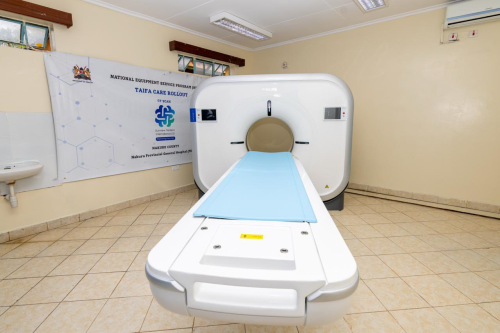
A Makueni lab technologist, Grace Mwende, described the shift as life-changing.
“We used to pack samples into a vehicle and pray they reached the other hospital safely. Now tests are done here, and results guide treatment immediately,” she said
These machines have strengthened maternal care, emergency response, and routine outpatient services, significantly reducing delays that once cost lives.
Modern Operating Theatres Expand Surgical Capacity
Alongside imaging and laboratory upgrades, Sunview Medipro has begun installing modern, fully equipped operating theatres under NESP. Forty theatres have been completed in Kajiado, Kirinyaga, Kisii, Kisumu, Kitui, Kwale, Tharaka Nithi, and Wajir.
Each unit includes modern theatre lights, an operating table, anaesthetic machine, patient monitors, infusion and syringe pumps, and other theatre essentials for emergency and elective surgeries.
These theatres drastically reduce delays for trauma care, maternal emergencies, and life-threatening surgical conditions.
During an installation at Kitengela Sub-County Hospital, Kajiado Health CECM Alex Kilowua said the program allows hospitals to get equipment on a need-basis.
“Through the NESP program, we’ve been able to install several machines in Kajiado County, including this new theatre. This program allows hospitals to get equipment on a need-basis and is making health a reality,” he said.
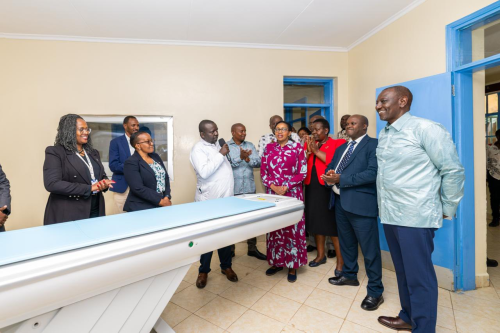
Medical Superintendent Veronica Abuto added that the hospital conducts up to 500 deliveries monthly:
“All along, we had one operating theatre. With the new theatre, we are going to address issues of maternal health and ensure our mothers go home healthy and with healthy babies,” she said.
Sunview also provides training for surgeons, nurses, anaesthetists, and biomedical engineers to ensure safety and efficiency, with plans to install up to 400 theatres nationwide.
Communities Feel Seen Again
Families across Kenya, from Samburu to Lamu, are experiencing improved access to healthcare, with faster diagnostics for accident victims, mothers, and the elderly.
Radiologists and hospital staff highlight how modern equipment has made patients feel valued and “seen.” Sunview Medipro emphasises that their support extends beyond delivery, ensuring machines remain functional and accessible. With more installations planned, rural hospitals are rapidly reaching global standards, transforming healthcare and improving lives for thousands of families.
How the NESP Fee-for-Service (FFS) Model Works
Under NESP’s FFS model, counties receive advanced medical equipment without paying upfront costs. Contracted suppliers handle installation, maintenance, servicing, training, and uptime support, while reimbursement is done through the Social Health Authority (SHA) based on usage.
The model guarantees reliable uptime, continuous servicing, predictable costs for counties, and reduced equipment breakdowns. This has been especially critical for rural facilities where even hours of downtime can mean preventable deaths.
Author
Latest News


Advertisement
More on Insights