Has Raila Odinga betrayed devolution by shielding Sakaja from impeachment?
By Mabonga Makhanu, September 7, 2025Former Prime Minister Raila Odinga’s blocking the impeachment of John Sakaja by requesting Nairobi Members of County Assembly (MCAs) to drop the motion has spoilt his reputation, which has long been synonymous with that of a statesman, a defender, and a champion of devolution.
Raila was among the top voices that saw the birth of the 2010 Constitution and eventually the establishment of devolution, with MCAs given the task of exercising their role of oversight and representation, keeping governors in check.
Nairobi MCAs had collected signatures to impeach the governor, accusing him of a number of issues, something they are fully empowered by the Constitution to do.
Blocking accountability
However, the so-called “champion of devolution” went ahead to stop the MCAs from proceeding to the Senate, where the governor’s case could have been heard and determined on whether to uphold or reject the impeachment.
Instead, the ODM party leader intervened by calling his party MCAs to the Jaramogi Oginga Foundation, where he attempted to broker a truce between the two parties, forcing the MCAs to shelve their constitutional role of holding the governor to account.
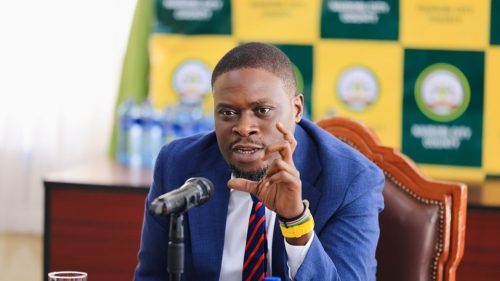
It is now difficult to determine whether Raila is still a defender or a threat to the Constitution he fought for.
By stopping the impeachment of a governor accused of poor leadership where the law provides impeachment as the only way to hold governors accountable, it would have been best for Raila to stay away and let the MCAs battle it out with the governor in the Senate.
A leader of such calibre should not have inserted himself into this issue.
Damaged reputation
By standing in the way of accountability, he has tainted his long-built reputation. He is now being viewed as a double-speaker preaching water while drinking wine, if not a hypocrite.
He has proven that impeachment is more of a political tool than an accountability mechanism.
If Governor Sakaja can walk away freely after the intervention of a political bigwig and escape accountability, then impeachment is purely political.
The opposite could have happened if Sakaja was not aligned with Raila; his impeachment could have easily proceeded to the Senate. When a politician of Raila’s stature intervenes and halts the impeachment, it shows that impeachment is subject to political influence.
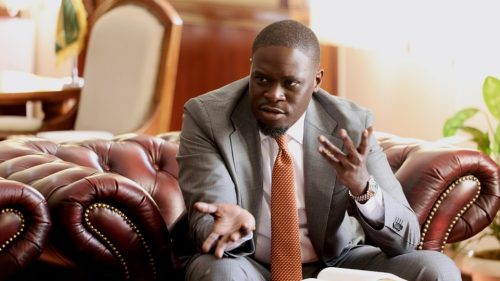
This means a governor who abuses office and engages in corruption may stay in office until the end of his term as long as he is politically aligned, while another governor who performs his duties well can still be thrown out simply because he lacks the right political backing.
Such trends were expected to be stopped by a leader like Raila, but from the look of things, he is no longer the Raila many Kenyans once knew.
More questions, few answers
In the end, Raila Odinga’s intervention in the Nairobi governor’s impeachment process has raised more questions than answers about his commitment to accountability and devolution. By shielding a leader from facing the Senate, he has cast doubt on the very principles he once championed.
This moment may go down as a turning point where Raila shifted from being seen as the defender of the Constitution to being perceived as a protector of political interests.