Advertisement
Gachagua vs Muturi: Miscommunication, strategy or growing rift in United opposition over presidential flag bearer
Monday 06th July, 2026 01:22 PM|
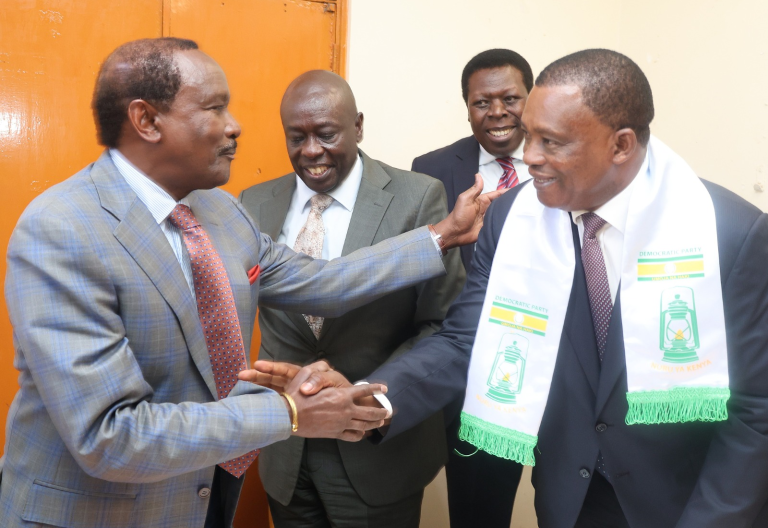
The new remarks by Democratic Party leader Justin Muturi and Democracy for the Citizens Party (DCP) leader Rigathi Gachagua have stirred fresh questions on the United Opposition, whether it is holding together as a team or if there is some fissure.
The two leaders have expressed their wish to topple President William Ruto, but their disagreement on when to announce the coalition’s presidential candidate has left some questions about coordination, trust and the level of transparency.

Muturi calls for speedy resolution.
Speaking at a church service on Sunday, July 5, 2026, Muturi said there was no need for the coalition to wait and announce its presidential candidate so as to protect itself from political attacks.
“We do not have a candidate because we are afraid that when we name him, William Ruto will do something to the candidate. He knows all of us. What can he do?” Muturi said.
You Might Also Like


He argues that the longer the status quo continues, the more speculation there will be, and the longer it goes on, the more it will stall coalition preparations for elections.
“If I’m not selected as the presidential candidate, the only other principal in the United Opposition I can support is Kalonzo. Let’s stop beating around the bush,” he added.
His support gives Kalonzo the edge over other opposition principals in personal preference and indicates where alliances might be forged if there’s a consensus candidate among opponents.
Gachagua: Patience is the best strategy
Muturi’s statement comes in stark contrast to the revelations made by Gachagua only a few days ago.
The former Deputy President told the opposition that it must not fall into the trap of announcing its flag bearer too soon, on July 3. In his opinion, this could leave the would-be president open to a political campaign and even a possible disenchanted attack from within the alliance.
“We can name a candidate as late as May 15, 2027. That is the deadline for naming a candidate. Ruto, we will not allow you to intimidate our flagbearer or take advantage of dividing us,” Gachagua stated.
His approach is to keep the coalition intact for as long as possible and pressure President Ruto enough to give him no time to focus on political initiatives against one opponent.
Miscommunication or sound internal discussion?
On the surface, the two roles seem to be mutually exclusive.
Muturi thinks it’s a no-brainer for the coalition to resolve the issue early since all contenders are “publicly known. Gachagua, meanwhile, thinks timing is a political tool and that by waiting, the announcement benefits the coalition and the eventual candidate.
However, the disagreement may not necessarily amount to a crisis.
Political coalitions can frequently accept conflicting ideas and find a common strategy. The internal debate can be used to try ideas out and to measure public reaction to an idea before the leader reaches a consensus.
In that case, Muturi and Gachagua may only be describing different strategies they will take to ensure that one opposition candidate is presented.
Or are larger cracks forming?
Regardless of this, however, Muturi’s remarks add to the succession discussion.
By declaring support for Kalonzo only if he loses the nomination, he is leaving the door open for other principals who have come out with presidential aspirations. This can make future negotiations more difficult if other leaders believe it is an effort to change the balance of power within the coalition.
It is also raising doubts about the informal camps forming around preferred candidates well before the coalition has finalised its nomination system.
If more principals openly state their preferred alternatives, the coalition faces the danger of detracting from the contest with President Ruto and instead engaging in an internecine struggle.
Delicate equilibrium
The United Opposition has always said that it will present one presidential candidate to oppose Ruto in 2027. That stance hasn’t changed with the new public squabbles.
The next question is not so much who to identify as carrying the banner of the coalition as when, and under what conditions, the decision shall be made.
To make an early announcement could help to give clarity, mobilise the country, and reassure supporters. If they postpone an announcement, it can help keep unity, reduce political attacks, and give opponents no time to capitalise on any divisions.
Finally, the conflicting claims of Muturi and Gachagua could be a reflection of the two campaigning differently and less of a rift or falling out. However, if the coalition is unable to come up with a shared message, the impression of dissension in the ranks could be just as damaging as any substantive differences in the backrooms.
The opposition’s biggest challenge for now is to find a way to demonstrate that even though their top leaders disagree on the timing, they are united on the goal: to field a single contender in the 2027 presidential election who is strong enough to pose a threat to President Ruto.
Author
Latest News






Advertisement
More on Insights