Advertisement
From honouring the president to saving the planet: Kenya’s evolution from Moi Day to Mazingira Day
Thursday 09th October, 2025 02:56 PM|

The history of Mazingira Day traces back to Moi Day, a public holiday established in Kenya to honour the country’s second president, Daniel arap Moi, who served from 1978 to 2002.
Introduced in the 1980s, Moi Day was observed annually on October 10 and gazetted under the Public Holidays Act. It celebrated Moi’s leadership and contributions, with events often centred around national pride and government-led initiatives.
The holiday was an important part of Kenya’s calendar during Moi’s presidency, reflecting the political culture of the time, when public holidays were often dedicated to national leaders.
In 2010, the adoption of Kenya’s new constitution under President Mwai Kibaki brought major changes to the country’s legal and cultural framework. The new constitution aimed to streamline public holidays and move away from those associated with individual leaders, emphasising inclusivity and national unity instead.
You Might Also Like



Consequently, Moi Day was abolished as a gazetted public holiday following a ruling by the High Court, which declared it unconstitutional alongside Kenyatta Day (later renamed Mashujaa Day). This marked a clear shift away from personality-driven commemorations, leaving October 10 without an official holiday.
Reinstatement of the day
The status of October 10 remained uncertain until 2017, when a court ruling temporarily revived Moi Day after legal challenges by Moi loyalists and political figures who pushed for its reinstatement.
The High Court ruled that Moi Day should continue to be observed as a public holiday until Parliament provided further legislative guidance. However, this revival was short-lived and controversial, as many Kenyans favoured holidays with broader national meaning rather than those tied to individual leaders.
Huduma day
In 2019, during President Uhuru Kenyatta’s administration, the government sought to give October 10 a more modern and inclusive identity.

Through an executive order, Moi Day was officially renamed Huduma Day (Swahili for “Service Day”). The rebranding shifted the holiday’s focus from honouring one individual to promoting community service and civic engagement.
Kenyans were encouraged to participate in volunteer work, community clean-ups, and public service activities. The change aimed to modernise the holiday and foster a spirit of unity, though some critics argued that it lacked a strong cultural or historical foundation.
The holiday underwent yet another transformation in 2020 when it was renamed Utamaduni Day (Culture Day) as part of efforts to celebrate Kenya’s rich cultural heritage. Utamaduni Day was designed to promote national pride through the preservation and celebration of Kenya’s diverse traditions, languages, and cultural expressions.
Activities included cultural festivals, exhibitions, and educational programmes showcasing the country’s ethnic diversity. While this version resonated with many Kenyans, others felt it did not adequately address pressing national challenges such as environmental degradation and climate change.
Mazingira day adoption
The most significant change came in April 2024, when President William Ruto’s administration officially renamed the holiday Mazingira Day (Environment Day) through a gazette notice.
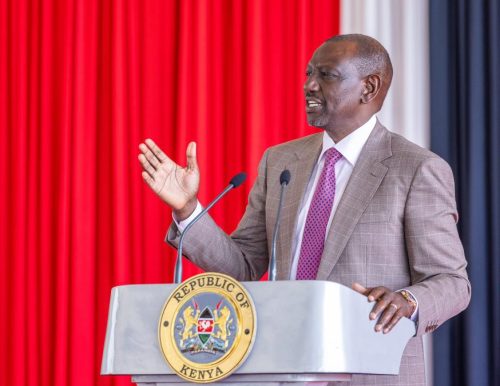
The announcement, made by then-Interior Cabinet Secretary Kithure Kindiki, redefined October 10 as a day dedicated to environmental conservation, sustainability, and climate action.
Motive behind Mazingira Day
The decision was inspired by global recognition of environmental rights, particularly the 2021 UN Human Rights Council resolution that affirmed a clean, healthy, and sustainable environment as a universal human right.
Mazingira Day was also aligned with Kenya’s ambitious 15 Billion Tree Growing Programme, which targets 30% tree cover by 2032 and supports national goals such as food security, ecosystem restoration, and climate resilience.
The renaming marked a deliberate shift toward collective environmental responsibility, with the slogan “Dirty hands make a green and clean environment” encouraging citizens to take part in grassroots environmental action.
Author
Latest News





Advertisement
More on Insights