Advertisement
Finance Bill 2026: Why rising public anger echoes 2024 protests as final reading looms in parliament
Thursday 18th June, 2026 11:15 AM|

As Kenya’s Finance Bill 2026 enters its last readings in the National Assembly, the legislative corridors are buzzing with palpable tension. The government is on a tightrope walk to raise an extra Ksh1.1 trillion to fill the gaps in the budget for 2026/2027.
The situation is reminiscent of the intense pressure of past legislative periods, and the public feels weighed down by a lot of lawmaking.
The closer the bill gets to the presidential seat, the deeper the disparity between the big-picture fiscal goals of the state and the lives of everyday people.
Flashpoints of taxation
The Departmental Committee on Finance and National Planning sought to moderate some of the Treasury’s most forceful measures, but a number of salient points have left the public with a stomachache.
You Might Also Like


Most obviously, the bill does not provide any tax relief to the poor, as the PAYE tax bands remain unchanged, with the highest-earning group still under the 35% tax rate.

John Mbadi, accompanied by principal secretaries Mr Cyrell Wagunda (Public Investments and Assets Management), Dr Chris Kiptoo
(PS National Treasury) and Dr Bonface Makokha
(Economic Planning) alongside other senior officials from the Ministry before the presentation of the Financial Year 2026/2027 Ksh 4.8 trillion budget at the National Assembly. PHOTO/@SDPI_AM/X.
The bill further goes after everyday consumer goods and industries that have millions of livelihoods. The proposed import duty of 5% on the customs value of mitumba, which is the name given to second-hand clothes and shoes, has directly jeopardised the informal sector and low-income shoppers.
In addition, the digital and tech markets are dealing with strong headwinds. The finance committee passed an even more divisive Treasury plan for a 25% consolidated tax on mobile device imports despite being able to do little to defeat the measure, but it did leave the import tax unchanged, which risks higher costs of digital connectivity.
Moreover, an aggressive expansion of digital and financial taxes has redefined royalties and management fees to aggressively target interchange fees, payment processing networks, and digital platforms.
Parliament divided
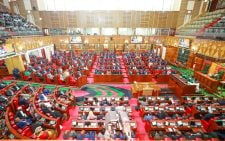
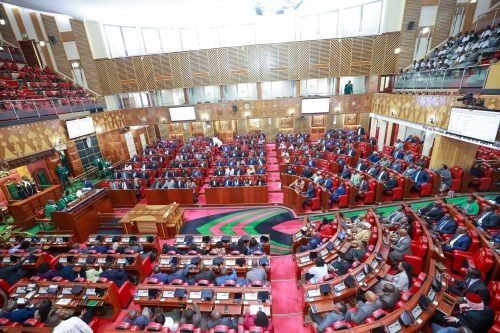
The debate in the National Assembly on Wednesday, June 17, 2026, has brought to light an enormous political division in which two opposing, opposite comments stand in parallel.
The government side argues that the bill is a sacrosanct way of generating domestic revenue. Advocates say raising taxes is the only way to finance key national development initiatives and gradually curb the country’s suffocating dependence on foreign borrowing.
The government claims they have acted in good faith, citing the committee changes that have made the most severe aspects of the legislation ‘watered down’ and a wide-ranging public consultation process that garnered more than 100,000 submissions.
The opposition, on the other hand, has turned these very provisions into weapons and is portraying the bill as an unambiguous statement of the state’s insensitivity to a population already burdened by taxes. Opposition legislators say the bill imposes an “unaffordable burden” on a struggling small business and on struggling families who are already struggling under a high cost of living.
One of the major issues of contention for the opposition is how the bill is being passed through the House. They say the majority side are busily hurried readings to prevent true legislative oversight.
Path to assent and political survival
Parliamentary arithmetic and political survival will be the order of the day as the bill moves forward to the final reading, in which each clause is voted on in turn. The ruling coalition has the number of majorities needed to pass the bill into law, but it is a very big risk for individual MPs.
A vote for the bill protects the fiscal agenda of the executive but may be unpopular with local electorates who are extremely pushy when it comes to new taxes. T
The government side might continue to use voice voting and fast tracking, thus protecting the members from being targeted individually by angry voters. If the bill passes the House, then it will go to the president for his approval.
Despite the political mess it could create, it is a letter that is expected to be signed by the governor, given the state’s stringent revenue requirements.

Dark days of 2024
This bill’s timing brings an extra volatile emotional twist to the growing political drama. It is also the month of a historic and tragic event in the history of the country when the Gen-Z generation led protests, and an eventual breach into Parliament resulted in the total withdrawal of the tax proposals for that year, as contained in the Finance Bill 2024.
Attempting to pass a highly contested revenue law in the same month of the country’s remembrance of those historic protests is a very delicate political situation.
Author
Latest News






Advertisement
More on Insights