Advertisement
Facts about Type 1 diabetes affecting at least 1.2M children and young people in Africa
Friday 24th April, 2026 01:35 PM|

Type 1 diabetes is an autoimmune disease in which the body attacks insulin-producing cells in the pancreas, leaving patients unable to regulate blood sugar levels.
Unlike type 2 diabetes, which is usually in adults and occurs when the body becomes resistant to insulin or doesn’t make enough insulin, type 1 diabetes typically develops in childhood and adolescence, making it one of the most common chronic illnesses among young people worldwide.
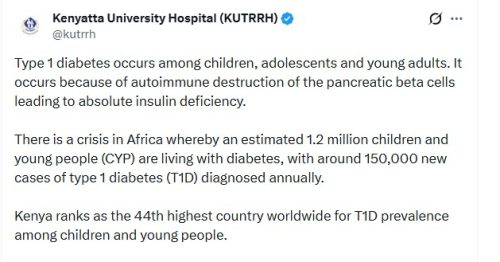
According to a report by the Kenyatta University Teaching, Referral & Research Hospital (KUTRRH) on Friday, April 24, 2026, Type 1 Diabetes occurs because of autoimmune destruction of the pancreatic beta cells.
“Type 1 diabetes occurs among children, adolescents and young adults. It occurs because of autoimmune destruction of the pancreatic beta cells, leading to absolute insulin deficiency,” KUTRRH stated.
You Might Also Like
Meanwhile, KUTRRH warns of a rise in Type 1 cases as recent data indicates that around 150,000 new cases of Type 1 diabetes are diagnosed each year among children and young people in Africa.
“There is a crisis in Africa whereby an estimated 1.2 million children and young people (CYP) are living with diabetes, with around 150,000 new cases of type 1 diabetes (T1D) diagnosed annually,” KUTRRH said.
In the report by Kenyatta University Hospital, Kenya ranks as the 44th highest country worldwide for T1D prevalence among children and young people.
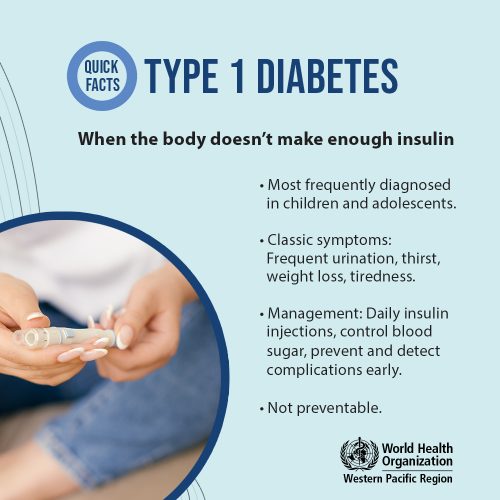
According to the World Health Organisation(WHO) Type 1 diabetes previously known as insulin-dependent, juvenile or childhood-onset, is characterised by deficient insulin production and requires daily administration of insulin.
WHO further notes that in 2017, there were 9 million people with type 1 diabetes; the majority of them live in high-income countries. WHO notes that classic symptoms include frequent urination, thirst, weight loss and tiredness.
According to the WHO, for people living with diabetes, access to affordable treatment, including insulin, may be critical to their survival.
At the same time, while Type 1 Diabetes is not preventable, the WHO suggests daily insulin injections, controlling blood sugar, which prevents and detects complications at an early stage.
Author
Latest News








Advertisement
More on Insights