Advertisement
Eid al-Adha explained: Faith, sacrifice, and global celebration
Tuesday 26th May, 2026 07:04 PM|
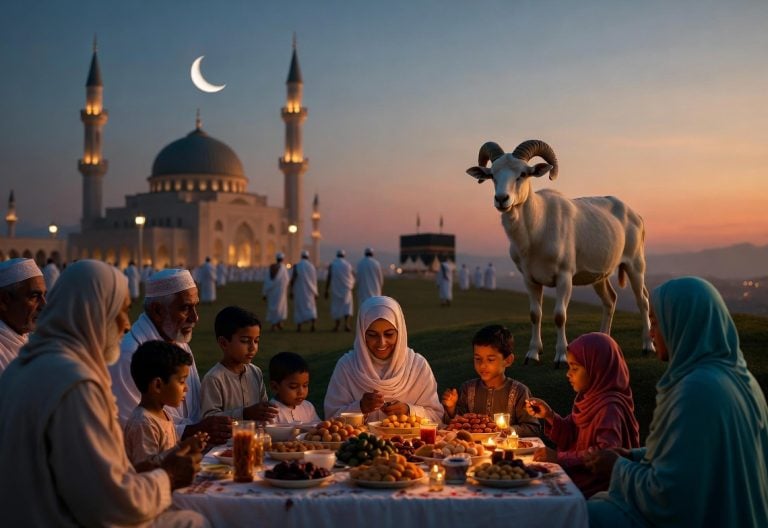
Eid al-Adha is one of the most important religious celebrations in Islam. It is also known as the Festival of Sacrifice. Eid al-Adha is observed by Muslims worldwide as a time of prayer, charity, family unity, and reflection on faith and obedience to God.
At its heart, the festival is rooted in the story of Prophet Ibrahim (Abraham), a character also respected in Christianity and Judaism. In Islamic tradition, Ibrahim is tested by God and asked to sacrifice his son as an act of devotion.
“The story comes from Prophet Ibrahim, who was tested by God and asked to sacrifice his son. As he was about to do so in obedience, God replaced the son with a ram. This event is remembered as a symbol of complete faith and trust in God’s will,” explains Ismael Ismael of Nanyuki Township Mosque.
Eid al-Adha takes place during the final month of the Islamic lunar calendar, Dhu al-Hijjah, and coincides with the annual pilgrimage known as Hajj, performed in Mecca.
You Might Also Like



“Hajj is one of the five pillars of Islam and is performed by millions of Muslims each year. The Eid celebration marks the completion of key rituals of this pilgrimage, linking the festival to one of the most sacred journeys in Islam,” Ismael said.
During some rituals linked to Eid al-Adha, especially during the Hajj pilgrimage in Mecca, pilgrims perform a symbolic act of throwing stones at pillars. This ritual represents the rejection of evil and temptation, and is rooted in the story of Prophet Ibrahim and his son Ismail, who, according to Islamic tradition, threw stones at Satan when he tried to distract them from obeying God’s command.
“The throwing of stones during this ritual represents Prophet Ibrahim and his son Ismail rejecting Satan when he attempted to lead them away from God’s command. It is a symbolic act of faith, reminding believers to resist temptation and remain obedient to God in their daily lives,” explained Ismael.
One of the most defining practices of Eid al-Adha is the ritual sacrifice of an animal such as a goat, sheep, cow, or camel especially for those who are financially able.
“ A central practice for those who can afford it is the ritual sacrifice of an animal, often referred to as Qurbani or Udhiyah. This practice reflects the historical act of Prophet Ibrahim and is performed according to specific religious guidelines,” added Ismael
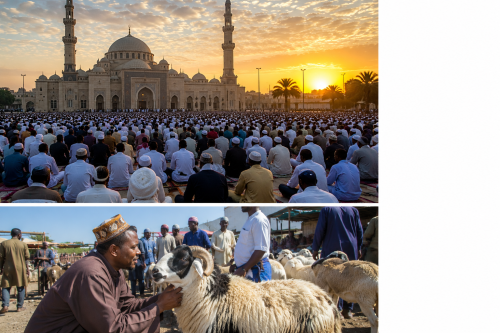
Faith, sacrifice, and charity
The meat from the sacrificed animal is traditionally divided into three parts: one for the family, one for relatives and friends, and one for people in need. This distribution highlights the festival’s emphasis on social responsibility and care for the less fortunate.
“Eid al-Adha teaches faith, patience, generosity, and compassion. It reminds people to care for those in need, to be grateful for what they have, and to remember that true sacrifice is about devotion and selflessness,” said Ismael.
”Preparation for Eid al-Adha usually begins several days before the celebration. Families clean their homes, buy new clothes, prepare special foods, and plan gatherings with relatives and friends. In many communities, livestock markets become busy as families purchase goats, sheep, or cows for the ritual sacrifice” added Ismael.
Eid al-Adha begins on the 10th day of Dhu al-Hijjah, the final month of the Islamic lunar calendar. The exact date changes every year because the Islamic calendar follows the moon.
The celebration officially starts with special morning prayers after sunrise.
In many countries, the festival lasts between two and four days, depending on local traditions and religious practices.
In Kenya, the government has declared Wednesday, May 27, 2026, a public holiday to mark Eid al-Adha. The announcement was made through a Gazette notice by Interior Cabinet Secretary Kipchumba Murkomen on Monday, May 25, 2026. The declaration follows the confirmation of the Eid date after the sighting of the crescent moon in Saudi Arabia, aligning Kenya’s observance with global Islamic traditions.
The idea of sacrifice and obedience to God closely echoes the story of Abraham in the Bible, where faith is tested and trust in God is central. While Christians traditionally do not practice ritual animal sacrifice, the symbolic meaning of sacrifice remains central in Christian theology, particularly through the belief in self-sacrifice, service, and compassion as taught in the life of Jesus.
In many ways, it is both a religious observance and a reminder of shared human values—faith, sacrifice, and compassion ,spoken in different traditions but understood in similar ways across cultures.
The origins of Eid al-Adha are found in Surah As-Saffat (37:100–111) of the Quran, which recounts Prophet Ibrahim’s test of faith and God’s replacement of the sacrifice with a ram.
Author
Latest News








Advertisement
More on Insights