Advertisement
A secondary teacher’s warning about CBE dream
Monday 21st July, 2025 05:00 AM|

As schools nationwide prepare to welcome 1.2 million Grade Nine students, a national crisis looms: severe teacher shortages and crumbling infrastructure threaten to undermine this reform.
As a secondary school teacher in rural Kenya, I’m deeply invested in the promise of Competency-Based Education (CBE) in Senior Schools, set to launch in January 2026.
The vision of CBE – empowering students through tailored STEM, Social Sciences, and Arts and Sports Science pathways – offers a transformative path toward equipping our youth for Vision 2030.
Yet, as schools nationwide prepare to welcome 1.2 million Grade Nine students, a national crisis looms: severe teacher shortages and crumbling infrastructure threaten to undermine this reform.
You Might Also Like
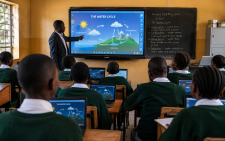
The Ministry of Education’s optimistic assurances ring hollow against the stark realities in schools, especially in marginalised regions like Tana River County. As a concerned educator, I urge the nation to confront these challenges before it’s too late.
The education system is buckling under a teacher shortage that jeopardises CBE’s ambitious goals. The Teachers Service Commission (TSC) reports a deficit of 111,870 teachers – 47,329 for primary schools and 64,541 for post-primary institutions.
This has resulted in a national pupil-to-teacher ratio of 56:1 in public schools, well above the recommended 40:1. In marginalised counties like Tana River, ratios climb even higher, exacerbating inequities.
The STEM crisis is particularly acute. Only 21 per cent of public junior school teachers are trained in STEM, yet this is critical for the 60 per cent of Senior School learners mandated to pursue STEM pathways.
Alarmingly, 35 per cent of junior schools lack a single STEM educator.
The ministry, led by Cabinet Secretary Julius Ogamba, points to 76,000 teachers hired since 2022 and a Sh2.4 billion plan to recruit 20,000 interns in 2025/26.
However, interns – often underpaid and untrained in CBE’s hands-on, project-based approach – represent only a temporary fix.
Current retooling programmes for teachers are too brief to prepare us for the specialised demands of CBE pathways.
I currently teach 18 lessons per week, within the ministry’s recommended 27, but the influx of Senior School students next year will likely push this beyond sustainable levels – a concern shared by teachers nationwide.
The ministry’s claim of “enough teachers” is undermined by the fact that 44 teachers were leaving daily in 2022, driven out by burnout and poor conditions.
Infrastructure woes compound the crisis. Over 1,600 schools nationwide lack labs, and only 48 per cent of public junior school learners have access to lab facilities – essential for STEM education.
Toilet facilities present health risks with ratios of 66:1 for boys and 62:1 for girls nationally, double the ministry’s standards of 30:1 and 25:1.
I believe in CBE’s potential to transform lives, but the current trajectory risks failure. The government must act decisively. It must do several things:
Hire permanent, CBE-trained teachers, prioritising STEM specialists. The Ksh14.8 billion needed annually to close the teacher gap is an investment in our future.
Invest in science labs, computer labs, and sports facilities for Cluster 2–4 schools, targeting both rural and urban areas.
Clarify pathway options to parents to curb dropouts and ensure informed decision-making.
And partner with NGOs and the private sector, as recommended in the State of Education report, to bridge resource gaps.
The writer is an Educator in Tana River County
Author
Newton Maneno
View all posts by Newton ManenoLatest News



Advertisement
More on Insights