Advertisement
Willis Otieno: MPs who skipped Finance Bill vote failed their constitutional duty
Saturday 20th June, 2026 02:40 PM|

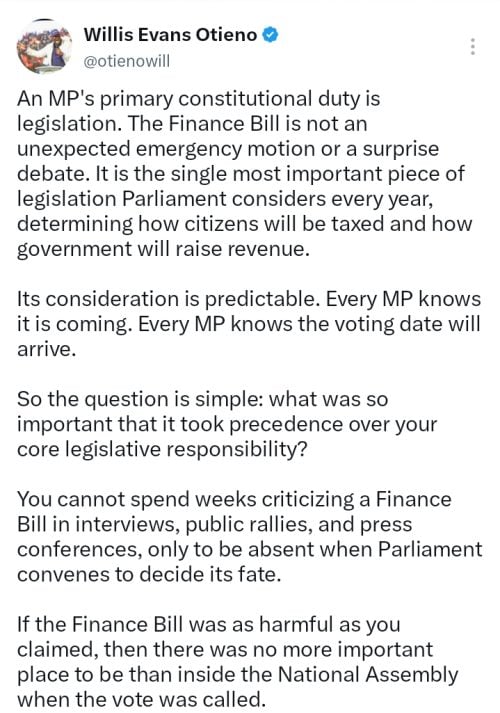
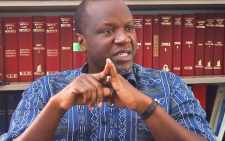
Lawyer Willis Otieno has intensified criticism against Members of Parliament who failed to show up during the decisive Finance Bill 2026 vote, arguing that lawmakers who skipped the session abandoned their core constitutional responsibility at one of the country’s most critical legislative moments.
Speaking on his X account on Saturday, June 20, 2026, Otieno said legislation remains the primary constitutional duty of every MP, insisting there was no justification for absenteeism during a vote that directly determines how Kenyans will be taxed and how the government raises revenue.
“The Finance Bill is not an unexpected emergency motion or a surprise debate. It is the single most important piece of legislation Parliament considers every year,” Otieno stated.
Questions Over MPs’ Absence
The lawyer questioned lawmakers who had spent weeks publicly opposing the Bill through interviews, rallies and media appearances, only to miss the final parliamentary vote when the matter came before the National Assembly for decision.
You Might Also Like


“Its consideration is predictable. Every MP knows it is coming. Every MP knows the voting date will arrive. So the question is simple: what was so important that it took precedence over your core legislative responsibility?” he posed.
His remarks come amid growing political backlash following the passage of the Finance Bill 2026, after the House approved it during Third Reading, with 122 MPs voting in favour and 40 opposing, paving the way for the legislation to proceed to presidential assent.
Criticism After Finance Bill Passage
Otieno argued that lawmakers who openly criticised the Finance Bill but failed to appear for voting had undermined their own credibility and betrayed public trust.
“You cannot spend weeks criticising a Finance Bill in interviews, public rallies and press conferences, only to be absent when Parliament convenes to decide its fate,” he said.
Duty to Represent Kenyans
According to Otieno, if leaders genuinely believed the Bill was harmful to ordinary citizens, then Parliament was the only place they needed to be when the vote was called.
“If the Finance Bill was as harmful as you claimed, then there was no more important place to be than inside the National Assembly when the vote was called,” he added.
Author
Latest News








Advertisement
More on Inside Politics