Advertisement
Willis Otieno accuses govt of funding political power and lifestyles over public services
Sunday 21st December, 2025 07:35 AM|

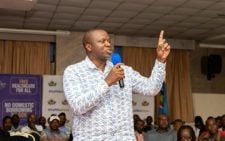
Safina Party Deputy President-designate Willis Otieno has accused the government of prioritising political power and elite lifestyles at the expense of essential public services, arguing that the country’s fiscal crisis is less about lack of money and more about misplaced priorities.
In a statement posted on his X account on December 21, 2025, Otieno claimed that State House had already exhausted almost its entire recurrent budget barely halfway through the financial year, even as critical sectors struggle to stay afloat.
“99.7% of its (State House) recurrent budget is gone before the financial year is even halfway,” he said.
Financial strain
Otieno contrasted this with what he described as a deteriorating situation in public service delivery, noting that key institutions were facing serious financial strain.
You Might Also Like

He pointed to the Social Health Insurance Fund (SHIF), which he said was struggling, hospitals grappling with drug shortages, universities delaying lecturers’ salaries, and counties failing to pay workers on time.
At the same time, he argued, development projects had stalled while taxes on citizens continued to rise.
“While State House is fully funded: SHIF struggles, hospitals lack drugs, universities delay lecturers’ pay, counties delay salaries, development projects stall, taxes keep rising,” Otieno stated.
‘No fiscal space’ critique
According to the lawyer, the government’s frequent claims about lacking “fiscal space” for various programmes are misleading, arguing that resources are available but misallocated.
“So when the government says ‘we have no fiscal space’, what they really mean is that there is no space for you, but there is always space for power,” he said.
He further argued that public funds were not being channelled into productive investments that could improve the lives of ordinary Kenyans.
“This money does not build roads, schools, hospitals, or factories,” Otieno stated, adding that instead it goes towards “lifestyles, bureaucracy, political maintenance of power.”
Otieno concluded by accusing the government of presiding over a system where the burden of taxation falls on citizens without corresponding improvements in services.
“So your taxes are funding comfort at the top, not progress at the bottom,” he wrote.
Author
Cy Muganda
View all posts by Cy MugandaLatest News





Advertisement
More on Inside Politics
