Advertisement
Why IPOA independence matters if Kenya police watchdog moves under Ministry of Interior
Thursday 16th July, 2026 06:38 AM|

The Independent Policing Oversight Authority (IPOA) is Kenya’s civilian police watchdog responsible for investigating allegations of police misconduct, promoting accountability within the National Police Service and strengthening public confidence in law enforcement institutions.
That independence is now at the centre of a constitutional dispute after the High Court temporarily suspended the implementation of President William Ruto’s Executive Order No. 2 of 2023, which sought to place IPOA under the Ministry of Interior and National Administration.
The court’s decision did not declare the Executive Order unconstitutional. Instead, it issued conservatory orders preserving the existing structure of IPOA until the constitutional petition challenging the move is heard and determined.
The case has triggered a wider national conversation about police oversight in Kenya and a fundamental question: Can a police watchdog effectively investigate accusations against officers if it falls under the same ministry responsible for overseeing the police service?
You Might Also Like

The answer will depend on how the court interprets the constitutional protections surrounding independent institutions, but the debate has already highlighted why IPOA’s independence matters to Kenya’s accountability system.
IPOA was created to provide civilian oversight of the National Police Service (NPS) and to ensure that claims of police misconduct can be investigated by an institution separate from the police command structure.
Its mandate includes investigating deaths and serious injuries resulting from police action, examining accusations of excessive use of force, reviewing complaints against police officers, monitoring police operations and recommending criminal prosecution or disciplinary action where evidence supports such measures.
The authority was established on the understanding that police accountability requires an oversight institution capable of operating without influence from the agencies it monitors.
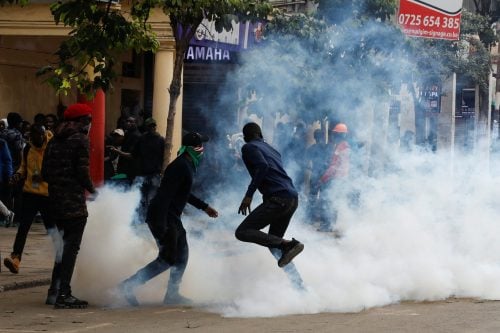
This principle has become particularly important whenever Kenya faces public concerns about police conduct during demonstrations, security operations, arrests or cases involving deaths in police custody.
Over the years, IPOA has investigated cases involving claimed excessive use of force, deaths linked to police action and other complaints against members of the NPS. These investigations have contributed to recommendations for prosecution, disciplinary action and reforms aimed at improving policing standards.
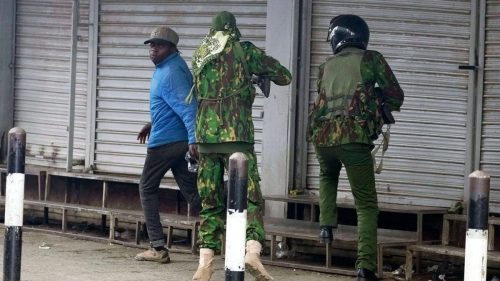
For many Kenyans, the importance of IPOA is not only in the investigations it conducts but also in the confidence that victims, families and the wider public have that those investigations are independent.
That issue forms the basis of the constitutional challenge filed by Obwogi Jonathan, supported by several civil society organisations that joined the case as interested parties.
The petitioners argue that placing IPOA under the Ministry of Interior could weaken its constitutional independence because the ministry also oversees the NPS. They contend that the arrangement could create a conflict of interest by placing the police oversight body under the authority of an institution responsible for police administration.
The government position and the constitutional arguments surrounding the Executive Order will ultimately be considered by the High Court. At this stage, the court has only suspended implementation of the order and has not made a final finding on its legality.
PHOTO/@channelafrica1/X
Future of police oversight
The High Court’s decision temporarily preserves IPOA’s existing status as an independent civilian oversight authority.
While the case remains pending, the Ministry of Interior cannot rely on Executive Order No. 2 of 2023 to supervise, direct, administer or exercise authority over IPOA.
The final ruling could have consequences beyond IPOA itself. It may shape how future governments reorganise independent institutions and determine the limits of executive authority over bodies created to provide checks and accountability.
Governments have a responsibility to improve administrative efficiency and coordinate public institutions, but those changes must also respect constitutional safeguards designed to protect independent oversight.
The debate surrounding IPOA is therefore not simply about where a government agency sits within the administrative structure. It is about whether institutions responsible for holding powerful public bodies accountable can maintain the independence necessary to perform their duties effectively.
Whenever Kenyans ask, “Who investigates the police?” the credibility of the answer depends on whether the institution carrying out those investigations is trusted to operate without fear, favour or external pressure.
The High Court’s eventual decision will determine whether placing IPOA under the Ministry of Interior is compatible with Kenya’s constitutional framework and could influence the future of police oversight, accountability and public trust in state institutions.
Author
Latest News




Advertisement
More on Inside Politics