Why IEBC faces empirical electoral test amid growing trust deficit
By Aloys Michael, April 8, 2026The Independent Electoral and Boundaries Commission (IEBC) is entering a defining phase as it continues with a nationwide voter registration drive under mounting scrutiny over its credibility, institutional readiness, and operational integrity.
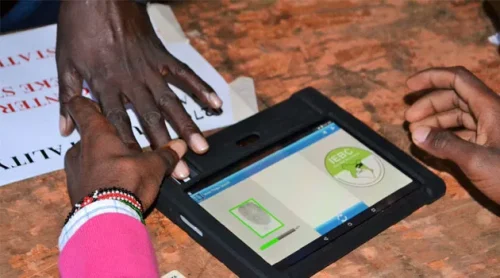
The 30-day mass registration exercise, running daily until April 28, 2026, is part of the electoral body’s ambitious plan to enlist at least 6.3 million new voters.
Conducted across all seven days of the week, the initiative is designed to expand electoral participation ahead of the 2027 General Election.
However, beneath this administrative push lies a deeper challenge: restoring public trust in an institution still grappling with the legacy of disputed processes and systemic vulnerabilities.
At the heart of the crisis is a growing trust deficit, fueled by longstanding concerns about the accuracy of the voter register and the transparency of electoral operations.

The commission must simultaneously navigate budgetary constraints, fill key leadership gaps, including the recruitment of a substantive Chief Executive Officer (CEO) and procure critical electoral materials, all within a tightening electoral timeline.
IEBC chairman Erastus Ethekon has sought to reassure stakeholders about ongoing reforms, particularly a controversial plan to integrate data-sharing mechanisms with the state’s civil registration systems. The initiative aims to enhance the integrity of the voter register by cross-referencing identity data.
“Therefore, the commission has engaged the State Department of Immigration and Citizen Services on various areas of collaboration,” he said.
“Including establishing a secure Application Programming Interface link with an Integrated Population Registration System to ensure that only legitimate ID and passport numbers are used.”
While framed as a safeguard against fraud, the proposal has triggered fresh debate over data privacy, institutional independence, and the potential politicisation of inter-agency collaboration.
Pressure is also mounting on IEBC to address historical irregularities in the voter register, as revealed in a pre-2022 audit conducted by KPMG.
The audit exposed significant anomalies, including 481,711 duplicate records and 226,143 instances where individuals reported to have registered using identity cards that did not belong to them.
Further compounding concerns, the audit identified 246,465 deceased voters still listed in the register and 164,269 registrations linked to invalid identification documents.
Perhaps most alarming was the discovery of 14 unidentified Returning Officers with extensive system privileges, capable of manipulating the register.
The report noted that these individuals could transfer, delete, insert, trigger, truncate and update the voters register at will, while one user, Postgres, had superuser access privileges.
These revelations continue to cast a long shadow over IEBC’s reform agenda, with political actors demanding urgent corrective measures.
Audit concerns
Justin Muturi, leader of the Democratic Party and former Attorney General, has called for a comprehensive overhaul and audit of the voter register.
“A comprehensive fresh audit of the register of voters must be done,” he said, echoing sentiments shared across the political divide.
Leadership uncertainty within the commission has further complicated its reform trajectory. Following the exit of former CEO Marjan Hussein, IEBC appointed Moses Sunkuli in an acting capacity, a move that has sparked resistance from sections of the opposition.

Kalonzo Musyoka, leader of the Wiper Patriotic Front, has insisted on a transparent and competitive recruitment process.
He emphasised that the IEBC must properly advertise the CEO position to safeguard institutional credibility, while opposing any attempt to confirm Sunkuli in a substantive role without due process.
Parallel to these internal challenges, Parliament has intensified oversight of electoral preparedness. The Justice and Legal Affairs Committee (JLAC) recently convened a high-level consultative forum in Mombasa, bringing together key stakeholders including IEBC officials, judicial representatives, and the Witness Protection Agency.
Committee chairman George Murugara said the engagements were aimed at evaluating institutional readiness and identifying emerging risks in election management.
“The discussions focused on critical areas, including election preparedness, proposed legal and administrative reforms, the usability of Kiems kits, stakeholder engagement, voter education and election security,” he said.

Funding remains another flashpoint. IEBC has requested Ksh63 billion to conduct the 2027 polls, a figure that Parliament has so far declined to approve. The funding impasse raises concerns about the commission’s ability to execute its mandate effectively.
“Funding of these institutions and agencies is paramount. A believable election is paramount for our country. The funding must, thus, be adequate,” Murugara noted.
As the countdown to 2027 begins, IEBC’s voter registration drive is shaping up to be more than a routine administrative exercise.
It is an empirical test of the commission’s capacity to rebuild credibility, implement reforms, and inspire public confidence in Kenya’s electoral process.
Whether it succeeds may ultimately determine not just the legitimacy of the next election, but the resilience of the country’s democratic institutions.