Advertisement
Why Dalmas Otieno’s funeral could reunite Kenya’s political bigwigs
Wednesday 01st October, 2025 11:09 AM|
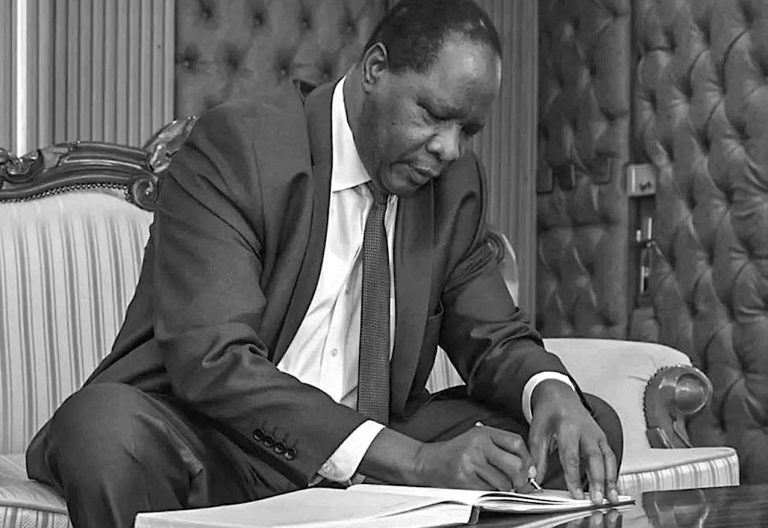
The funeral of the late former Cabinet minister Dalmas Otieno, a respected statesman who served under three regimes, President Moi, Kibaki, and Uhuru, has emerged as more than just a personal loss to his family and constituents; it is a loss to the whole nation.
It is shaping up to be a rare moment of national political convergence, expected to draw top leaders from both the ruling Kenya Kwanza coalition and the opposition Azimio la Umoja movement or Orange Democratic Movement (ODM).
The envisioned potential reunion of President William Ruto and former President Uhuru Kenyatta, alongside ODM leader Raila Odinga and former Vice President Kalonzo Musyoka, signifies Otieno’s legacy in Kenyan politics and his unique ability to transcend partisan boundaries.
Dalmas’s political career spanned decades, marked by an unwavering dedication to public service.
You Might Also Like
He held powerful ministerial positions under President Moi, Labour and Transport, and later served under President Kibaki as the Minister for Public Service.
His most recent public role was under President Uhuru Kenyatta, who appointed him Vice Chair of the Salaries and Remuneration Commission (SRC), a testament to the trust and esteem he commanded even in his twilight years.
Sources at the family indicated the esteemed guests expected at the funeral, and the police were briefed accordingly, with the Rongo security team working yesterday to beef up patrols.
Uhuru’s expected presence at the funeral, alongside his confidantes such as David Murathe and Raphael Tuju, reflects not just loyalty but the respect Otieno garnered across administrations.
“We learnt a lot from Dalmas,” said Owalo. Tuju also echoed kind words: “He was an astute leader.”
What is particularly notable is how Otieno managed to earn the admiration of political figures with often conflicting ideologies.
Ayacko termed him a “political icon and force who played his forte very well and daringly with brevity.”
During his requiem mass at Don Bosco Catholic Church in Nairobi, leaders from divergent camps came together to celebrate a man they described as polished, diligent, and selfless.
That kind of universal praise in today’s polarised Kenyan political environment is rare and perhaps precisely why his funeral presents a unifying moment.
Indeed, funerals of prominent political figures in Kenya often double as forums for subtle reconciliation, signalling possible political realignments or softening of hostilities.
The case of Dalmas is especially poignant given that his home in Rongo, Migori County, lies in a region heavily associated with ODM and Raila Odinga.
Yet, his professional ties with the likes of President Ruto’s cabinet members and his apolitical demeanour in retirement make it politically safe and perhaps even necessary for leaders from across the divide to honour him in person.
Former President Uhuru’s close ties with Dalmas were further highlighted by Murathe, who described Dalmas as one of Uhuru’s most trusted advisors on issues of governance, accountability, and democracy.
Such public acknowledgement reinforces the statesmanlike aura surrounding Otieno and makes his funeral a natural meeting ground for dialogue, even if informal.
Murathe’s comments hint at the kind of behind-the-scenes political influence Otieno wielded, quiet, strategic, largely unpublicized, but impactful.
Security arrangements also hint at the high-level nature of the event. The heightened presence of both plainclothes and uniformed officers in Rongo and around Dalmas’s Kangeso home speaks to the sensitivity and stature of the occasion.
With multiple MPs and governors expected to attend, and the State officially taking over the funeral programme, this is more than a regional send-off; it is a national occasion.
Moreover, the expected presence of Raila and Kalonzo, key figures in the opposition, alongside current government figures, underscores the symbolic weight of the moment.
At a time when the country continues to grapple with post-election tensions, inflation, and political division, such events offer an opportunity, however brief, for reflection and unity.
Dalmas, who was described by his widows as a man of “great integrity and a kind heart,” seems to have left behind more than a political legacy; he leaves behind a rare space for dialogue.
Dalmas’s funeral is not just a ceremony marking the end of a life well lived.
It is a moment where political foes will stand side by side, brought together by the memory of a man who, in life, worked with nearly all of them. Wives Patricia Otieno and Dorothy Otieno described their husband as a kind and loving man.
“He was always there for us,” Patricia recalled, while Dorothy said, “He was admirable and compassionate in character.”
Whether this moment leads to deeper reconciliation remains to be seen. But at the very least, it offers a brief and dignified pause from the usual political bickering and in honouring Dalmas, Kenya’s leaders may find a fleeting moment of common ground.
Author
Latest News
Advertisement
More on Inside Politics