Advertisement
Wetang’ula walks tightrope amid pressure to join UDA
Tuesday 24th March, 2026 08:19 AM|

National Assembly Speaker Moses Wetang’ula finds himself at the centre of an intensifying political storm, as calls grow louder for him to dissolve Ford Kenya and merge it with the United Democratic Alliance (UDA), led by President William Ruto.
The mounting pressure not only exposes fault lines within the ruling Kenya Kwanza coalition but also raises critical questions about constitutional propriety, party loyalty, and the broader implications for Kenya’s multiparty democracy ahead of the 2027 General Election.
Wetang’ula’s predicament is compounded by scrutiny over whether he should have relinquished his role as Ford Kenya party leader upon assuming the speakership.
Critics argue that holding both positions creates a conflict of interest, placing him in a politically vulnerable position at a time when coalition dynamics are rapidly shifting.
You Might Also Like
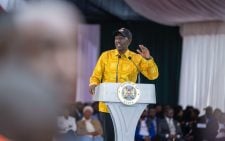
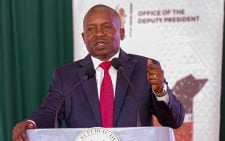
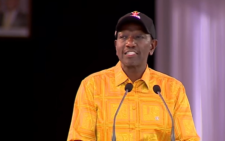
This scrutiny adds to the already delicate balancing act he must perform, maintaining party independence while remaining aligned with the government he serves.

Unlike Prime Cabinet Secretary Musalia Mudavadi, who folded the Amani National Congress into UDA, Wetang’ula has taken a defiant stance.
His resistance signals a reluctance to cede political identity, especially in Western Kenya, where Ford Kenya remains a key player. However, this position risks creating friction within Kenya Kwanza, particularly as Ruto seeks to consolidate political support under a unified banner.
For Ruto, the stakes could not be higher. The President is aggressively courting the vote-rich Western Kenya region, a battleground that could determine the outcome of the 2027 polls.
His recent tours of Busia, Bungoma, Kakamega, and Vihiga underscore a calculated strategy to solidify his base and counter opposition influence.
Which way, Wetang’ula?
Yet, any internal dissent threatens to derail these efforts. Indeed, any misstep by key allies like Wetang’ula could weaken the President’s reelection prospects, especially as critics position themselves to limit him to a single term.
“We have a clear and demonstrable track record in delivering housing, health, education, roads, and other critical infrastructure. Across the country, we are transforming the delivery of development to the people of Kenya, ensuring that progress reaches every sector and every community, leaving no one behind. Our plan is credible, practical, and proven through decisive action,’ Ruto said.
Despite such assurances, political undercurrents in Western Kenya remain volatile. The emergence of grassroots movements aligned with the Orange Democratic Movement (ODM) has intensified competition, with factions mobilising against the government over unmet expectations and perceived policy failures.
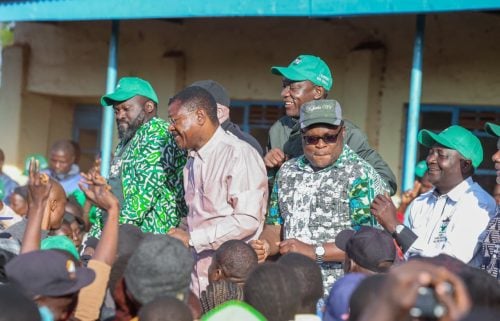
Within this context, Wetang’ula has firmly rejected calls to dissolve Ford Kenya. The party’s Secretary General, John Chikati, issued a statement condemning pressure from UDA leaders. He described the demands as outrageous and warned that they undermine the democratic principles that underpin Kenya’s political system.
“The FORD Kenya Party has noted with deep concern the consistent and sustained threats issued by senior leaders within UDA. These utterances, demanding that affiliate parties within the Kenya Kwanza administration should fold up and join UDA ahead of the 2027 General Elections, are not only outrageous but a direct affront to the democratic fabric of our nation,” read part of the statement.
“FORD Kenya cannot and will not be dissolved. It can only be enhanced and protected for future generations.”
The remarks were in response to growing pressure from UDA figures, including Senator Samson Cherargei, who warned that affiliate parties risk exclusion from government opportunities if they fail to merge.
Complicating matters further are legal and structural precedents. Attempts to merge UDA with ANC previously faced judicial setbacks, with courts insisting on strict constitutional thresholds for party dissolution.
Ultimately, Wetang’ula’s stance reflects a broader ideological battle within Kenya Kwanza, between consolidation for electoral strength and preservation of multiparty diversity.
As 2027 draws closer, his decisions will not only shape his political future but also influence the trajectory of Ruto’s reelection bid and the stability of the ruling coalition.
Author
Latest News





Advertisement
More on Inside Politics