Advertisement
Wamalwa criticises media for snubbing Gachagua roundtable interview
Friday 23rd January, 2026 09:44 AM|
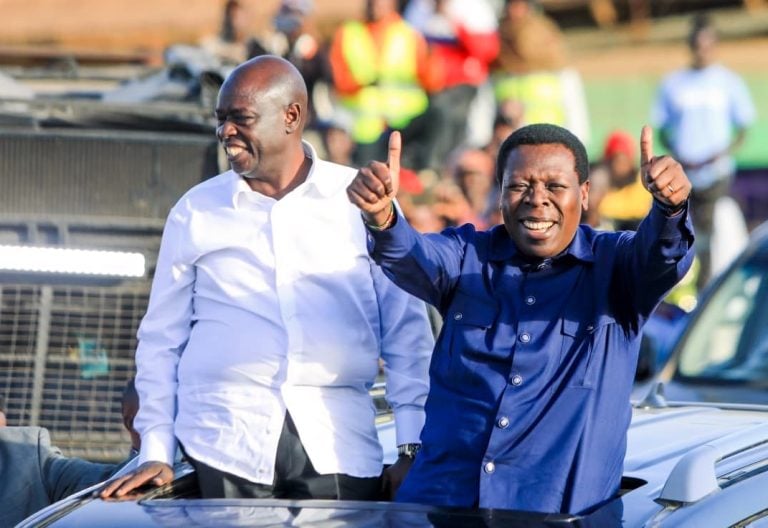
Democratic Action Party-Kenya (DAP-K) leader Eugene Wamalwa sharply criticised Northern Kenya media practitioners for cancelling a planned roundtable interview with former Deputy President Rigathi Gachagua.
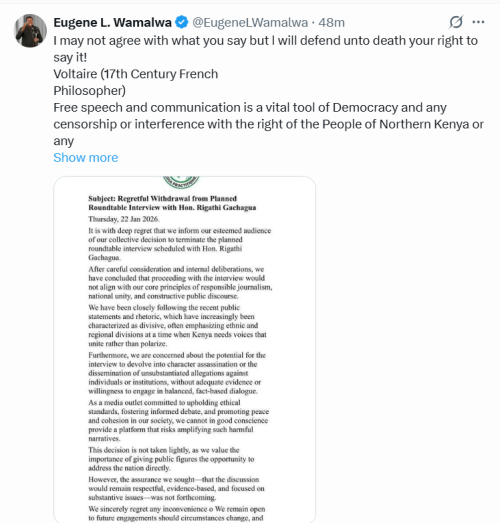
Posting on X on January 23, 2026, Wamalwa described the decision as a cowardly violation of free speech and democratic principles, framing it as an attack on both leaders’ rights and the public’s access to information.
“To deny a National Leader like H.E @rigathi a former Deputy President of the Republic of Kenya the opportunity to address any Region of our Nation is not just a violation of his rights but but the rights of the people of that region who are part of a free and open democratic society called Kenya and their freedom of association, speech, expression, thought, conscience and right to information,” read the X post in part.
Free speech and regional impact
Wamalwa invoked 17th-century French philosopher Voltaire in his response: “I may not agree with what you say but I will defend unto death your right to say it!”
You Might Also Like
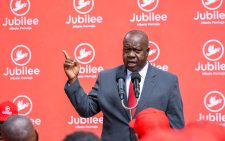

He argued that denying Gachagua a platform violates the rights of both the leader and the people of Northern Kenya, limiting access to debate and information.
Wamalwa added, “This is not responsible journalism, it is a mockery of Journalism which is supposed to promote transparency, accountability and dialogue on matters of vital National importance such as Devolution which holds the key to a more Just, and inclusive Kenya.”
He further warned that the withdrawal could foster intolerance toward leaders holding divergent views.
Media group cites ethical concerns
The Northern Kenya Media Practitioners announced their regretful withdrawal on January 22, 2026, citing a need to uphold responsible journalism, national unity, and constructive discourse.
They expressed concern that proceeding with the interview could amplify divisive rhetoric or unsubstantiated claims and emphasized that assurances for a respectful, evidence-based discussion were not provided.
“After careful consideration and internal deliberations, we have concluded that proceeding with the interview would not align with our core principles of responsible journalism, national unity, and constructive public discourse,” read the Northern Kenya Media Practitioners statement in part.
The media collective highlighted the risk of discussions focusing on ethnic and regional divisions at a time when Kenya needs unifying voices. They stated that their decision does not preclude future engagements should circumstances allow for balanced dialogue.
Author
Latest News


Advertisement
More on Inside Politics