Advertisement
Tuju warns Kenya faces instability over unemployment, corruption and opulence
Wednesday 06th May, 2026 12:13 PM|

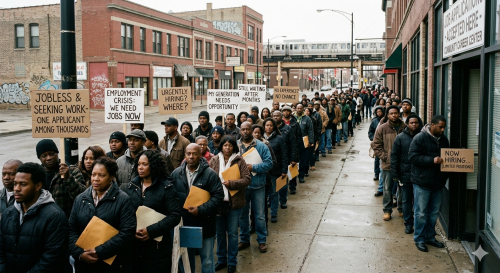
The former Jubilee Secretary General Raphael Tuju has been alarmed that Kenya is simply sliding into even greater social turmoil unless something is done to curb the increasing youth unemployment, the growing inequality and what he calls the open display of wealth by political leaders.
In an interview on a local radio station on Wednesday, May 6, 2026, Tuju said that the ever-increasing number of jobless and economically frustrated youth in the country are becoming more vulnerable to the manipulations, and more so during a time of political tension.
He contended that unemployment is the largest contributor to insecurity and social disorder among the youth.
“I don’t know any young person who has got a job, has got shelter and is planning to start a family who is a goon. Children who don’t have opportunities and who don’t have jobs,” Tuju said.

You Might Also Like



The former CS has further cautioned that these circumstances are producing a pool of easily exploited young people who are often drawn into violence and political mobilisation to survive and not because of their ideologies.
Statistics from the Kenya National Bureau of Statistics’ 2025 Economic Survey reveal that youth unemployment has persistently remained at a high level, with the latest estimates showing that it was at 16.8 among individuals aged 20–24 and 11.1 among individuals aged 15–19. In general, between 11 and 12 per cent of youths who actively seek employment are not engaged in employment.
The statistics further indicate that more than 80 per cent of newcomers to the labour market are absorbed by the informal sector, with up to 67 per cent of the young people being unemployed, underemployed or not in formal work. Each year, approximately 800,000 young people enter the labour market, and the number of young people seeking employment in the job market is increasing.
Tuju pointed out that, as part of the current crisis, past policy choices, in particular during the 1980s when Kenya saw a rapid population increase, led to the current crisis.
Corruption and opulence menace
Tuju also complained of corruption and what he termed the opulent lives of some leaders, saying it is contributing to the public anger and mistrust in the government.
“People can cope with corruption, but when they are corrupt, showing us choppers. You cannot cope with that kind of opulence,” he said.
He cautioned that the widening divide between leaders and citizens is becoming one of the greatest fault lines in society, with inequality and exclusion becoming more and more the source of anger and frustration.
Tuju also noted that increasing political intolerance is also harming social cohesion, with citizens now directed against each other based on their political affiliation.
“You go against your neighbour because of his or her political decision, and yet this individual is doing what he or she believes is right,” he added.
He concluded that unless Kenya urgently addresses the issues of unemployment, corruption and inequality, the country will risk turning its large youth population from a development asset into a source of instability.
Author
Latest News








Advertisement
More on Inside Politics