Advertisement
Trump says US will hit Iran hard again on Wednesday, June 10
Wednesday 10th June, 2026 08:05 PM|

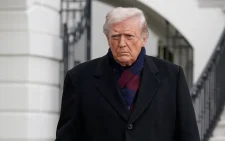
Donald Trump has said the US will hit Iran “hard” on Wednesday, after the two sides exchanged strikes overnight.
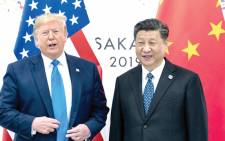
Speaking to reporters in the Oval Office, the US president said the US and Iran were “close” to making a peace deal, but reiterated a call for Iran to “sign a deal”.
Following US strikes on Iran on Tuesday in response to the downing of a US army helicopter in the Gulf, Trump said strikes would continue.
“We hit them hard yesterday and we’re going to hit them hard again today,” he said.
You Might Also Like
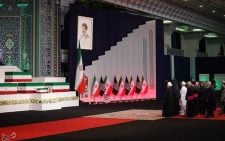
Iran earlier said it launched strikes at US bases in the Middle East following the US’s strikes on Iranian sites.
Trump earlier said Tehran had taken “too long to negotiate a deal” and would now “have to pay the price”, without giving specific details. It came after Iran’s Foreign Minister Abbas Araghchi earlier warned his country would “leave no attack or threat unanswered”.
The US said it struck Iranian sites on Tuesday in response to the downing of a US army helicopter in the Gulf.
Separately, India’s government said a commercial vessel had been attacked off the coast of Oman on Wednesday, with three Indian sailors reportedly missing.
It did not give details of the source of the attack. The BBC has asked US military Central Command (Centcom) for comment.
Earlier on Wednesday the UK’s Maritime Trade Operations (UKMTO) Centre said it had received a report – which it marked under “suspicious activity” – that a tanker 20 nautical miles northeast of Sohar in Oman, had experienced a fire in its engine room.
The US military said it had targeted Iranian defence systems, ground control stations and radar sites near the Strait of Hormuz. Iranian state media said US strikes had hit two reservoirs in the area, leaving thousands of people in the southern port town of Sirik without access to drinking water.
Iran’s Islamic Revolutionary Guard Corps (IRGC) said it launched strikes on 21 targets at US bases in the region, one in Bahrain and the other in Jordan, while Kuwait’s army said it was also intercepting an attack.
Reuters cited a US official on Wednesday as saying nearly all of the Iranian missiles and drones launched at US bases in the Middle East in response were intercepted, with no reported casualties.
Writing on his social media platformTruth Social on Wednesday, Trump said: “Iran’s Military is a complete and total mess. Much of it, like their Navy and Air Force, doesn’t even exist anymore – They have been completely defeated.”
He added: “They’ve taken too long to negotiate a deal that would have been great for them, now they will have to pay the price!!!”
Trump’s comments were in contrast to Tuesday, when he told journalists the US and Iran were “in the final throes of what will be a very, very good deal”.
Also on Wednesday, Iran’s foreign ministry spokesman Esmaeil Baqai accused the US of “damaging this diplomatic process through the contradictory messages it sends, its repeated shifts in positions and demands, and, worst of all, through repeated violations of the ceasefire”.
He said Iran needed to re-assess the situation, adding that any diplomatic process required a minimum of stability.
On Tuesday, Centcom described its strikes on Iran as “a proportional response” for the Apache helicopter downing on Monday, with the IRGC describing them as “vicious”.
Trump previously said on Truth Social that the helicopter had been “shot down” as it was patrolling the Strait of Hormuz, a critical shipping channel that has been effectively closed since the conflict started in late February.
Fox News quoted Trump on Wednesday as saying that an Iranian drone had hit the helicopter without exploding as it flew “very low” .
The two crew members survived and were rescued by an American sea drone.
According to US officials, Iran used a drone to launch the attack on the helicopter. But it is not clear whether the drone had deliberately attacked it, an unnamed US official told CBS News, the BBC’s US partner.
The semi-official Iranian Mehr News Agency reported that Iran had not claimed responsibility for the downed aircraft.
The Indian Ministry of External Affairs said in a statement on Wednesday that 21 Indians had been rescued after an attack on the commercial vessel Settebello “earlier today”.
It said its embassy in Oman was coordinating with Omani authorities in the ongoing search and rescue operation for the three missing people, saying the “targeting of commercial shipping and civilian infrastructure in the region must end”.
It added: “We reiterate our call for immediate de-escalation of tensions, and the conclusion of ongoing negotiations for a diplomatic solution so that peace and stability can return to the region.”
In a separate incident, the Indian crew of a sanctioned oil tanker were rescued by the Omani military earlier this week after the ship was hit by a US missile off Oman.
The war began on 28 February, after the US and Israel launched wide-ranging strikes on Iran that killed the country’s supreme leader.
Iran responded by launching attacks on Israel and US-allied states in the Gulf. The fighting escalated quickly across the region, with Lebanon drawn into the conflict in March.
In April, the US and Iran agreed to a ceasefire that was initially meant to last for a period of two weeks.
Both sides have since exchanged intermittent fire, without returning to full-scale hostilities.
Meanwhile, the countries’ representatives have engaged in fraught negotiations, including a meeting in Pakistan, in an attempt to find a lasting solution to the conflict.
Separately on Wednesday, the International Atomic Energy Agency (IAEA) – the UN nuclear watchdog – approved a US-backed resolution telling Iran to provide details on its uranium stockpile and production facilities.
The Iran Mission to the UN in Vienna, where the IAEA is based, criticised the move, saying: “The resolution hypocritically expresses support for a diplomatic solution, while the US simultaneously engages in further acts of aggression including against Iranian civilian infrastructure and promotes confrontation in different fora.”
Iran’s nuclear programme is central to negotiations between it and the US and Israel, who have both led Western opposition to the programme, claiming Iran is seeking to develop a nuclear bomb.
Iran insists its nuclear programme is entirely peaceful and denies it is seeking to develop nuclear weapons.
Author
Latest News






Advertisement
More on Inside Politics