Advertisement
Safina Party slams Ruto’s regime over increased borrowing
Wednesday 25th March, 2026 02:39 PM|

The Safina Party has issued a strong and unequivocal declaration that once in power, it will not support the repayment of what it describes as ‘odious debt’, intensifying the national debate over Kenya’s growing public debt burden.
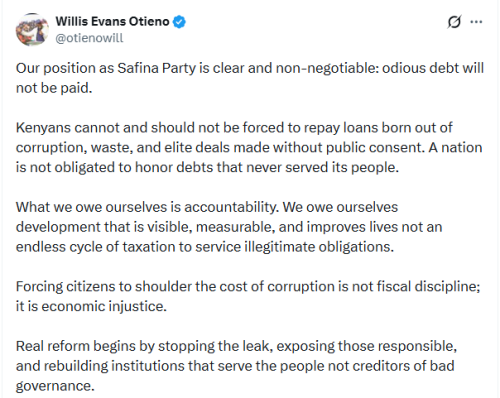
In a bold statement on the X handle on Wednesday, March 25, 2026, the party’s deputy party leader, Willis Otieno, argued that citizens should not be forced to repay loans acquired through corruption, mismanagement, and deals that failed to benefit the public.
“Our position as the Safina Party is clear and non-negotiable: odious debt will not be paid. Kenyans cannot and should not be forced to repay loans born out of corruption, waste, and elite deals made without public consent.
“A nation is not obligated to honour debts that never served its people. What we owe ourselves is accountability. We owe ourselves development that is visible, measurable, and improves lives, not an endless cycle of taxation to service illegitimate obligations,” Willis stated.
You Might Also Like

According to the party, debts incurred without transparency or public participation cannot be considered legitimate. It maintained that a government’s obligation is to its people, not to creditors tied to questionable agreements.
Safina Party leaders emphasised that forcing taxpayers to shoulder such financial burdens amounts to economic injustice rather than responsible fiscal policy.
Otieno further stated that what Kenyans truly owe themselves is accountability and meaningful development. It called for a shift in focus toward projects that are visible, measurable, and directly improve citizens’ livelihoods.
Instead of prioritising debt repayment at all costs, Safina urged authorities to address corruption, seal financial leakages, and hold those responsible for misusing public funds accountable.
In its criticism, Safina Party warned that continued reliance on heavy taxation to service debt risks deepening inequality and eroding public trust in government institutions.
It argued that real reform begins with rebuilding governance systems that prioritise citizens’ welfare over external financial obligations stemming from poor leadership decisions.
Kenya’s debt ceiling
Kenya’s public debt has risen significantly over the past decade, crossing the country’s debt ceiling, which is Ksh10 trillion, driven by large-scale infrastructure projects and recurrent borrowing to plug budget deficits.
While the government maintains that the loans have supported development, critics argue that a substantial portion has been lost through inefficiencies, inflated project costs, and corruption.
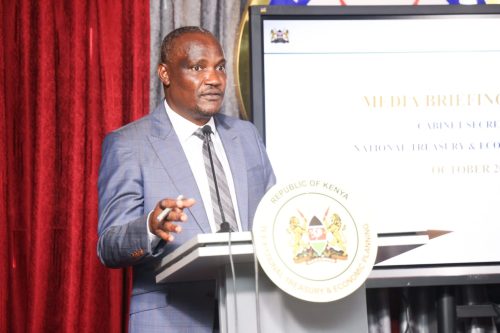
Concerns have also been raised about the sustainability of the debt, with increasing pressure on taxpayers through higher taxes and levies. This has fuelled growing public debate, with some leaders and economists questioning the transparency of borrowing practices and whether all acquired loans have delivered value to ordinary citizens.
Author
Latest News





Advertisement
More on Inside Politics