Advertisement
Ruto’s economic claims under fire as KNBS exposes gaps in govt scorecard
Thursday 30th April, 2026 07:34 AM|

President William Ruto’s persistent defence of his administration’s economic record is facing renewed scrutiny after the latest Economic Survey revealed inconsistencies between official data and some of the figures he has publicly cited.
The 2026 report from the Kenya National Bureau of Statistics (KNBS), released on Wednesday, April 29, 2026, offers a mixed assessment of the country’s economic trajectory, validating a handful of the president’s claims while sharply contradicting others.
The findings arrive at a politically sensitive moment, as the administration quietly recalibrates its fiscal strategy ahead of the 2027 general election.
For months, President Ruto has leaned heavily on statistics to counter criticism over the high cost of living and rising tax pressure. His messaging has centred on recovery, productivity gains, and long-term economic stability.
You Might Also Like

But the KNBS data now complicates that narrative, exposing gaps that could erode public trust in official communication.

At the same time, the government appears to be shifting gears. Fresh signals from the 2026 Budget Policy Statement (BPS) suggest a move away from aggressive taxation toward policies aimed at boosting household incomes.
The National Treasury is considering measures such as reducing Pay As You Earn (PAYE) and expanding relief mechanisms to increase disposable income.
This marks a notable departure from the Kenya Kwanza administration’s earlier approach, which prioritised expanding the tax base to fund development programmes.
Lies or reality?
The new strategy reflects growing political and social pressure as Kenyan households grapple with elevated living costs and stagnant wages.
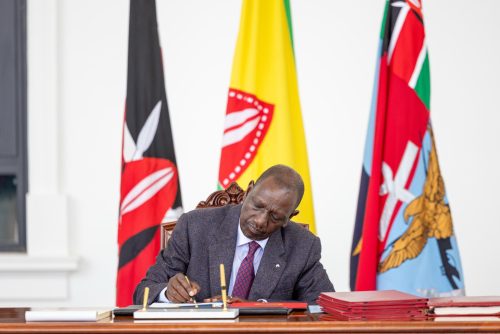
“As part of the finalisation process, the Cabinet Secretary invites views, proposals, and innovative ideas from the public on economic policy, expenditure priorities, and tax measures for the FY2026/27 budget,” the Treasury said in a notice, signalling an attempt to broaden participation and rebuild confidence.
“To bring down the cost-of-living, ensure food security, create jobs, expand the tax base, improve foreign exchange balances and foster inclusive growth.”
Yet beneath this policy pivot lies a difficult balancing act: how to ease tax burdens without undermining revenue targets in an already constrained fiscal environment.
Treasury projections show that revenue demands will remain high even as the government aims to narrow the fiscal deficit from 5.3 per cent of GDP in 2026/27 to 3.3 per cent by 2028/29. The Treasury insists that discipline will be maintained through efficiency measures and improved revenue collection.
“The fiscal consolidation will rely on enhanced domestic revenue mobilisation, rigorous expenditure optimisation and reprioritisation, and protection of essential government programmes and social interventions,” the BPS reads.
However, it is the divergence between rhetoric and data that is likely to dominate public discourse.
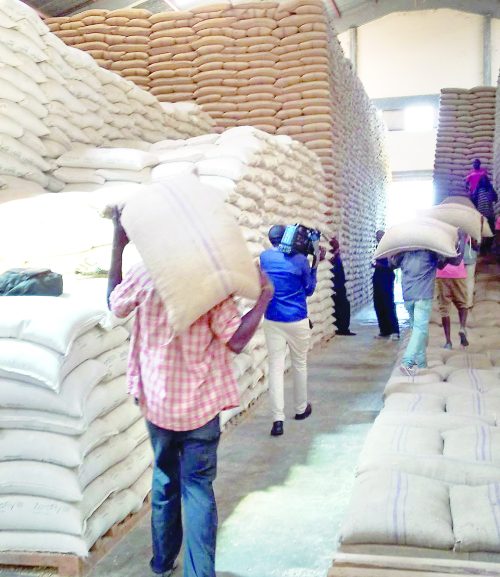
In his State of the Nation Address on November 20, 2025, President Ruto painted a picture of strong agricultural recovery, particularly in maize production.
“National maize harvests have risen from 44 million bags in 2022 to 67 million in 2024, setting the stage for a historic harvest of 70 million bags this year,” he said.
But the KNBS survey presents a more modest reality even as the government insists that the economy is booming.
“Maize production improved by 2.4 per cent to 45.8 million bags,” the report states, suggesting that the gains may not be as dramatic as portrayed.
Ruto’s economic handball?
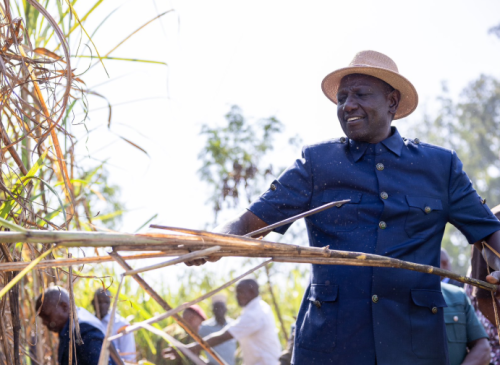
A similar discrepancy emerges in the sugar sector amid calls from the stakeholders for cogent reforms to maximise benefits.
“The sugar sector, long troubled, is stabilising. Area under cane is up by 200,000 acres; production has surged 76 per cent to over 815,000 metric tonnes.”
Contrary to this, the KNBS data indicate a contraction.
“Sugar cane production dropped by 24.7 per cent to 7,051.9 thousand tonnes,” the report notes, raising questions about the accuracy of official claims regarding sector recovery.
The affordable housing programme, one of the administration’s flagship initiatives, also reflects this pattern of partial alignment.
“Across the country, we are delivering the most extensive housing rollout in our history: 230,000 affordable homes,” Ruto said.
KNBS figures show that by December 31, 2025, 205,311 units were under construction, a substantial number but still below the figure cited by the President.
Job creation data linked to the housing programme further complicates the picture. On December 12, 2025, Ruto stated: “Through this programme, more than 480,000 Kenyans have secured jobs and enterprise opportunities across over 300 active sites.”

Yet KNBS reports more modest employment growth. Private construction employment rose by 2.1 per cent to 228,200 persons in 2025, while public sector construction jobs reached 10,100, figures that fall short of the scale suggested in the president’s remarks.
Still, not all claims were overstated. The survey confirms that milk production increased by 3.5 per cent to 5.5 billion litres in 2025, lending credibility to parts of the administration’s narrative on agricultural performance.
Infrastructure development also appears on track, with the country’s paved road network reaching 25,400 kilometres.
The mixed findings indicate a broader tension within the administration’s economic communication strategy: the need to project optimism while confronting a complex and uneven recovery.
As the government pivots toward tax relief and prepares for the next budget cycle, the credibility of its data will be critical.
Author
Latest News




Advertisement
More on Inside Politics